
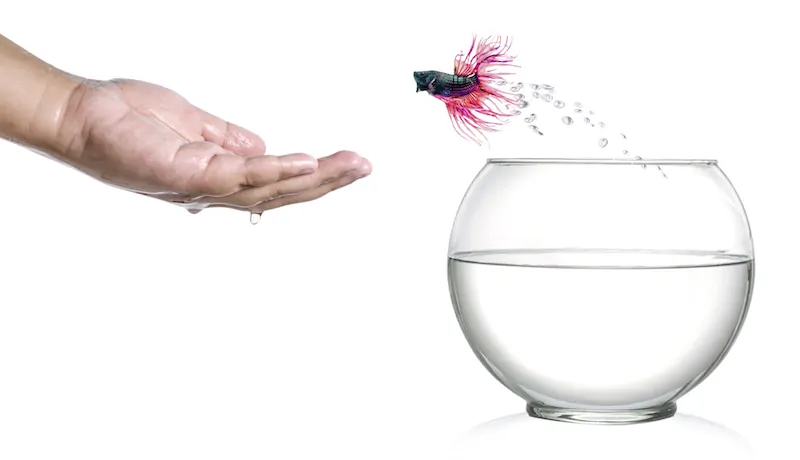
Betta fish are naturally playful, curious, and surprisingly intelligent. These traits, combined with their food motivation and bold personalities, make them one of the few aquarium fish that can genuinely be trained to perform tricks. Training your betta provides mental stimulation, strengthens your bond, and gives you a fascinating party trick to show visitors.
Why Training Works
In the wild, bettas jump to catch insects above the water surface. Training leverages these natural instincts alongside positive reinforcement (food rewards) to teach new behaviors. You’re not teaching them to do anything unnatural — just channeling existing behaviors.
Here’s a visual overview of the training techniques we’ll cover — feel free to save it for reference.
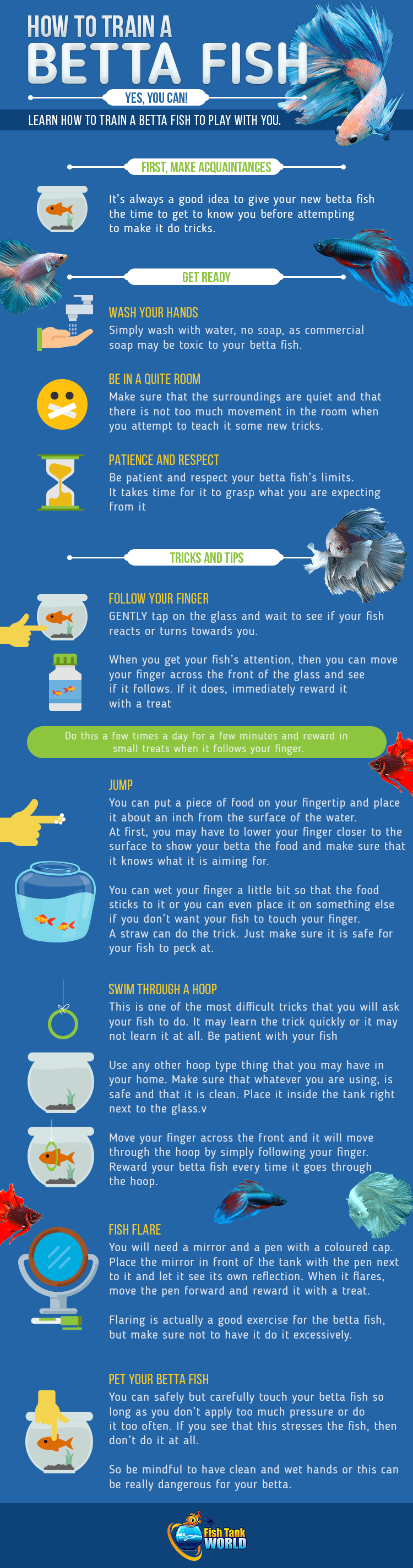
Save and share this betta training guide!
Love this guide? Share it on your website or blog with the embed code below.
<a href="https://fishtankworld.com/train-betta-fish/" target="_blank" rel="noopener"><img src="https://fishtankworld.com/images/fish/betta/how-to-train-betta/Betta-Fish-Training.png" alt="Betta fish training guide infographic showing key tips and tricks" style="max-width: 100%; height: auto;" /></a><p>Image credit: <a href="https://fishtankworld.com/train-betta-fish/">Fish Tank World</a></p>Before You Start: Building Trust
Training success depends on your betta trusting you. Before attempting any tricks, spend a week or two simply building a relationship.
Building Trust
- Approach the tank slowly without sudden movements
- Spend time near the tank so your betta associates you with safety
- Feed at consistent times so your betta anticipates your presence positively
- Avoid tapping the glass aggressively or startling your fish
- Let your betta approach your hand at the surface voluntarily
Once your betta swims toward you when you approach the tank and shows interest rather than fear, you’re ready to start training.
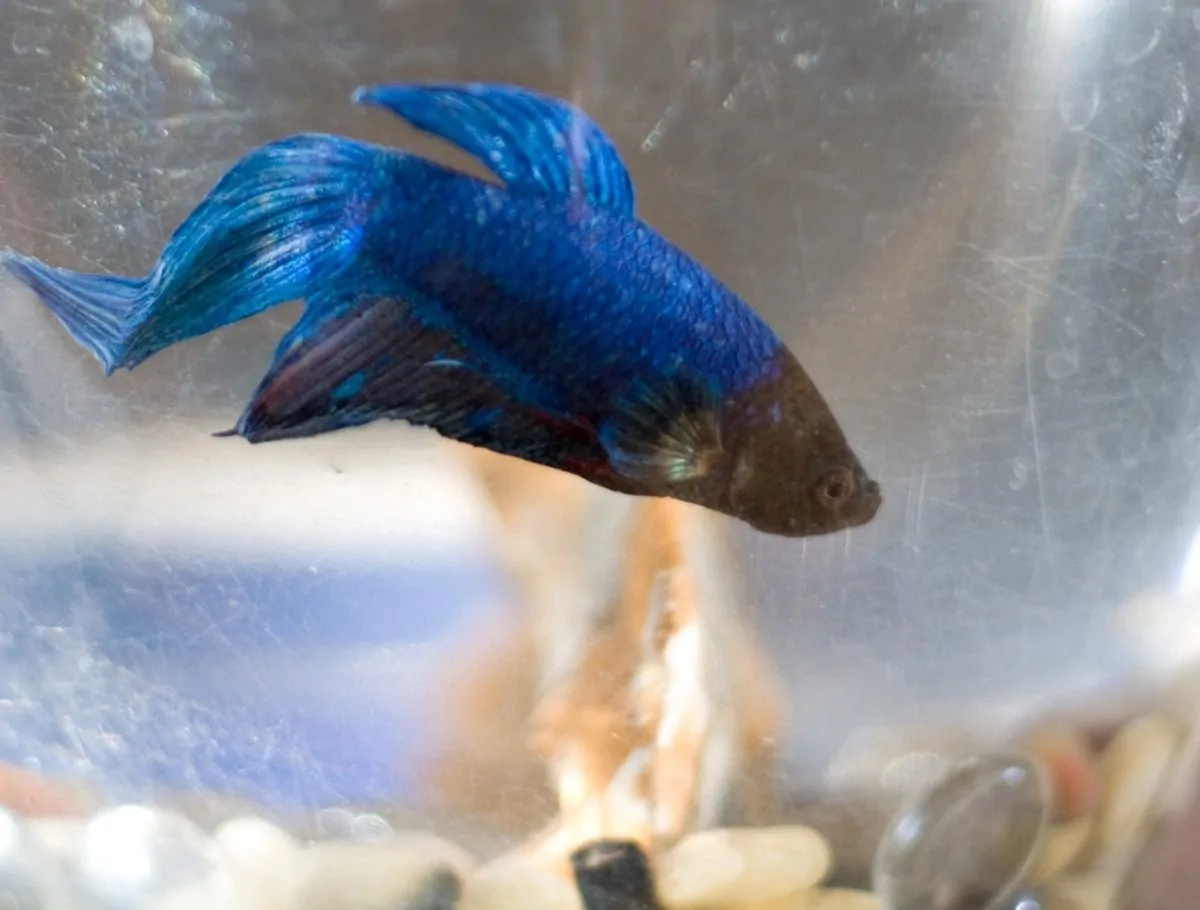
Bettas recognize their owners and will approach the glass when they see familiar faces — a sign of trust.
Training Preparation
Set yourself up for success before each training session.
Pre-Training Checklist
- Wash hands thoroughly with water only — soap residue is toxic to fish
- Choose a quiet time with minimal household activity
- Have treats ready — freeze-dried bloodworms work excellently
- Ensure the tank environment is calm with no recent water changes or disturbances
- Plan for short sessions of 3-5 minutes maximum
Important
Never withhold regular meals to force your betta to perform tricks. Training treats should be in addition to normal feeding, or use a small portion of their regular meal as the training reward. A hungry, stressed betta won’t learn.
Trick 1: Follow Your Finger
This is the easiest trick and a great starting point. Most bettas learn this within a few days.
Teaching the Follow
Get your betta's attention
Place your finger on the outside of the glass where your betta can see it. Wait for them to notice and approach.
Move slowly
Once your betta is watching, slowly move your finger along the glass horizontally. Move at a pace your betta can easily follow.
Reward immediately
When your betta follows your finger even a short distance, reward with a small treat dropped at the surface where they followed to.
Gradually increase distance
Over several sessions, require longer follows before rewarding. Eventually your betta should follow your finger across the entire tank front.
Add patterns
Once basic following is mastered, try circles, figure-eights, and up-and-down patterns. Always reward success.
Trick 2: Jump for Food
Jumping comes naturally to bettas who hunt insects at the water surface. This trick leverages that instinct.
Teaching the Jump
Start close to the surface
Hold a bloodworm or pellet in your fingers just barely above the water surface — almost touching it.
Let them grab it
Your betta should take the food easily at this height. Repeat several times so they understand food comes from your fingers.
Gradually increase height
Over multiple sessions, raise the food slightly higher — quarter inch, half inch, then one inch above the water.
Be patient
Your betta may take time to attempt actual jumps. Keep the environment quiet and give them time to build confidence.
Reward every success
Each successful jump should be rewarded. If they miss, lower the food slightly to rebuild confidence.
Safety Note
Once your betta learns to jump, ensure you have a lid on the tank. Bettas can jump 2-3 inches when motivated and may jump out of an uncovered tank when startled or excited.
Trick 3: Swim Through a Hoop
This impressive trick takes more time but is achievable with patience.
Teaching the Hoop Swim
Create a safe hoop
Use a pipe cleaner bent into a circle, or a plastic ring. Ensure there are no sharp edges that could injure your betta's delicate fins.
Start with the hoop against the glass
Position the hoop flat against the front glass with an opening your betta can easily swim through.
Combine with finger following
Use the follow-your-finger trick to guide your betta through the hoop. Reward immediately when they pass through.
Gradually move the hoop away from glass
Over sessions, position the hoop further into the tank so your betta must swim through open water.
Add distance and complexity
Eventually, hold the hoop at varying positions and have your betta swim through from different angles.
Optional: Make the hoop smaller
Once your betta is comfortable, you can gradually reduce hoop size for a more impressive trick.
Trick 4: Flare on Command
Male bettas flare their gills and fins to appear larger and more intimidating. You can teach them to do this on command using visual cues.
Teaching the Flare
Use a mirror initially
Place a small mirror against the tank glass. Your betta should flare at their reflection within seconds.
Add a visual cue
While your betta is flaring at the mirror, hold a colored object (like a pen cap) near the mirror consistently.
Reward the flare
After a few seconds of flaring, remove the mirror and reward with a treat.
Transition to cue only
Over time, try showing just the colored object without the mirror. If your betta flares, reward immediately.
Maintain with intermittent use
Occasionally use the mirror to reinforce the behavior, but the goal is flaring when they see the colored cue alone.
Flaring Limits
Limit flaring exercises to 1-2 minutes per session and not more than once daily. Extended flaring is stressful and exhausting for bettas. A brief display is enriching; prolonged exposure to their reflection causes chronic stress.
Can You Pet Your Betta?
Technically yes, but it should be done rarely and carefully. Bettas have a protective slime coat that covers their scales and protects against disease. Handling can damage this coating.
If you want to interact physically:
- Ensure hands are clean, wet, and completely free of soap or lotion
- Let the betta approach you — never chase them
- Touch briefly and gently
- Limit physical contact to occasional interactions, not daily handling
Most bettas actually prefer not to be touched and bond better through visual interaction and feeding routines.
Training Tips for Success
Keys to Successful Training
- Keep sessions short — 3-5 minutes maximum
- Practice at the same time each day for consistency
- End on a success — if your betta is struggling, simplify the task so they can succeed before stopping
- Use high-value treats like bloodworms for training, not regular pellets
- Be patient — some bettas learn faster than others
- Watch for stress signs and stop immediately if you see them
- Celebrate progress — even small improvements deserve rewards
Have Fun!
Training should be enjoyable for both you and your betta. If either of you seems frustrated, take a break and try again tomorrow. The goal is enrichment and bonding, not performance perfection. Your betta’s wellbeing always comes first.
About Betta Fish
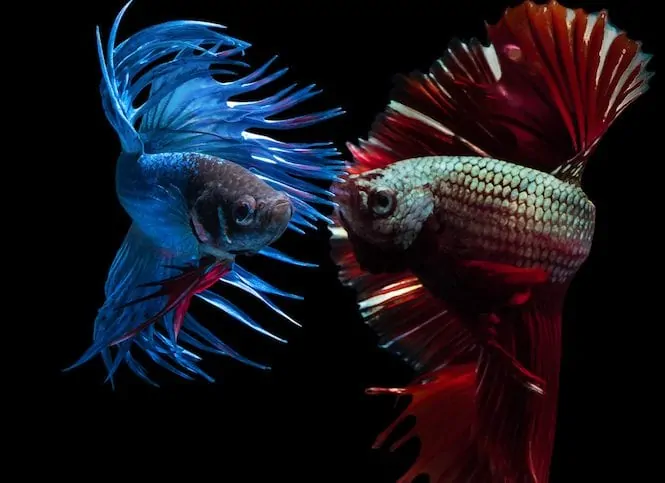
Female bettas can sometimes be kept together in sororities, though males must be housed alone.
Betta fish (Betta splendens), also called Siamese fighting fish, originate from Southeast Asia — particularly Thailand, Vietnam, and Cambodia. In the wild, they live in shallow rice paddies, ponds, and slow-moving streams.
Males are highly territorial and will fight other males, which is why they should be kept alone or with carefully chosen tank mates. Females can sometimes be kept together in groups of three or more (called sororities) with adequate space and hiding places.
Bettas require at least a 5-gallon tank with filtration and heating (75-80°F). Despite the myth, they do not thrive in tiny bowls or vases. A properly housed, well-fed betta is more active, colorful, and receptive to training than one kept in inadequate conditions.
Conclusion
Betta fish are smart, curious, and trainable. With patience, consistency, and positive reinforcement, you can teach your betta to follow your finger, jump for treats, swim through hoops, and flare on command. Keep sessions short, always reward success, and prioritize your fish’s wellbeing over trick performance. Training creates enrichment that benefits both you and your betta.
Are betta fish smart enough to be trained?
Yes, bettas are among the most intelligent aquarium fish. They can recognize their owners, learn routines, and be trained to perform simple tricks through positive reinforcement. Their natural curiosity and food motivation make them excellent candidates for training.
How long does it take to train a betta fish?
Most bettas learn basic tricks like following your finger within a few days of consistent practice. More complex behaviors like jumping or swimming through hoops may take 1-2 weeks. Keep training sessions short (3-5 minutes) and practice daily for best results.
Can you touch a betta fish?
You can briefly and gently touch a betta with clean, wet hands, but frequent handling should be avoided. Bettas have a protective slime coat that can be damaged by handling, making them vulnerable to infections. If you must touch your betta, ensure your hands are free of soap, lotion, and other chemicals.
Will training stress my betta fish?
Done properly, training actually enriches your betta's life and reduces boredom. However, avoid long sessions (over 5 minutes), never withhold food to force compliance, and stop immediately if your betta shows stress signs like hiding, clamped fins, or rapid breathing. A stressed betta won't learn effectively anyway.
Related Topics
Found this helpful?
Share this guide with your fellow aquarium enthusiasts!
Written by
FTW Team
The FishTankWorld editorial team brings together experienced aquarists to help you succeed in the hobby.