
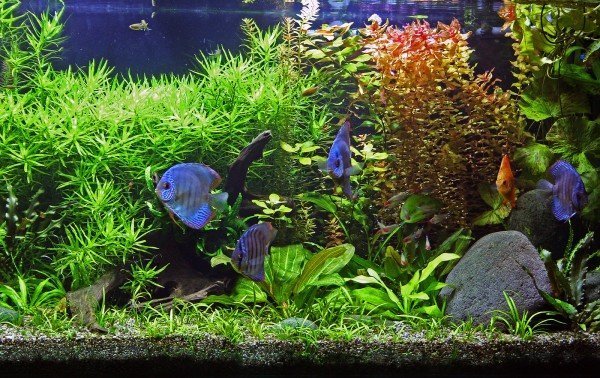
A fish tank that cleans itself — feed your fish and never worry about water changes, algae, or filter maintenance. That’s what self-cleaning fish tanks promise, and it’s easy to see why the idea is so appealing. Nobody gets into fishkeeping because they love scrubbing glass and vacuuming gravel.
Several self-cleaning fish tanks are available on Amazon right now, ranging from tiny aquaponics kits to small tanks with built-in filtration. Some of them are genuinely clever. But before you buy one, you should know what you’re actually getting — because the reality of self-cleaning fish tanks is more complicated than the marketing suggests.
The Short Version
Commercial self-cleaning fish tanks exist, but they’re small, have mixed reviews, and still require regular maintenance. For a truly low-maintenance aquarium, building your own self-sustaining planted tank is more effective and often cheaper. We cover both options below.
How Self-Cleaning Fish Tanks Work
Self-cleaning fish tanks use one of two main approaches to reduce maintenance:
Aquaponics systems grow plants on top of or beside the tank. Fish waste provides nutrients for the plants, and the plant roots filter the water in return. This is the same natural cycle that keeps lakes and ponds healthy — fish waste breaks down into ammonia, beneficial bacteria convert it to nitrate, and plants absorb nitrate as fertilizer. Aquaponics tanks are the closest thing to a genuinely self-cleaning system because the plants do real biological filtration.
Filtration-based systems use built-in mechanical and biological filters to process waste. These are standard aquarium filters packaged into a compact all-in-one design. While good filtration reduces maintenance, calling these “self-cleaning” is a stretch — every aquarium with a filter could make that claim.
Some older designs used gravity-drain systems where you pour fresh water in the top and dirty water drains out the bottom. These have mostly fallen out of favor because they disrupt beneficial bacteria colonies and require water additions every few days.
Self-Cleaning Fish Tanks Worth Considering
Here’s an honest look at the self-cleaning options currently available. These are the products that at least attempt genuine self-cleaning functionality — not just standard tanks with filters rebranded as “self-cleaning.”
Aquaponics Seed Sprouter Fish Tank
This compact aquaponics system pairs a small fish tank with a seed sprouter tray on top. Fish waste fertilizes the sprouts, and the plant roots help filter the water — a genuine aquaponics cycle in a small package. The manufacturer claims 50% fewer cleanings compared to traditional tanks, and the sprouting tray can grow herbs, microgreens, and wheatgrass.
- Real aquaponics system — plants genuinely filter the water
- Grows edible sprouts and microgreens
- Educational — great for kids learning about ecosystems
- Compact desktop size
What Reviews Say:
- Pump reliability is a common complaint — motors can stop working
- Assembly can be tedious
- Mixed results on fish health — the tank is very small
- Some find maintenance harder than expected despite 'self-cleaning' label
At 3.9 stars with mixed reviews, this is best treated as a sprouting kit that happens to have fish, rather than a serious aquarium. If you’re interested in aquaponics as a concept or want an educational project for kids, it’s a reasonable entry point. For long-term fishkeeping, the tank is too small to maintain stable water parameters.

AquaSprouts Garden
The AquaSprouts Garden takes a different approach — instead of providing the fish tank, it’s an aquaponics grow bed that sits on top of any standard 10-gallon aquarium. You supply the tank, and AquaSprouts provides the grow bed, pump, timer, and clay grow media. This gives you a much larger water volume than the all-in-one kits, which means more stable water chemistry and room for multiple fish.
- Works with standard 10-gallon tanks — much more water volume
- Grows herbs, lettuce, and other edible plants
- Timer-controlled pump cycles water to the grow bed
- Modular design lets you upgrade the tank later
Keep In Mind:
- Aquarium tank sold separately — factor that into the total cost
- Requires cycling time before adding fish (2-4 weeks)
- Grow bed sits on top, limiting access to the tank below
- Still needs feeding, water top-offs, and occasional plant maintenance
The AquaSprouts Garden is the most legitimate self-cleaning option on this list because of the larger tank volume. A 10-gallon tank with an aquaponics grow bed can genuinely reduce water changes and maintain healthier water. It’s not hands-off, but it’s a real step toward lower maintenance.

3.7 Gallon “Self-Cleaning” Betta Tank
This glass aquarium comes with a built-in filter, LED light with adjustable colors, and a water pump. The “self-cleaning” claim comes from its combination of physical and biological filtration — filter cotton removes debris while beneficial bacteria process waste.
- Glass construction (better than acrylic alternatives)
- Includes filter, LED, and pump in one kit
- Adjustable LED colors
- 3.7 gallons — larger than most self-cleaning tanks
Being Honest:
- This is a standard filtered fish tank — not genuinely self-cleaning
- 3.6 star average with mixed reviews on build quality
- Still requires regular water changes, filter maintenance, and feeding
- 3.7 gallons is still small for stable water parameters
Let’s be straightforward: this tank has a filter. That’s standard aquarium equipment, not self-cleaning technology. It’s a fine starter kit if you want a small betta tank with everything included, but don’t buy it expecting less maintenance than any other small filtered aquarium.

2.5 Gallon Aquaponics Betta Kit
This kit combines a 2.5-gallon tank with an aquaponics growing system, heater, filter, LED lighting, and accessories like a net and gravel cleaner. The idea is that plants grow from the top and clean the water while the fish waste feeds them.
- Most complete starter kit — includes heater, filter, LED, and accessories
- Aquaponics growing system for plants
- Waterfall feature adds visual interest
- Everything you need in one box
The Catch:
- 3.0 star average — lowest-rated option on this list
- 2.5 gallons is very small for any fish
- Aquaponics at this scale has limited effectiveness
- Heater and filter quality concerns at this price point
At 2.5 gallons with a 3.0-star rating, this is the weakest option here. The aquaponics concept is sound, but the tiny water volume severely limits how well the system can balance itself. If a 2.5-gallon kit appeals to you, consider spending the same money on a standard 5-10 gallon setup instead — your fish will be healthier and you’ll have fewer problems.

Why Most Self-Cleaning Fish Tanks Disappoint
After looking at what’s available, a pattern emerges. Here’s why most people end up frustrated with commercial self-cleaning fish tanks.
They’re Too Small
The biggest problem is tank size. Most self-cleaning tanks are 1-4 gallons. Small tanks are harder to maintain, not easier. In a tiny volume of water, ammonia and toxins build up fast, temperature swings are dramatic, and there’s no buffer for mistakes. A single missed feeding or a hot afternoon can crash the entire system.
Experienced aquarists actually consider small tanks more difficult than large ones. The smaller the tank, the less forgiving it is. This is exactly the opposite of what beginners expect when they buy a “self-cleaning” tank hoping for easy fishkeeping.
The Self-Cleaning Label Is Misleading
A tank with a filter isn’t self-cleaning — it’s just a tank with a filter. Every aquarium sold at pet stores comes with or recommends filtration. Rebranding standard equipment as “self-cleaning” sets unrealistic expectations. Buyers think they’re getting something that requires no effort, and then they’re disappointed when they still need to do water changes, clean filter media, and manage water chemistry.
Even the genuine aquaponics models still need regular attention. You’ll feed the fish, top off evaporated water, trim plants, clean pumps when they clog, and test water parameters. “Reduced maintenance” is accurate. “Self-cleaning” is not.
Fish Health Suffers
Amazon reviews for self-cleaning tanks consistently mention fish dying. This isn’t coincidence — it’s a predictable result of keeping fish in tiny, unstable environments. Betta fish, the most common species kept in these tanks, need a minimum of 5 gallons to thrive. Most self-cleaning tanks are half that size or less.
The constant water parameter fluctuations in small volumes stress fish, weaken their immune systems, and shorten their lifespans. A betta in a well-maintained 10-gallon tank can live 3-5 years. The same betta in a 2-gallon self-cleaning tank often lasts months.
| Commercial Self-Cleaning | Standard 10-Gallon Setup | |
|---|---|---|
| Tank Size | 1-4 gallons typically | 10 gallons |
| Actual Maintenance | Still needs feeding, top-offs, cleaning | Weekly water change, monthly filter rinse |
| Water Stability | Unstable — small volume swings fast | Stable — large volume buffers changes |
| Fish Health | Stressed, shortened lifespan | Healthy, natural behavior |
| Fish Options | Single betta at most | Multiple species, schooling fish |
| Cost | $30-80 for a tiny kit | $40-60 for tank + filter + heater |
| Long-Term Satisfaction | Often abandoned within months | Rewarding hobby that grows with you |
A Better Alternative: Build Your Own Self-Cleaning Aquarium
Here’s what most self-cleaning fish tank articles won’t tell you: you can build a genuinely self-sustaining aquarium for the same price as these commercial kits — and it actually works.
The concept is simple. Instead of relying on a gimmicky product, you create a balanced ecosystem where live plants, beneficial bacteria, and cleanup crew species handle most of the waste processing naturally. This is how lakes and ponds stay clean without anyone doing water changes — and you can recreate that balance in your living room.
A planted aquarium with the right setup can go weeks between water changes. Some hobbyists with well-established systems only top off evaporated water and perform occasional maintenance every month or two. That’s genuinely lower maintenance than any commercial self-cleaning tank.
What You Need
The basic setup is surprisingly affordable:
- A 20-gallon tank — larger volume means more stable, forgiving water chemistry
- A simple hang-on-back filter — provides water movement and houses beneficial bacteria
- Fine sand or plant substrate — anchors plants and supports bacterial colonies
- Fast-growing live plants — hornwort, java fern, and anubias absorb waste as fertilizer
- A pothos cutting from a hardware store — stick the roots in the water and watch it devour nitrates
- A few Nerite snails — they handle algae so you don't have to scrub glass
- API Freshwater Master Test Kit — monitor water quality, especially during the first few months
The total cost is often comparable to a commercial self-cleaning kit, but you get a 20-gallon ecosystem instead of a 2-gallon gadget. Your fish are healthier, your water is more stable, and the system genuinely maintains itself once established.
Why This Approach Works
The secret is live plants — especially emergent plants that grow above the water with their roots dangling into the tank. Pothos, philodendron, and lucky bamboo absorb ammonia, nitrite, and nitrate directly from the water, converting fish waste into new growth. Because their leaves are above water with unlimited access to CO2, they grow faster and pull more waste out of the water than any commercial self-cleaning mechanism.
All you need to get started is a cheap pothos cutting from a hardware store and a couple of clip-on plant holders. Clip them to the rim of your tank, drop the roots in, and you’ve got a living filter that looks beautiful and costs almost nothing. Within weeks, you’ll notice clearer water and less algae — the plants are outcompeting algae for the same nutrients.

A couple of these holders with pothos or philodendron cuttings will do more for your water quality than any of the commercial self-cleaning tanks listed above — and for a fraction of the price. Add a cleanup crew of Nerite snails, Corydoras catfish, and maybe some cherry shrimp, and you’ve got a team that handles algae, leftover food, and detritus. Combine that with beneficial bacteria in your filter and substrate, and the ecosystem practically runs itself.
The Easiest Way to Start
Don’t overthink it. Get a 20-gallon tank, a basic filter, some java fern and hornwort, and clip a pothos cutting into the back. Let it cycle for a few weeks, add a few hardy fish and some Nerite snails, and you’re done. The system gets more stable over time — within 3-6 months, you’ll barely need to touch it.
We wrote a complete step-by-step guide that walks you through the entire process — from choosing equipment and plants to selecting the right fish and establishing the ecosystem.
Build Your Own Self-Cleaning Aquarium
Our complete guide covers everything: equipment, plants, fish species, setup steps, and maintenance tips for a genuinely self-sustaining aquarium that works better than any commercial kit.
Frequently Asked Questions
Are self-cleaning fish tanks truly maintenance-free?
No. Every self-cleaning fish tank still requires feeding, water top-offs, and occasional cleaning. Aquaponics models reduce water changes but need plant care. Gravity-drain models require you to manually add fresh water every few days. The term 'self-cleaning' is marketing — no aquarium runs without some human involvement.
What size self-cleaning fish tank is best?
Most commercial self-cleaning tanks are 1-4 gallons, which is too small for stable water chemistry. If you want a genuinely low-maintenance aquarium, a 20-30 gallon tank with live plants and a simple filter provides a much more stable, forgiving ecosystem that requires less intervention than a tiny self-cleaning kit.
Can betta fish live in a self-cleaning fish tank?
Betta fish can survive in the 2.5-4 gallon self-cleaning tanks, but they won't thrive. Bettas prefer at least 5 gallons with a gentle filter, heater, and places to hide. The small volume of most self-cleaning tanks makes water parameters unstable, which stresses bettas and shortens their lifespan.
What's the best alternative to a self-cleaning fish tank?
A planted aquarium of 20+ gallons with live plants, a simple hang-on-back filter, and a few cleanup crew species like Nerite snails and Corydoras catfish. This setup handles most waste naturally and can go weeks between water changes once established. See our full guide on how to build a self-cleaning aquarium for step-by-step instructions.
Do aquaponics fish tanks really clean themselves?
Aquaponics tanks reduce cleaning by using plant roots to absorb fish waste as fertilizer. This does genuinely reduce water changes compared to a bare tank. However, these systems still need feeding, occasional water top-offs, plant trimming, and pump maintenance. They're lower-maintenance, not no-maintenance.
Related Topics
Found this helpful?
Share this guide with your fellow aquarium enthusiasts!

Written by
Ynes Carrillo
Ynes grew up in the Andes mountains of Venezuela, where she spent decades as a teacher and cultivated a lush garden of native and non-native plants around her backyard fish pond. She holds a Master's degree in Education and now lives in Texas, where she keeps a low-tech planted aquarium and tends a vegetable garden. Though retired from the classroom, Ynes channels her lifelong passion for teaching into helping others succeed with fishkeeping and aquatic plants.