
Aquarium salt reduces osmotic stress, treats parasitic and fungal infections, and provides emergency nitrate protection in freshwater tanks. However, there is no scientific consensus on whether routine salting benefits freshwater fish. The one universally accepted use is short-term treatment for parasites and disease. This guide covers the science behind aquarium salt, proper dosing, species compatibility, and the risks of long-term use so you can decide whether salt belongs in your tank.
The One Thing Everyone Agrees On
Aquarium salt can eradicate external parasites and fungal infections when used carefully for short periods. Beyond that therapeutic use, the aquarium hobby remains deeply divided on whether freshwater tanks benefit from salt at all.
What Is Aquarium Salt?
Aquarium salt is evaporated seawater processed without additives like iodine or anti-caking agents. The term covers several salt types used in fishkeeping, but not all are interchangeable.
Salt Types for Aquarium Use
- Freshwater aquarium salt (tonic salt) — evaporated seawater without iodine or anti-caking agents. API Aquarium Salt is the most widely available brand.
- Non-iodized rock salt and kosher salt — pure sodium chloride (NaCl) without harmful additives. An acceptable substitute when aquarium-specific salt is unavailable.
- Marine salt — a complex mineral blend formulated for saltwater aquariums. Not suitable for freshwater use because it alters water chemistry beyond sodium chloride levels.
Only freshwater aquarium salt or non-iodized rock salt are appropriate for freshwater tanks. Never use table salt — the iodine and anti-caking agents it contains can poison fish.
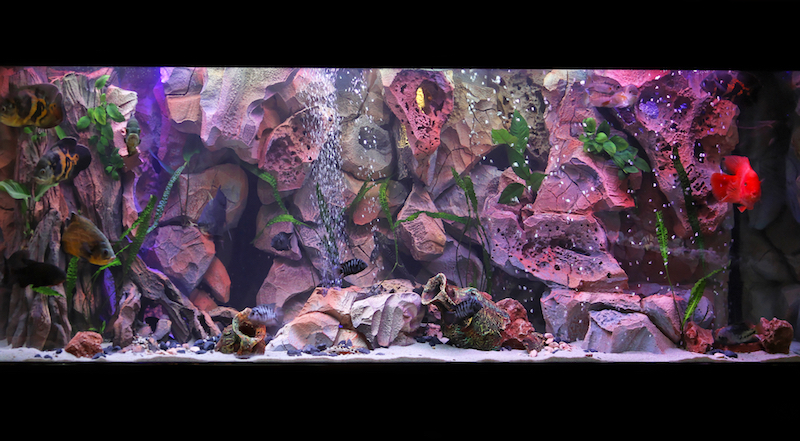
Cichlids are among the more salt-tolerant freshwater species, but even they don't require aquarium salt under normal conditions.
How Aquarium Salt Affects Osmoregulation
Aquarium salt changes the osmotic balance between a freshwater fish’s body and its surrounding water. Freshwater fish are naturally saltier than the water they inhabit, so their bodies constantly take in water through osmosis while losing salts through their gills. Fish counteract this by producing large amounts of dilute urine to expel excess water — a process called osmoregulation.
Adding aquarium salt to freshwater reduces this concentration difference. The fish expends less energy managing its salt-water balance, which proponents argue reduces stress during transport, acclimation, and illness. Aquarium salt also stimulates production of the protective slime coat that covers fish skin, providing an additional physical barrier against parasites and bacteria.
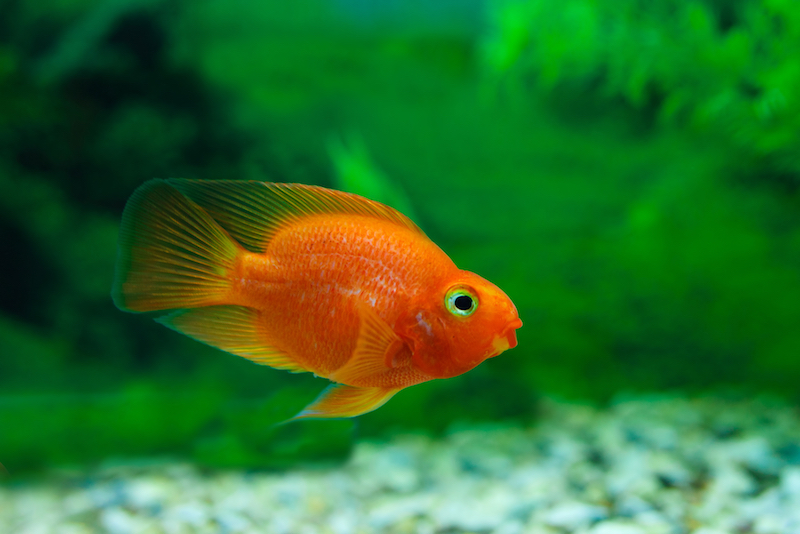
Blood parrot cichlids and other cichlid species tolerate low aquarium salt concentrations better than most freshwater fish.
Aquarium Salt for Nitrate Emergencies
Aquarium salt creates a chloride ion barrier that prevents freshwater fish from absorbing nitrates through their gills. This makes aquarium salt a valuable emergency tool during filter failures, power outages, or nitrogen cycle crashes when nitrate levels spike unexpectedly.
A typical emergency dose is one teaspoon of aquarium salt per 300 gallons of tank water. This concentration provides protective chloride ions without stressing most freshwater species.
Emergency Measure Only
Aquarium salt for nitrate poisoning is a temporary intervention, not a long-term solution. It does not remove nitrates from the water — it only blocks absorption through the gills. Fix the underlying filtration or maintenance problem immediately with water changes.
Aquarium Salt for Treating Parasites and Fungal Infections
Aquarium salt is most effective as a treatment for external parasites and fungal infections in freshwater fish. Salt disrupts the cellular osmotic balance in parasitic organisms, dehydrating them until they detach from the fish’s body. This mechanism is effective against common freshwater parasites including Ichthyophthirius multifiliis (ich), Chilodonella, and Trichodina.
Conditions Aquarium Salt Treats
- Ich (white spot disease) caused by Ichthyophthirius multifiliis — salt dehydrates the parasite at all life stages
- Velvet disease (Oodinium) — salt disrupts the parasite's osmotic function
- Protozoan parasites including Chilodonella and Trichodina
- Fungal infections on skin, fins, and gills
- Fin rot in early stages — salt inhibits bacterial growth while stimulating slime coat repair
Aquarium salt also stimulates the fish’s protective slime coat, reinforcing the body’s natural defense against reinfection. For severe or persistent infections, aquarium salt works best alongside dedicated medications rather than as a standalone treatment. After treating disease, follow proper post-disease aquarium cleaning procedures to prevent recurrence.
Aquarium Salt Dosing Guide
Aquarium salt dosing varies significantly by purpose. Using too little renders treatment ineffective; using too much stresses or kills fish. Always dissolve aquarium salt completely in a container of tank water before adding the solution to your aquarium.
General Tonic Dose
Some aquarists maintain a continuous low salt concentration for osmoregulation support. The most common tonic dose is 1 tablespoon of aquarium salt per 5 gallons of water. More conservative aquarists use as little as 1 teaspoon per 300 gallons.
Disease Treatment Dose
For treating parasites or fungal infections in the main tank, add aquarium salt gradually to reduce shock. Dissolve half the target dose on day one, then add the remaining half 48 hours later. A standard treatment concentration is 1 tablespoon per 3 to 5 gallons.
Medicinal Salt Bath Dose
Medicinal salt baths use the highest concentration: 4 teaspoons of aquarium salt per gallon of water in a separate container. Bath duration ranges from 5 to 30 minutes depending on the fish species and severity of infection. Monitor fish constantly and remove immediately if the fish rolls over or shows extreme distress.
Salt Never Evaporates
Aquarium salt never evaporates from tank water. When water evaporates, the salt stays behind and the concentration increases. The only way to remove aquarium salt from your tank is through water changes. Always account for this accumulation effect when dosing — replace evaporated water with fresh, unsalted water.
Long-Term Risks of Aquarium Salt in Freshwater Tanks
Aquarium salt used chronically — weeks or months rather than days — poses specific health risks to freshwater fish. Unlike brackish or marine species, freshwater fish kidneys are not designed to process elevated sodium chloride levels continuously.
Risks of Long-Term Aquarium Salt Use
- Kidney damage — freshwater fish kidneys work constantly to expel excess water. Chronic salt exposure forces the kidneys to work differently, potentially causing permanent organ damage over time.
- Lateral line disruption — prolonged salt exposure can damage the lateral line sensory system that fish use to detect water movement, pressure changes, and nearby objects.
- Osmotic stress reversal — while short-term salt reduces osmotic pressure, long-term exposure forces fish to adapt their osmoregulation permanently, which can weaken their resilience when salt is eventually removed.
- Beneficial bacteria disruption — high salt concentrations can slow or kill the nitrifying bacteria in your biological filter, undermining the nitrogen cycle.
For these reasons, most experienced aquarists treat aquarium salt as a short-term medication rather than a permanent water additive. Return your tank to pure freshwater through gradual water changes after completing any salt treatment.
Three Schools of Thought on Freshwater Salting
The freshwater aquarium hobby divides into three camps on aquarium salt use:
1. Never Add Aquarium Salt
Many aquarists believe freshwater fish evolved in freshwater and should remain in it. Maintaining proper water parameters, performing regular water changes, and running a healthy biological filter eliminates any need for aquarium salt. This camp points to the long-term kidney and lateral line risks as reasons to avoid salt entirely.
2. Maintain Light Salting
Some hobbyists keep a very low aquarium salt concentration permanently, claiming fewer disease outbreaks and reduced fish stress. This approach is most common among keepers of salt-tolerant species like mollies and African cichlids, where the low concentration mimics their natural mineral-rich habitat.
3. Salt Only for Treatment
The middle-ground approach reserves aquarium salt exclusively as a short-term therapeutic tool for parasitic infections, fungal outbreaks, or nitrate emergencies. Once the condition resolves, these aquarists return the tank to pure freshwater through water changes. This is the most widely recommended approach in the fishkeeping community.
Which Fish Species Tolerate Aquarium Salt?
Aquarium salt tolerance varies dramatically across freshwater fish species. Before adding any salt, research the tolerance of every species in your tank — the most sensitive species determines your maximum safe concentration.
Salt-Tolerant Freshwater Fish
- Mollies and other livebearers — many naturally inhabit brackish coastal waters and thrive with low salt levels
- African cichlids — adapted to the mineral-rich waters of Lakes Malawi, Tanganyika, and Victoria
- Goldfish — tolerate short-term aquarium salt treatment well for ich and other parasites
- Brackish-water species like archerfish, monos, and scats
Salt-Sensitive Freshwater Fish
- Corydoras catfish — a 2003 University of North Carolina study (Murphy and Lewbart) found Corydoras aeneus tolerated up to 0.2% salinity, but higher concentrations caused distress
- Most other catfish species including plecos — their scaleless skin absorbs salt rapidly
- Loaches — react negatively even to low aquarium salt concentrations
- Tetras and other soft-water South American species — a 2002 study by Rothen et al. found Black Widow Tetras began showing stress at concentrations above 1 part per thousand
- Barbs — generally intolerant of added aquarium salt
- Koi — despite being closely related to goldfish, koi are notably more salt-sensitive
- Most wild-caught species from soft, acidic Amazonian or Southeast Asian waters
Fry (baby fish) are less tolerant of aquarium salt than adult fish of the same species. Research by Rothen et al. (2002) showed that Blue Gourami, Zebra Danio, Black Widow Tetra, and Buenos Aires Tetra fry all tolerated concentrations up to 1 part per thousand, but tetras and danios began suffering at higher doses. Keep aquarium salt below 1 part per thousand in any tank containing fry.
Is Aquarium Salt Safe for Aquarium Plants?
Aquarium salt damages most freshwater aquarium plants through the same dehydration mechanism it uses against parasites. Salt pulls water out of plant cells, causing wilting, browning, and eventually death. The lethal concentration for many popular aquarium plant species occurs around 1,000 micrograms per liter — a threshold easily reached with even light routine salting.
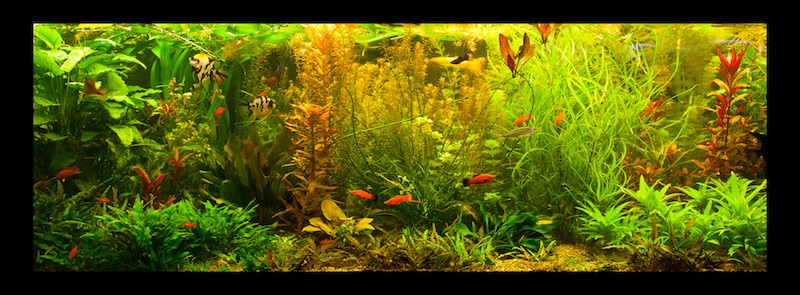
Planted freshwater aquariums and aquarium salt are incompatible. Even low concentrations damage or kill most aquatic plants.
Never Salt Planted Tanks
Aquarium salt kills most freshwater aquarium plants. Algae also dies immediately upon salt exposure, but losing desirable plants is not worth this side effect. For disease treatment in planted tanks, move sick fish to a separate hospital tank for salt treatment. Read our low-tech planted aquarium guide for plant-safe disease prevention strategies.
Is Aquarium Salt Safe for Freshwater Invertebrates?
Aquarium salt is dangerous to nearly all freshwater invertebrates. Freshwater snails are extremely sensitive — even low aquarium salt concentrations that most fish tolerate easily can be lethal to snails within hours. Freshwater shrimp species including Cherry Shrimp (Neocaridina davidi) and Amano Shrimp (Caridina multidentata) are similarly intolerant.
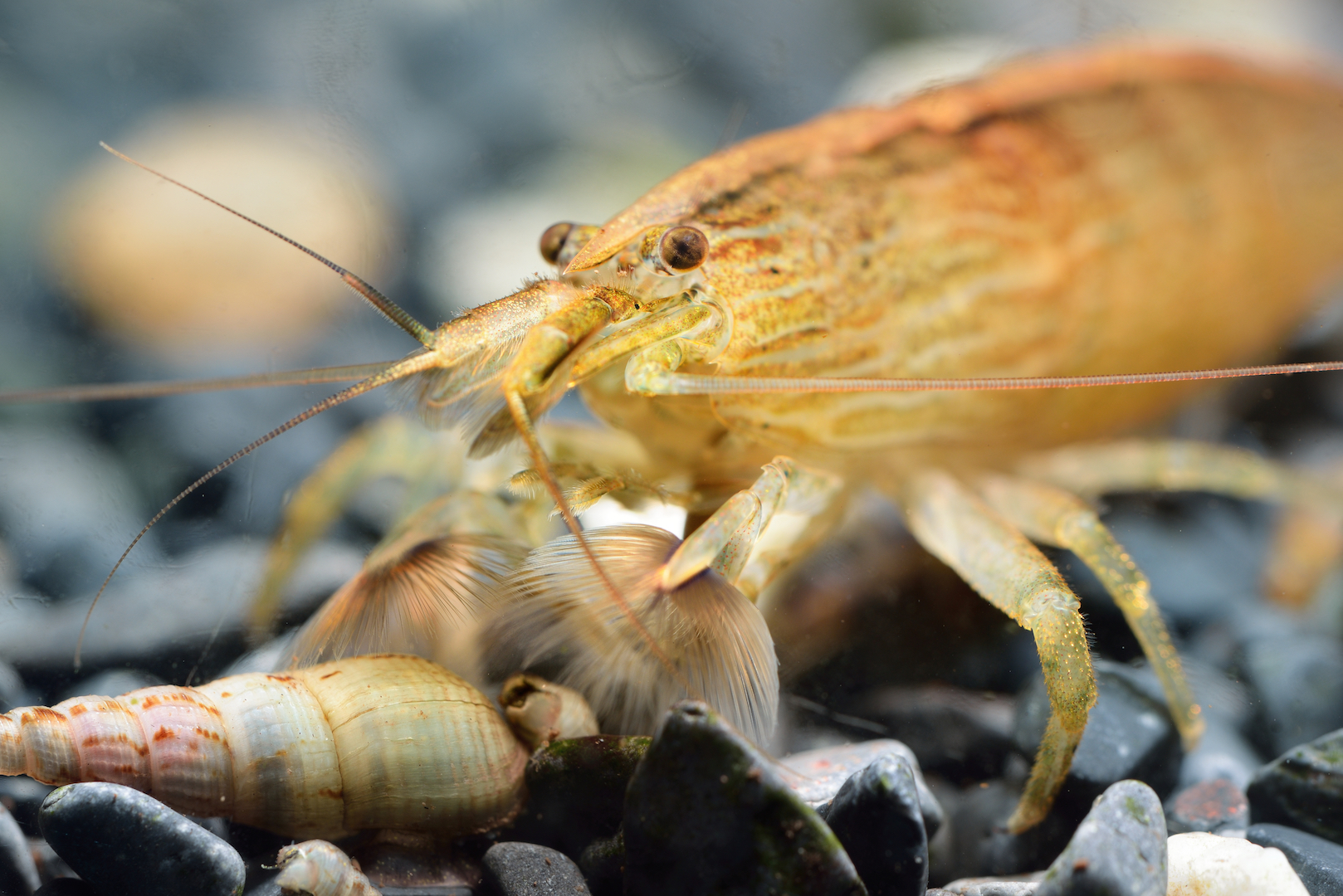
Freshwater shrimp and snails cannot tolerate aquarium salt. Always use a separate hospital tank when salt-treating fish from invertebrate tanks.
If you keep snails, shrimp, crayfish, or other freshwater invertebrates alongside fish, never add aquarium salt to the main tank. Treat fish in a separate hospital tank and return them only after completing a freshwater rinse.
How to Add Aquarium Salt to Your Tank
Aquarium salt must be dissolved and added gradually to prevent osmotic shock. Never pour undissolved aquarium salt crystals directly into an aquarium — they can burn fish skin and gills on contact.
Step-by-Step Tank Salting
- Calculate your tank’s actual water volume by subtracting space occupied by substrate, decorations, and equipment
- Measure the correct amount of aquarium salt for your target dose
- Dissolve the aquarium salt completely in a bucket of tank water — stir until no crystals remain
- Add half the dissolved solution to the tank on day one
- Wait 48 hours, then add the remaining half
- Monitor fish closely for stress signs: erratic swimming, gasping at the surface, or loss of equilibrium
- Remove aquarium salt gradually through regular water changes when treatment is complete
How to Perform a Medicinal Salt Bath
- Fill a clean container with water from the aquarium to match temperature and pH exactly
- Dissolve 4 teaspoons of aquarium salt per gallon and stir thoroughly until fully dissolved
- Place the fish gently into the salt bath
- Watch the fish constantly — if it rolls over, sinks, or shows extreme distress, remove it immediately
- After 5 to 30 minutes (depending on species tolerance and condition severity), transfer the fish to a quarantine tank containing fresh, unsalted water
- Treat the original tank with appropriate medication if needed, following post-disease cleaning procedures
Conclusion
Aquarium salt serves a specific, valuable role in freshwater fishkeeping: short-term treatment for parasites, fungal infections, and nitrate emergencies. Beyond that therapeutic use, there is no scientific consensus supporting routine salting of freshwater aquariums. Long-term aquarium salt exposure carries documented risks including kidney damage and lateral line disruption in freshwater fish.
The safest approach for most freshwater aquariums is to keep aquarium salt on hand as a treatment tool but maintain your tank with pure freshwater through consistent water changes, proper filtration maintenance, and good overall husbandry. If you do use aquarium salt, research every species in your tank first, never exceed the lowest recommended dose for your most sensitive species, and avoid salt entirely in planted tanks or tanks with invertebrates.
Is aquarium salt the same as table salt?
No. Aquarium salt is evaporated seawater without additives. Table salt contains iodine and anti-caking agents that can harm fish. Use only products labeled for aquarium use — such as API Aquarium Salt — or pure non-iodized rock salt and kosher salt.
How much aquarium salt should I add to my freshwater tank?
Dosing depends on purpose. For general tonic use, 1 tablespoon per 5 gallons is a common starting dose. For medicinal salt baths, dissolve 4 teaspoons per gallon in a separate container for 5 to 30 minutes. Always start with the lowest effective dose.
Will aquarium salt kill my aquarium plants?
Most freshwater aquarium plants are salt-intolerant. Concentrations around 1,000 micrograms per liter can be lethal to many species. If you need to treat fish with salt, remove plants first or use a hospital tank.
Does aquarium salt evaporate from the tank?
No. Salt never evaporates from aquarium water. When water evaporates, the salt stays behind and concentration increases. The only way to remove salt is through water changes — replace evaporated water with fresh, unsalted water.
Can I use aquarium salt with Corydoras catfish?
Corydoras catfish tolerate very low salt concentrations — up to 0.2% according to a 2003 University of North Carolina study — but higher doses are harmful. Most aquarists avoid salt entirely with Corydoras and use a separate hospital tank for salt treatments.
Is long-term use of aquarium salt safe for freshwater fish?
No. Chronic salt exposure can cause kidney damage and disrupt the lateral line sensory system in freshwater fish. Aquarium salt should be used as a short-term treatment, not as a permanent additive. Return the tank to pure freshwater through water changes after treatment.
Can aquarium salt treat ich in freshwater fish?
Yes. Aquarium salt disrupts the osmotic balance of the ich parasite (Ichthyophthirius multifiliis), dehydrating it at all life stages. A common treatment dose is 1 tablespoon per 5 gallons combined with gradually raising water temperature to 78-80°F over 48 hours.
Related Topics
Found this helpful?
Share this guide with your fellow aquarium enthusiasts!

Written by
Ynes Carrillo
Ynes grew up in the Andes mountains of Venezuela, where she spent decades as a teacher and cultivated a lush garden of native and non-native plants around her backyard fish pond. She holds a Master's degree in Education and now lives in Texas, where she keeps a low-tech planted aquarium and tends a vegetable garden. Though retired from the classroom, Ynes channels her lifelong passion for teaching into helping others succeed with fishkeeping and aquatic plants.