
The best tank mates for Oranda goldfish are other fancy goldfish varieties — Pearlscales, Ryukins, Lionheads, Black Moors, and Bubble-Eyes — plus compatible coldwater species like White Cloud Mountain Minnows, Dojo Loaches, and Mystery Snails. Oranda goldfish are gentle, slow-moving fish with distinctive fleshy head growths called “wens” and flowing four-lobed tails that fan out beautifully when the fish glides to a stop. You can’t just mix and match any fish you like — the wrong companions will outcompete, stress, or injure your Orandas.
This guide covers 12 tank mates that work well with Orandas, organized by category: fancy goldfish varieties, compatible schooling fish, bottom dwellers, and invertebrates.
The Golden Rule of Oranda Compatibility
Oranda goldfish cannot compete with fast swimmers. Their elaborate finnage and wen-covered heads limit both speed and vision. Every tank mate on this list shares one critical trait: they won’t outcompete your Oranda for food or space. When in doubt, stick to other fancy goldfish varieties with similar body shapes.
Why Oranda Goldfish Need Special Tank Mates
Oranda goldfish differ from common and comet goldfish in ways that directly affect compatibility. The Oranda’s egg-shaped body produces drag that limits swimming speed, while the wen growth can partially obstruct vision as the fish matures. These physical traits mean Orandas cannot chase down food, escape aggressive tank mates, or defend territory the way streamlined goldfish can.
Oranda Traits That Affect Tank Mate Selection
- Slow swimming speed — egg-shaped body creates drag compared to streamlined goldfish
- Reduced vision — wen growth can partially cover eyes in mature specimens
- Delicate fins — long, flowing finnage is susceptible to nipping and damage
- Peaceful temperament — Orandas rarely show aggression toward other fish
- Heavy waste production — requires strong filtration and adequate tank volume
Tank Mates to Avoid
Common goldfish, comet goldfish, shubunkin goldfish, and sarasa goldfish are all too fast and aggressive for Orandas. These streamlined varieties create a physical shoving match at every feeding — they’ll consume food before your slower Orandas even reach it. Over time, this competition leads to malnutrition, stress, and potential physical injury to your fancy goldfish. Koi are also incompatible with Orandas due to their size and activity level — see our koi vs goldfish comparison for more on the differences between these species.
Incompatible Species
- Common goldfish — too fast, too large, aggressive feeders
- Comet goldfish — streamlined swimmers that dominate feeding time
- Shubunkin goldfish — active, competitive, will outpace fancy varieties
- Sarasa goldfish — strong swimmers that create feeding competition
- Tropical fish — require warmer water (75-80°F) incompatible with Orandas
- Fin-nipping species — barbs (except Cherry Barbs), tiger barbs, serpae tetras
Water Temperature Considerations
Oranda goldfish thrive in water between 65-72°F, which is cooler than most tropical fish require. Traditional goldfish keeping recommends 65-70°F, but fancy varieties like Orandas can comfortably handle temperatures up to 72°F without issues. This flexibility opens the door to a few non-goldfish species that tolerate cooler water, including White Cloud Mountain Minnows, Zebra Danios, and Dojo Loaches. Preventing extended overheating and maintaining adequate dissolved oxygen remain the primary concerns in any Oranda community tank.
Quick Compatibility Reference
Fancy Goldfish — Safest Choices
- Other Orandas — 65-72°F, grows 8-12 in, keep 1+
- Pearlscale Goldfish — 65-72°F, grows 6-8 in, keep 1+
- Ryukin Goldfish — 64-72°F, grows 6-10 in, keep 1+
- Lionhead Goldfish — 65-72°F, grows 5-8 in, keep 1+
- Black Moor Goldfish — 65-72°F, grows 6-8 in, keep 1+
- Bubble-Eye Goldfish — 65-72°F, grows 5-6 in, needs smooth tank decor
Non-Goldfish — Compatible Coldwater Species
- White Cloud Minnows — 64-72°F, stays 1.5 in, school of 6+
- Zebra Danios — 64-74°F, stays 2 in, school of 5+
- Cherry Barbs — 68-72°F, stays 2 in, school of 6+
- Dojo Loach — 50-72°F, grows 6-12 in, group of 3+
- Bristlenose Pleco — 60-80°F, grows 4-5 in, keep 1+
- Mystery Snails — 68-82°F, 2 in shell, keep 1+
Fancy Goldfish Tank Mates
Fancy goldfish varieties make the safest and most reliable Oranda goldfish tank mates. These species share the same egg-shaped body type, similar swimming limitations, and identical water requirements. For most fishkeepers, a properly set up goldfish aquarium housing multiple fancy varieties provides the best long-term results. Browse all of our goldfish care guides for species-specific advice.
1. Other Oranda Goldfish
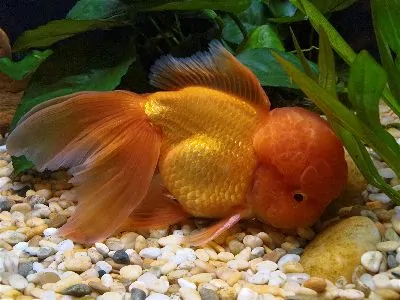
Oranda goldfish are 100% compatible with other Orandas — the safest tank mate choice
Oranda goldfish are 100% compatible with other Orandas — this is the single safest tank mate choice. Orandas never fight with their own kind, share identical care requirements, and allow you to create a stunning multi-colored display in a single tank. Available Oranda color varieties include redcap, calico, tigerhead, chocolate, panda, tri-color, blue, and the classic red-and-white. A tank featuring three or four different Oranda varieties creates a display that rivals saltwater aquariums in visual appeal.
Oranda goldfish reach 8-12 inches as adults and need 20-30 gallons per fish. A pair of Orandas does best in a 40-55 gallon tank with filtration rated for double the tank volume. For a detailed breakdown of goldfish care requirements, including why these fish need more space than most people expect, see our complete guide.
2. Pearlscale Fancy Goldfish
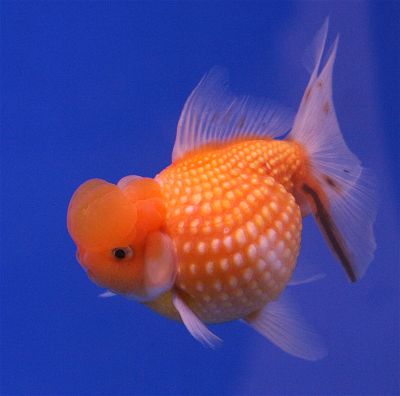
Pearlscale goldfish feature raised, pearl-like scales and the same slow swimming speed as Orandas
Pearlscale goldfish feature distinctive raised scales that shimmer with a pearlescent sheen, giving this variety its name. Their egg-shaped bodies and straight backs create a round, almost spherical profile that limits swimming speed to roughly the same pace as Orandas. Pearlscale goldfish are available in calico, red, blue, red-and-white, black, and chocolate color varieties, with Crown Pearlscales featuring an oranda-like wen on top of the head.
Pearlscale goldfish share the Oranda’s water requirements (65-72°F, pH 6.5-7.5) and reach 6-8 inches as adults. Their gentle temperament and matching swimming limitations make Pearlscales one of the most harmonious tank mates for Oranda goldfish.
3. Ryukin Fancy Goldfish
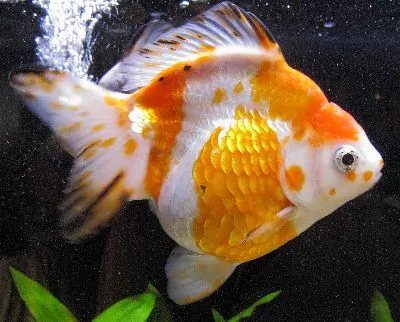
Ryukin goldfish are slightly more active than Orandas but still compatible due to their fancy body shape
Ryukin goldfish display a distinctive high-backed, hump-shaped body profile with graceful split tails that trail behind them as they swim. Ryukins are slightly more active than Orandas — they’re among the hardiest fancy goldfish varieties — but their rounded body shape still prevents them from outcompeting Orandas during feeding. Ryukin goldfish are available in calico, red, red-and-white, tri-color, and chocolate varieties.
Ryukin goldfish tolerate water temperatures between 64-72°F and grow to 6-10 inches. Their non-aggressive nature and fancy goldfish body type make them reliable long-term Oranda companions. Ryukins are often recommended as good starter fancy goldfish because of their hardiness, which also means they adapt well to community setups.
4. Lionhead Fancy Goldfish
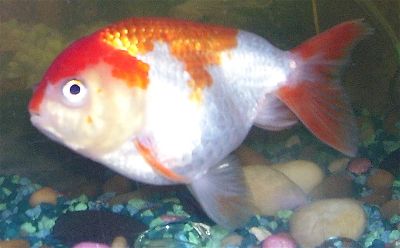
Lionhead goldfish share the Oranda's slow swimming style and are often confused with redcap Orandas
Lionhead goldfish are sometimes confused with redcap Orandas because both varieties develop fleshy head growths. The key difference is that Lionhead goldfish completely lack a dorsal fin, making them even slower swimmers than Orandas. Their egg-shaped bodies feature a hood-like growth that covers the entire head, mimicking the appearance of Chinese lion-dogs — the source of their common name.
Lionhead goldfish require the same water conditions as Orandas (65-72°F, pH 6.5-7.5) and reach 5-8 inches. Because Lionheads swim more slowly than most other fancy goldfish, they pair especially well with Orandas in tanks where food competition is a concern. Lionheads are not ideal for beginners due to their fragility, but experienced goldfish keepers find them rewarding companions.
5. Black Moor Goldfish
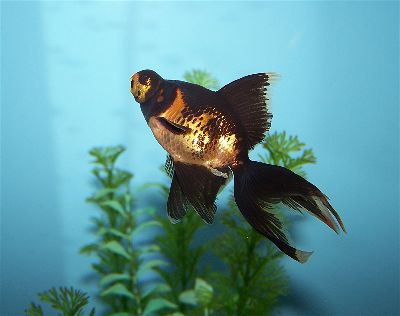
Black Moor goldfish have limited vision from their telescope eyes, making them natural Oranda companions
Black Moor goldfish feature rounded bodies, long flowing fins, and distinctive protruding telescope eyes that develop as the fish matures. Juvenile Black Moors start with a bronze coloration that deepens to a velvety black over several months. The telescope eye structure limits the Black Moor’s field of vision, creating swimming patterns and feeding behavior remarkably similar to Orandas with developed wens.
Black Moor goldfish thrive in water between 65-72°F and grow to 6-8 inches. Their reduced vision means Black Moors need placement with non-aggressive species that won’t outcompete them for food — exactly the same requirement as Orandas. For detailed care information, including tips on maintaining their signature black coloration, see our Black Moor goldfish care guide.
6. Bubble-Eye Goldfish
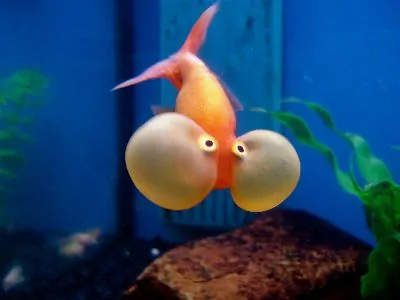
Bubble-Eye goldfish are among the most delicate fancy varieties — handle with care in community setups
Bubble-Eye goldfish are among the most unusual and delicate fancy goldfish varieties, featuring fluid-filled sacs that develop near the eyes and grow larger with age. These sacs can interfere with the fish’s vision and make Bubble-Eyes extremely weak swimmers that prefer slow water movement and calm tank mates. Bubble-Eye goldfish lack a dorsal fin and have egg-shaped bodies that further limit their mobility.
Bubble-Eye Safety Requirements
Bubble-Eye goldfish require aquariums with no sharp decorations, rough gravel, or strong filter intakes that could puncture their delicate eye sacs. If keeping Bubble-Eyes with Orandas, ensure every surface in the tank is smooth and rounded. Use sponge pre-filters on all intake tubes and avoid pointed driftwood or jagged rocks.
Bubble-Eye goldfish share Oranda water parameters (65-72°F, pH 6.5-7.5) and reach 5-6 inches. Their extreme fragility means they work best in dedicated setups, but in an appropriately designed tank, Bubble-Eyes coexist peacefully with Orandas.
Non-Goldfish Tank Mates
While most Oranda goldfish enthusiasts maintain dedicated goldfish-only tanks, several non-goldfish species can safely share space with Orandas. These species tolerate cooler water temperatures and won’t harass or outcompete your goldfish.
7. White Cloud Mountain Minnows
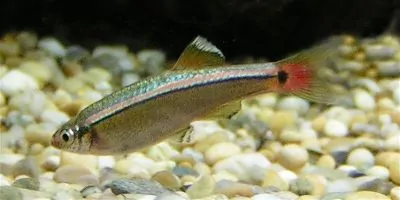
White Cloud Mountain Minnows are peaceful coolwater schooling fish that coexist well with Orandas
White Cloud Mountain Minnows (Tanichthys albonubes) are small, colorful members of the carp family native to the mountain streams of southern China. These peaceful schooling fish display a bright horizontal stripe along their body and red-tinted fins that add visual interest to a goldfish tank without any compatibility concerns. White Cloud Mountain Minnows stay small at 1.5 inches and school in groups of six or more.
White Cloud Mountain Minnows thrive in water between 64-72°F — a natural overlap with Oranda goldfish parameters. They’re quick enough to avoid being eaten but peaceful enough not to nip fins. Their small size means they don’t add significant bioload to the tank, though you should still maintain strong filtration for the Orandas’ waste output.
8. Zebra Danios
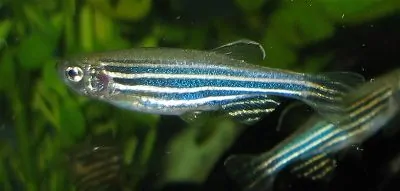
Zebra Danios are active schooling fish that prefer cooler temperatures compatible with goldfish
Zebra Danios (Danio rerio) are hardy schooling fish native to the Himalayan region, recognized by their five distinctive blue-and-silver horizontal stripes. These active swimmers prefer cooler temperatures around 64-74°F, placing them comfortably within Oranda goldfish range. Zebra Danios reach about 2 inches and should be kept in groups of five or more.
Zebra Danios are fast swimmers — fast enough that Oranda goldfish cannot catch them, which eliminates predation risk. They occupy the upper and middle water column, staying out of the Orandas’ typical cruising zone. While Zebra Danios are more energetic than goldfish, they direct that energy toward each other within their school rather than harassing tank mates.
9. Cherry Barbs
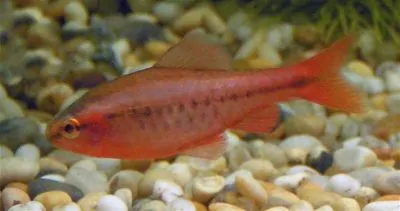
Cherry Barbs are one of the few barb species peaceful enough to keep with fancy goldfish
Cherry Barbs (Puntius titteya) stand apart from other barb species because they are genuinely peaceful toward other fish. Most barbs (tiger barbs, rosy barbs) are known fin-nippers, but Cherry Barbs display none of this behavior. Males develop a vivid cherry-red coloration during breeding condition, adding striking color contrast to a goldfish tank. Cherry Barbs grow to about 2 inches and prefer groups of six or more.
Cherry Barbs tolerate water temperatures between 68-79°F, with the lower end of their range overlapping Oranda goldfish conditions at 68-72°F. They occupy the middle water column and spend much of their time foraging among plants and decorations, rarely interacting directly with larger goldfish.
10. Dojo Loach (Weather Loach)
Dojo Loaches (Misgurnus anguillicaudatus), also called Weather Loaches, are one of the most commonly recommended non-goldfish tank mates for Orandas. These bottom-dwelling fish earned their “weather” nickname because they become noticeably more active before storms and barometric pressure changes. Dojo Loaches have a peaceful, almost docile personality and spend most of their time scavenging along the substrate.
Dojo Loaches thrive in cool water between 50-72°F — a perfect match for goldfish tanks. They reach 6-12 inches as adults and need a soft sand substrate to protect their sensitive barbels. Dojo Loaches are social and do best in groups of three or more. Their calm demeanor and bottom-dwelling habits mean they never compete with Orandas for food at the surface or mid-water column.
Substrate Matters for Dojo Loaches
Dojo Loaches burrow into substrate and use barbels to find food. Sharp gravel can damage these sensitive organs. Use fine sand or smooth rounded gravel if keeping Dojo Loaches with your Oranda goldfish.
11. Bristlenose Pleco
Bristlenose Plecos (Ancistrus sp.) are small, hardy algae-eating catfish that work well in goldfish tanks when the water temperature stays within their acceptable range. Unlike Common Plecos that grow over 18 inches and may develop a habit of sucking the slime coat off slow-moving goldfish, Bristlenose Plecos max out at 4-5 inches and focus almost exclusively on grazing algae from surfaces.
Bristlenose Plecos tolerate water between 60-80°F and prefer pH 6.5-7.5 — both compatible with Oranda goldfish conditions. They are nocturnal and spend daylight hours hiding in caves or under driftwood, emerging at night to graze on algae. Provide at least one cave or hiding spot per Bristlenose Pleco. Their peaceful bottom-dwelling behavior means they never compete with Orandas at feeding time.
Invertebrate Tank Mates
12. Mystery Snails
Mystery Snails (Pomacea bridgesii) are large, peaceful freshwater snails that make excellent Oranda goldfish tank mates. Their shells grow to roughly 2 inches in diameter — large enough that Orandas cannot eat them. Mystery Snails come in gold, ivory, blue, purple, and black shell colors, adding visual variety to the tank while providing functional algae control.
Mystery Snails thrive in water between 68-82°F with a pH of 7.0-7.5. They graze continuously on algae, leftover food, and decaying plant matter, helping to keep the tank cleaner between water changes. Mystery Snails are completely peaceful and move too slowly to bother any fish. Keep calcium levels adequate (either through diet or mineral supplements) to support healthy shell growth.
Nerite Snails are another excellent option for Oranda tanks. Nerite Snails are even more effective algae eaters than Mystery Snails and stay slightly smaller at about 1 inch. They cannot reproduce in freshwater, which prevents unwanted snail population explosions. Avoid smaller snail species like pond snails or Malaysian Trumpet Snails, as goldfish may attempt to swallow them.
Tank Size for Oranda Community Tanks
Oranda goldfish produce heavy waste and grow larger than most fishkeepers initially expect. A community tank with Orandas needs generous space to maintain water quality and reduce stress.
Minimum Tank Sizes for Oranda Communities
- Two Orandas alone — 40-55 gallon tank minimum
- Two Orandas + small schooling fish — 55 gallon tank minimum
- Three fancy goldfish varieties — 55-75 gallon tank minimum
- Oranda community with bottom dwellers — 55-75 gallon tank minimum
- Each additional fancy goldfish — add 10-20 gallons
For guidance on selecting the right aquarium and equipment for your goldfish community, see our goldfish aquarium setup guide.
Feeding in Mixed Oranda Tanks
Feeding time is where Oranda goldfish compatibility matters most. Even with appropriate tank mates, you need to ensure slower Orandas get their fair share. Oranda goldfish with heavily developed wens may have particularly poor vision, making them the last to reach food in a mixed tank.
Feeding Strategies for Oranda Community Tanks
- Use sinking pellets to reach slower bottom-feeding Orandas
- Drop floating food at one end to distract faster fish, then feed Orandas at the other
- Feed in multiple locations spread across the tank
- Target-feed individual Orandas with feeding tongs for heavily wen-covered specimens
- Feed smaller meals 2-3 times daily rather than one large feeding
For a comprehensive breakdown of goldfish nutrition, including the best commercial foods and fresh food options, see our complete guide to feeding goldfish.
Final Recommendations
A dedicated fancy goldfish tank housing Orandas alongside other fancy varieties like Pearlscales, Ryukins, and Black Moors remains the safest and most rewarding approach for most fishkeepers. This eliminates dietary incompatibility, temperature mismatches, and stress from mixed-species dynamics.
If you want to add non-goldfish species, White Cloud Mountain Minnows, Dojo Loaches, and Mystery Snails are the three lowest-risk options. These species have been kept successfully with goldfish by hobbyists for decades and share overlapping water parameters with minimal conflict.
Whichever combination you choose, provide adequate space with strong filtration, perform regular water changes, and monitor all fish for signs of stress, fin damage, or feeding competition. A well-planned Oranda community tank can thrive for years with the right tank mate selection.
Can Oranda goldfish live with tropical fish?
Oranda goldfish require cooler water temperatures between 65-72°F, which is too cold for most tropical fish that need 75-80°F. Orandas also swim slowly and cannot compete with faster tropical species at feeding time. Stick to coldwater-compatible tank mates like other fancy goldfish, White Cloud Mountain Minnows, or Dojo Loaches.
How many Oranda goldfish can live together?
Oranda goldfish need 20-30 gallons per fish due to their adult size of 8-12 inches and heavy waste production. A 55-gallon tank can comfortably house 2-3 adult Orandas with proper filtration. Always provide more space than you think necessary, as Orandas grow larger than most new fishkeepers expect.
Can Orandas live with common goldfish?
Common goldfish, comets, and shubunkins are too fast and competitive for Orandas. These streamlined varieties outcompete Orandas at every feeding, creating a physical shoving match that delicate fancy goldfish cannot handle. Only keep Orandas with other slow-moving fancy varieties or compatible coldwater species.
Do Oranda goldfish need tank mates?
Oranda goldfish are social fish that benefit from companions but do not strictly require tank mates. A single Oranda can live healthily in a properly sized tank. However, most Orandas show more active and natural behavior when kept with at least one other fancy goldfish of similar size and temperament.
Can snails live with Oranda goldfish?
Mystery Snails and Nerite Snails make excellent Oranda goldfish tank mates. Both species tolerate the same cool water temperatures, help control algae growth, and are too large for Orandas to eat. Avoid smaller snail species like pond snails or Malaysian Trumpet Snails, which goldfish may attempt to swallow.
What size tank do I need for Oranda goldfish with tank mates?
A community tank with Oranda goldfish should be at least 40-55 gallons for two Orandas plus tank mates. Add 10-20 gallons per additional fancy goldfish and 5-10 gallons for groups of smaller species like White Cloud Mountain Minnows or Cherry Barbs. Larger tanks provide better water quality and reduce aggression.
Related Topics
Found this helpful?
Share this guide with your fellow aquarium enthusiasts!
Written by
FTW Team
The FishTankWorld editorial team brings together experienced aquarists to help you succeed in the hobby.