An aquarium that cleans itself. Sounds like a dream, doesn’t it?! Regular aquariums require water changes every week or two, substrate cleaning, and constant filter maintenance. That’s a lot of work — and all that disruption can stress your fish.
That’s why we created this step-by-step guide to help you build a self-cleaning aquarium that requires minimal maintenance. With the right equipment, plants, and fish species, you can build a self-sustaining aquarium that practically takes care of itself.
What 'Self-Cleaning' Really Means
A self-sustaining aquarium still requires some care — you’ll need to feed fish, top off evaporated water, and perform occasional small water changes. The goal is minimizing maintenance by creating a balanced system, not eliminating it entirely.
🎉 Before we dive in: a quick thank you to the 25,000+ people who’ve saved and shared this guide — your support means everything.
How Self-Cleaning Aquariums Work
Building a self-sustaining aquarium requires the careful selection of three elements working together in complete harmony:
The Three Pillars
- Specialized control equipment — filters, lighting, and temperature controllers
- Live plants — absorb nutrients from fish waste and produce oxygen
- Compatible fish species — produce waste that feeds the cycle without overwhelming it
Fish waste breaks down into ammonia, which beneficial bacteria convert to nitrite and then nitrate. Plants absorb nitrates as fertilizer, completing the cycle. When balanced correctly, this natural process keeps water clean with minimal intervention.
Every element plays a role — compatible fish that won’t eat each other, air pumps providing oxygen, and controllers maintaining the right temperature. When these work together, the tank practically runs itself.
Why You May Want a Self-Cleaning Aquarium
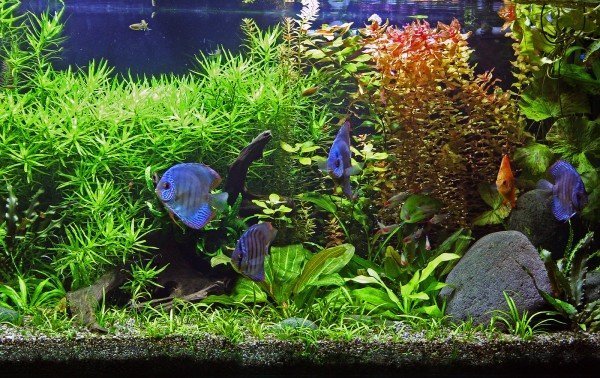
A self-cleaning aquarium combines the right equipment, plants, and fish to create a balanced ecosystem
Regardless of how big your aquarium is, keeping it clean takes time and energy. Just as you would clean up after a cat or take a dog out for a walk, taking care of fish requires cleaning air pumps, changing water filters, changing the water, and vacuuming the substrate from time to time. This is time-consuming and hard work.
Benefits
- Free up time to spend with family or pursue other hobbies
- Easier vacation planning — see our fish care while on vacation guide
- Lower ongoing costs — less spending on water treatments, filter replacements, and cleaning supplies
- Natural ecosystem that mimics wild habitats
Self-Cleaning vs Traditional Aquariums
Not sure which approach is right for you? Here’s how they compare.
| Self-Cleaning | Traditional | |
|---|---|---|
| Tank Size | 30+ gallons recommended | Any size works |
| Setup Time | 2-3 months to stabilize | Ready in a few weeks |
| Maintenance | Minimal once established | Regular water changes |
| Fish Selection | Hardy, low-bioload species | Wide variety |
| Upfront Cost | Higher | Lower |
| Ongoing Cost | Lower | Higher |
| Best For | Hands-off fishkeeping | Variety and control |
What You Need to Make a Self-Cleaning Aquarium
Building a self-cleaning aquarium from scratch requires the right equipment. Here’s what you’ll need.
Fish Tank
Tank size plays an important role — larger tanks generally work better than smaller tanks. We recommend something in the 30-100+ gallon range (see our guide on choosing the right aquarium size). Tanks in this size range have a more ideal water-to-fish-to-plant ratio.
Size Matters
Smaller tanks are harder to balance and less forgiving of mistakes. The larger the tank, the more stable the ecosystem becomes.
Substrate
Substrate has a bigger impact than most people realize. The sand, soil, and gravel at the bottom of your tank provide surface area for beneficial bacteria to colonize — the same bacteria that convert fish waste into plant food. Substrate also anchors rooted plants and, if you choose a nutrient-rich option, feeds them from below.
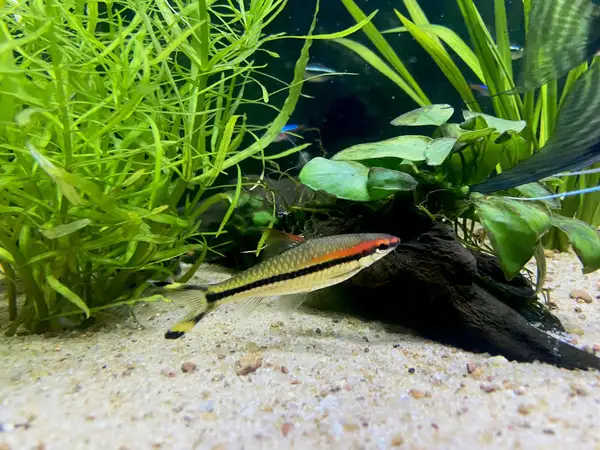
Sand substrate makes it easy for plants to root and keeps waste visible for your cleanup crew
Avoid large rocks and pebbles in a self-cleaning setup. The gaps between pebbles trap fish waste and uneaten food, throwing your system out of balance. Plants also struggle to root in coarse gravel. Fine sand or dedicated plant substrates work much better — waste stays on top where your cleanup crew can reach it, and plant roots spread easily. In a self-cleaning aquarium, harmony is everything.
Recommended Substrates
- Fluval Plant and Shrimp Stratum — excellent for planted tanks
- CaribSea Eco-Complete — contains beneficial bacteria
- Sand — low-cost, low-maintenance option that's easy on plant roots
Water
Many new hobbyists underestimate the importance of water quality — but it can make or break a self-cleaning aquarium. Tap water contains chlorine and chloramine — chemicals that kill the beneficial bacteria your system depends on. Always treat tap water with a dechlorinator before adding it to your tank.
For a balanced ecosystem, you’ll want to monitor four key parameters:
- Ammonia — should always be 0 ppm (toxic to fish)
- Nitrite — should always be 0 ppm (also toxic)
- Nitrate — keep under 20 ppm (plants absorb this)
- pH — 6.5-7.5 works for most freshwater species
A good water testing kit makes this easy. We recommend the API Freshwater Master Test Kit — it’s accurate, affordable, and lasts for hundreds of tests. Check your water weekly at first, then monthly once your system stabilizes.
Here’s a trick for jumpstarting your ecosystem: add a leaf or two from a local pond or stream. These leaves carry beneficial bacteria and microorganisms that help create a more diverse, resilient ecosystem in your tank. Nature has already done the hard work — you’re just borrowing some of it.
Top-Off vs Water Changes
When topping off evaporated water, use RODI or distilled water. Many times, tap water contains compounds that encourage algae growth and can raise nitrate levels. These compounds don’t evaporate with the water — they stay behind and accumulate each time you top off, slowly degrading your water quality.
For actual water changes, dechlorinated tap water is fine. Since you’re removing old water along with those accumulated compounds, then replacing it with fresh water, the system stays in balance. Your plants also benefit from the minerals in tap water that RODI lacks.
You don’t need an expensive RODI unit for top-offs — gallon jugs from the grocery store work fine and cost far less than “aquarium water” from big box pet stores.
Plants
Live plants are the secret weapon of a self-cleaning aquarium — plants do most of the cleaning work. Plants absorb nitrates, ammonia, and other nutrients to fuel their growth, directly outcompeting algae for the same resources. They feed on fish waste and uneaten food, converting what would be pollution into lush, green growth.
Picture a healthy lake or pond. Is it ever just water? No — it’s full of plants growing in and around it. Those natural bodies of water don’t need “water changes” because the ecosystem is balanced. Plants, fish, bacteria, and microorganisms all work together. That’s exactly what you’re recreating in your aquarium.
Plants Are Not Optional
In a self-cleaning setup, live plants aren’t decoration — they’re essential equipment. Without them, waste accumulates, algae takes over, and the system falls out of balance. More plants means more nutrient absorption and a more stable tank.
Fast-growing plants are your best cleaners. Stem plants like hornwort, water wisteria, and elodea grow quickly and pull the most nutrients out of the water. The faster they grow, the more waste they’re converting into plant mass. You can trim them regularly and remove that growth — you’re literally removing waste from the system.
Recommended Submerged Plants
- Java Moss — hardy, low-light tolerant, provides hiding spots
- Java Fern — grows attached to hardscape, minimal care needed
- Anubias — slow-growing, extremely hardy
- Hornwort — fast-growing, excellent at absorbing nutrients
- Amazon Sword — larger background plant
Check out our complete guide to low-light aquarium plants for more options.
Emergent Plants: The Ultimate Filter
Emergent plants — plants that grow above the water with their roots submerged — take self-cleaning aquariums to another level. If submerged plants are good, emergent plants are even better.
Emergent plants have unlimited access to CO2 from the air in your home, so they grow much faster than submerged plants. Faster growth means they’re pulling more nutrients out of your water. Their root systems dangle into the tank, acting as a natural filter that beneficial bacteria colonize. Some hobbyists run entire tanks with just emergent plants and no submerged plants at all.
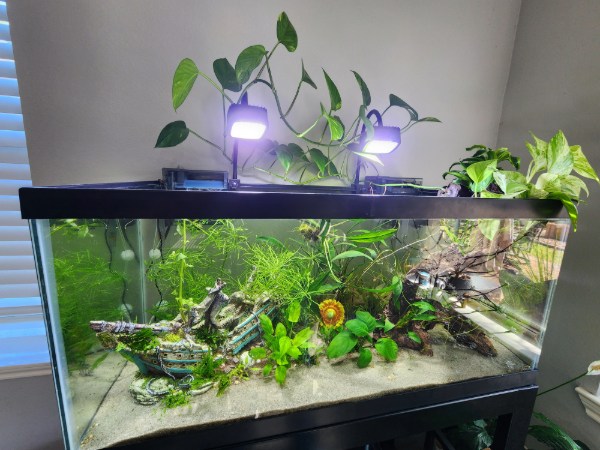
My own tank with pothos growing out the top — the roots act as a natural filter
Common emergent plants that thrive in aquarium setups:
Best Emergent Plants
- Pothos — almost impossible to kill, grows fast, roots love water
- Lucky Bamboo — adds height and visual interest
- Peace Lily — beautiful flowers, excellent nutrient absorption
- Philodendron — similar to pothos, very hardy
- Spider Plant — easy to find, propagates quickly
You don’t need anything fancy to get started. The simplest way is to use aquarium plant holders that clip onto the side of your tank. Just clip a pothos cutting from a houseplant, drop it in a holder, and let the roots grow into the water. You can also stick cuttings in your hang-on-back filter or wedge them behind your tank lid.
I often find great deals on potted pothos and philodendrons at local hardware stores and garden centers. When you get them home, carefully remove the plant from its pot — be gentle with the delicate roots. Give the roots a thorough rinse to wash away any soil or fertilizer residue. I typically keep new plants in a small bowl of water for a few weeks before adding them to my tank — this gives any remaining residue time to dilute out.
Within weeks you’ll see a difference in water clarity. This setup creates a beautiful, natural look that guests always ask about — and your tank practically maintains itself.
Filters
In a self-cleaning aquarium, the filter’s most important job isn’t mechanical filtration — it’s giving beneficial bacteria a place to thrive. The filter media provides surface area where bacteria colonies establish and process fish waste. More bacteria means a more stable system.
You don’t need a fancy, expensive filter. A simple hang-on-back (HOB) filter works great for most setups and is easy to maintain. Canister filters are overkill for most self-cleaning tanks unless you’re running a larger system. The filter I use in my tank (pictured above) is this HOB filter. I like it because it’s small, but the media compartment is big enough to fit biomedia, carbon if I want it, and a sponge. I typically only rinse one part of it every 4-6 months — that’s about as low-maintenance as it gets.
What to Look For
- Adjustable flow rate — lets you dial it down for a gentler current
- Room for extra filter media — more media means more bacteria
- Easy access for cleaning — you'll rinse media occasionally in tank water
The filter will still need your attention from time to time — rinse the media in old tank water (never tap water, which kills the bacteria) when flow slows down. Learn more in our guide on how to change filter media without losing bacteria.
Lighting
You don’t need fancy grow lights for a self-cleaning aquarium. In many cases, ambient light from a nearby window or the room itself is enough to keep low-light plants like java fern, anubias, and pothos happy.
The bigger concern is actually too much light. Excess light triggers algae blooms that throw your system out of balance — the opposite of what you want. If your tank gets direct sunlight or you’re running lights for more than 8-10 hours a day, you’ll likely end up battling algae.
Lighting Sweet Spot
Aim for 6-8 hours of light per day. A simple outlet timer makes this easy to manage. If you notice algae starting to take over, cut back your lighting hours before trying anything else.
If you do want a dedicated aquarium light, a basic LED will do the job. Look for one with adjustable brightness so you can dial it down if needed. Save the expensive planted tank lights for high-tech setups — they’re overkill for a low-maintenance self-cleaning system.
Livestock
The right fish don’t just live in your self-cleaning aquarium — they help run it. Some species actively contribute to the ecosystem by eating algae, cleaning up leftover food, and sifting through substrate. Choose wisely and your cleanup crew does half the work for you.
Mollies and Nerite snails can help you take care of algae — having a few of these is essential if you don’t want to scrub the tank every week. These critters take care of deposits that form on the glass, pumps, and filters. See our guide on fish that eat algae for more options.
Hoplo Catfish are excellent at picking up the remains of other tank mates’ food. Hoplo Catfish don’t care too much about water temperature but enjoy hiding spots, so they get along well with dense moss-like plants.
Putting a Self-Cleaning Aquarium Together
Step 1: Clean and Prepare the Tank
Once you’ve purchased a tank (hopefully at least a 40-gallon tank to give yourself room to work with), it must be cleaned thoroughly with water only — never use soap or chemicals. Several rinses and wipe downs should be enough to remove any leftover residue from the manufacturer or previous owner.
Step 2: Add Substrate
Use fine sand or a dedicated plant substrate — avoid rocks and pebbles that trap waste in the gaps. Aim for 2-3 inches of depth so plants can root properly. If you’re using plain sand with no added bacteria, rinse it thoroughly first to remove dust that would cloud your water. Many substrates designed for planted aquariums should not be rinsed before using, so always read the instructions for the specific type you purchased.
Step 3: Install Equipment
Now’s the time to set up your filter, heater, and any other equipment you purchased (air pump, thermometer, etc.). Position the filter where it’ll get good water flow, and place the heater near it so warmth circulates evenly. A simple stick-on thermometer works great for keeping an eye on temperature. You can also add any rocks or driftwood at this stage — it’s easier to arrange everything before the tank is full of water.
Step 4: Fill Slowly
Never pour water directly onto your substrate — the force will scatter it everywhere and cloud your tank for hours. Place a small bowl or plate at the bottom and pour into that, letting the water gently overflow. You can also pour onto a large rock or piece of driftwood to break the flow. Fill slowly and your carefully arranged substrate will stay exactly where you put it.
Step 5: Add Plants
Now’s the time to add your plants and hardscape. Start with driftwood and rocks to create the foundation of your design, then add your plants. For rooted plants like Amazon Swords and Crypts, bury just the roots and leave the crown (where leaves meet roots) exposed. Floating plants like Water Lettuce can simply be dropped on the surface. For emergent plants like Pothos, use aquarium plant holders to keep the roots submerged while leaves stay above water.
Driftwood and Brown Water
Driftwood releases tannins into your water, which can turn it a tea-like brown color. This is harmless to fish (some even prefer it), but if you want crystal-clear water, be aware that harder driftwood varieties can take 6-12 months or longer to fully leach out. Softer woods like Mopani leach faster. You can also pre-soak driftwood in a bucket for a few weeks before adding it to your tank.
Give plants a week or two to establish roots before adding any livestock.
Why Do My New Plants Look Like They're Dying?
Don’t panic if your new plants start to “melt” after a few weeks underwater. Most aquarium plants are grown in air by nurseries because they grow faster that way. When submerged, the plant sheds its air-grown leaves and grows new ones adapted for underwater life. It looks alarming, but it’s completely normal — healthy new growth will follow. If you want to skip this phase, look for plants at your local fish store that have already been submerged for a while.
Step 6: Cycle the Tank
Before adding any fish or invertebrates, your tank needs to develop beneficial bacteria that process waste — this is called cycling. These bacteria convert harmful ammonia (from fish waste) into nitrite, then into less harmful nitrate, which your plants absorb.
To cycle without risking any livestock, add a pinch of fish food every few days and let it decompose. This creates ammonia for bacteria to feed on. Use your API Freshwater Master Test Kit to monitor progress — you’ll see ammonia spike first, then nitrite, then both drop to zero as nitrates rise. When ammonia and nitrite consistently read 0 and you have some nitrates, your tank is cycled.
This process typically takes 2-6 weeks. The good news? All those plants you added are already helping by absorbing ammonia and giving beneficial bacteria surfaces to colonize. For a deeper dive into cycling methods, see our complete guide to cycling a freshwater aquarium.
Step 7: Introduce Fish
Once your tank is cycled (ammonia and nitrite at 0), you’re ready to add livestock. Start with a few hardy species — Nerite snails are great first additions since they immediately start cleaning algae and are tolerant of minor parameter swings. After a week or two, add your first fish. Mollies, Platies, and Corydoras are forgiving choices for a new tank.
When adding fish, float the sealed bag in your tank for 15-20 minutes to match temperatures, then gradually mix in small amounts of tank water before releasing them. Add only a few fish at a time, waiting a week or two between additions so your bacteria can adjust to the increased waste load.
Feed sparingly at first — overfeeding is the fastest way to crash a new system. Once your tank matures over the following months, you can add more sensitive species like cherry shrimp.
Patience Is the Secret Ingredient
A self-cleaning aquarium doesn’t happen overnight. Your tank needs time to reach balance — plants need to establish root systems, bacteria colonies need to grow, and the ecosystem needs to stabilize. The key is adding fish slowly so you don’t overwhelm the system. Add a few fish, let the ecosystem adjust for a couple weeks, then add more. Rushing this process is the fastest way to end up with a tank that needs constant intervention. Give it a few months and you’ll be rewarded with a balanced ecosystem where your main jobs are occasional water top-offs and the rare filter rinse.
Maintaining Self-Cleaning Aquariums
Once your tank reaches balance, you’ll be surprised how little you actually need to do. A well-established self-cleaning aquarium practically maintains itself — your plants consume the nitrates, your cleanup crew handles the algae, and beneficial bacteria process the waste. Your job becomes what it should be — enjoying your tank and watching the fascinating interactions between fish, plants, and invertebrates.
What You'll Actually Do
- Top off evaporated water with RODI water as needed
- Feed lightly every few days — your tank grows natural food too
- Small water changes (10-20%) as needed if nitrates get too high
- Rinse filter media in old tank water when flow slows
- Trim plants when they get overgrown
- Wipe the front glass if algae grows faster than your crew can eat it
Signs Your System Is Balanced
How do you know your self-cleaning tank is working? Nitrates stay low without frequent water changes. Algae grows slowly and your cleanup crew keeps up with it. Fish are active and healthy. Plants show steady growth. If you’re hitting these marks, you’ve done it — enjoy your low-maintenance tank and resist the urge to tinker.
If nitrates start climbing or algae gets out of control, your system is telling you something is off. Usually it’s overfeeding, too many fish, or not enough plants. Adjust the balance rather than throwing more maintenance at the problem.
The Best Fish for Self-Cleaning Aquariums
Maintaining the food chain isn’t the only concern for a self-sufficient aquarium. The fewer requirements your fish have, the easier it is to keep them healthy and thriving — and the less work you’ll have to do.
Here are some of the easiest freshwater fish that an owner can ask for. They don’t need much attention, yet they contribute to the sustainability of the ecosystem.
Mollies
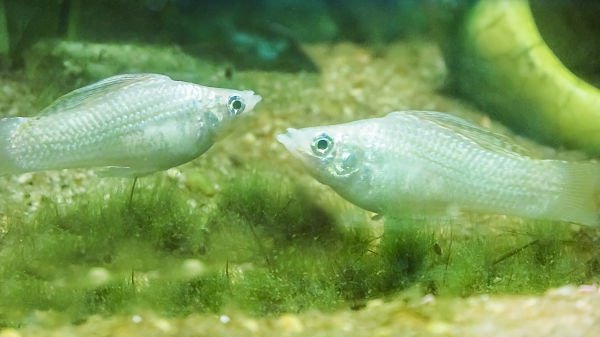
Mollies are adaptable algae-eaters that make excellent additions to self-cleaning tanks
Mollies are adaptable little guys that make friendly tank neighbors. Mollies lack aggression and love eating algae, helping keep your glass and decorations clean. Their peaceful nature makes Mollies a great addition to any aquarium, self-sustaining or otherwise.
Swordtails
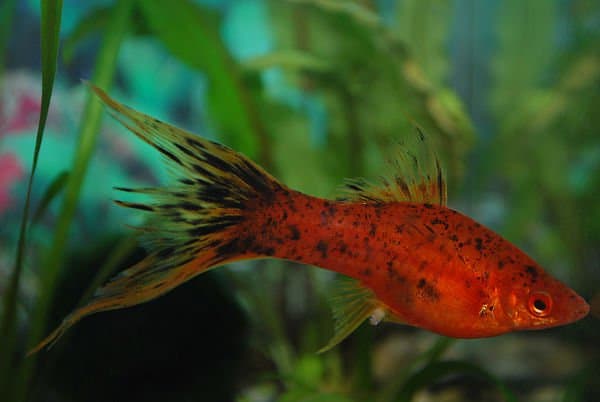
Swordtails add color and diversity while requiring minimal care
Swordtails bring color and diversity to any aquarium with their elongated, distinctive shape. Swordtails aren’t the best cleaners, but their passive nature makes them good companions. With long lifespans and flexible dietary needs, Swordtails are easy to keep happy.
Hoplo Catfish
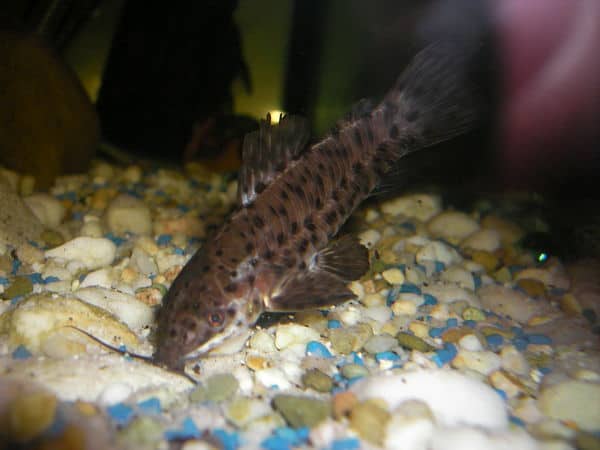
Hoplo Catfish are excellent bottom cleaners that consume leftover food and algae
Hoplo Catfish are the ideal cleaners for a fish tank — they take care of droppings from other fish and eat algae too. Hoplo Catfish may look a bit plain, but they make up for it with hard work.
Bristlenose Plecos
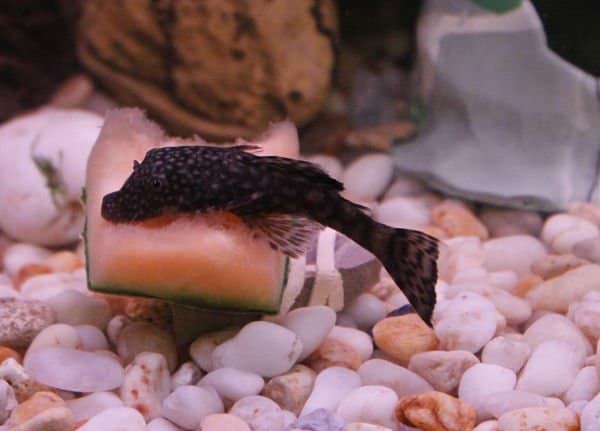
Bristlenose Plecos grow up to 6 inches and are voracious algae eaters
Bristlenose Plecos are weird-looking creatures that work great in any large-sized tank. Bristlenose Plecos grow up to 15cm (about 6 inches), move fast, and devour algae. Just make sure your tank produces enough algae to keep them fed.
Platies
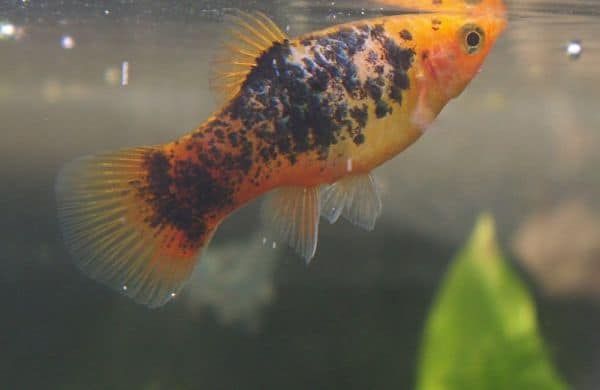
Platies come in multiple colors and eat anything including algae
Platies are colorful, low-maintenance fish that belong on your shopping list. Platies eat anything including algae and won’t bother other fish. Available in multiple colors, Platies can really make a tank look alive.
Bloodfin Tetras
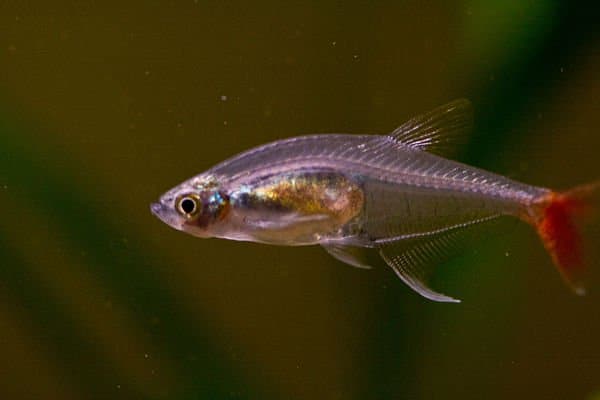
Bloodfin Tetras live over five years and thrive in groups
Bloodfin Tetras are two-inch fish with lifespans over five years. Bloodfin Tetras get more active in larger groups, and the more room they have, the bigger their visual impact. They require almost no care, and given their small size, Bloodfin Tetras won’t munch on your plants.
Neon Tetras
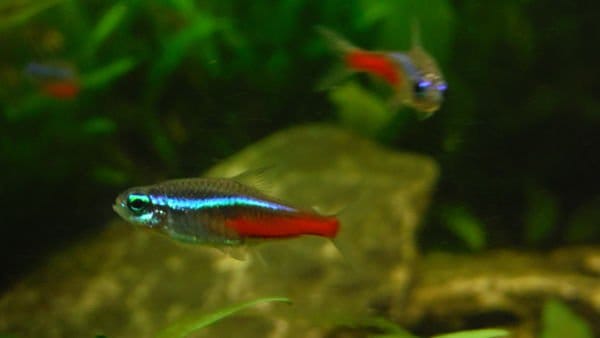
Neon Tetras are among the brightest-colored fish and thrive in groups of six or more
Neon Tetras are some of the brightest-colored fish you can get. Neon Tetras thrive in groups of at least six and stay active when they have room to swim. Their long lifespan and low-maintenance nature make Neon Tetras a great starter species.
Corydoras Catfish
Bottom-dwelling Corydoras Catfish clean up fallen food and detritus from the substrate, contributing to overall tank cleanliness. They’re peaceful, hardy, and work well alongside other cleaning species. Corydoras prefer to be kept in groups of 4-6 and thrive at temperatures between 72-78°F (22-26°C).
Conclusion
A self-cleaning aquarium is about more than just low maintenance. It’s about creating a thriving aquatic ecosystem for fish, invertebrates, plant life, and micro-organisms. It comes as close as possible to recreating the natural environment in an aquarium.
Even if you don’t mind constantly working to keep the fish tank clean, trying to make a self-cleaning one will do more for the creatures living inside of it than you could ever do by hand. Their food will be better than anything store-bought, the water cleaner, and the view a lot more spectacular.
Avoid the common fish-keeping mistakes that derail most beginners, and you’ll be rewarded with a beautiful, low-maintenance ecosystem that practically runs itself.
Do self-cleaning aquariums really work?
Yes — with patience and the right balance, a self-cleaning aquarium can truly maintain itself. Plants absorb nitrates, beneficial bacteria process waste, and your cleanup crew handles algae. Some hobbyists achieve tanks that need nothing beyond topping off evaporated water. It takes time and discipline to reach this balance, but it's absolutely possible.
What size tank is best for a self-sustaining aquarium?
Larger tanks of 30-100+ gallons work best for self-sustaining systems because they maintain more stable water parameters and provide adequate space for the fish-to-plant ratio needed for balance.
How long does it take to establish a self-cleaning tank?
Expect 2-3 months minimum for beneficial bacteria colonies to establish and plants to grow in. The ecosystem becomes more stable over time, with the best results appearing after 6-12 months of maturation.
Can I have too many fish in a self-sustaining aquarium?
Yes, overstocking disrupts the balance by producing more waste than bacteria and plants can process. Self-sustaining systems require lighter stocking than traditional aquariums to maintain equilibrium.
What's the best fish for a self-cleaning tank?
Mollies love grazing on algae, Bristlenose Plecos will devour it off your glass and decorations, and Corydoras sift through the substrate eating leftover food. Add a few Nerite snails and you've got a solid cleanup crew that earns their keep.
Do I still need a filter in a self-sustaining aquarium?
Not strictly — a truly balanced tank with enough surface area for bacteria can function without one. But a simple hang-on-back filter makes achieving that balance much easier while adding water movement and oxygenation. For most people, it's a small addition that pays off.
Related Topics
Found this helpful?
Share this guide with your fellow aquarium enthusiasts!

Written by
Jonathan Jenkins
I've been keeping fish for over 15 years — everything from planted freshwater tanks to saltwater reefs. I currently have a 30 gallon overstocked guppy breeding tank, 40 gallon planted self-cleaning aquarium, 200 gallon reef tank, and 55 gallon frag tank. I joined Fish Tank World to continue learning while sharing what I've learned along the way.