
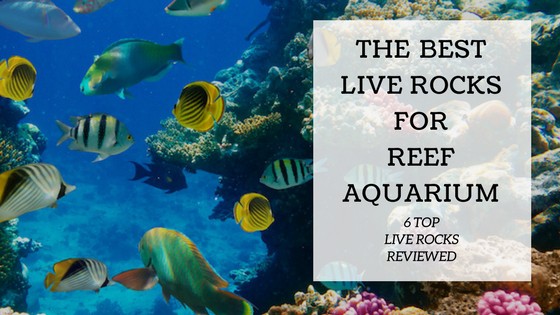
Rock is the backbone of every reef aquarium. It provides the porous surface area where beneficial bacteria drive the nitrogen cycle, the structural framework for mounting corals, and the caves and ledges that fish use for shelter and territory. Choosing the right rock affects how quickly your tank cycles, how stable your water chemistry remains, and how natural your aquascape looks.
This guide covers the major categories of reef rock available today — from bacteria-coated dry rock to premium ocean-cured live rock shipped wet overnight — and reviews specific products across a range of budgets.
Quick Recommendation
For most reef builds, CaribSea Life Rock offers the best combination of porosity, consistency, and value. It ships bacteria-coated with approximately 50% void space, giving you strong biological filtration capacity right out of the box.
Understanding Reef Rock Types
Not all aquarium rock is the same. The terminology can be confusing — “live rock,” “life rock,” “base rock,” and “dry rock” all describe different things. Understanding the distinctions helps you choose the right option for your tank and budget.
Dry Rock (Base Rock)
Dry rock is aragonite or limestone that has been mined, cleaned, and dried. It contains no living organisms, which means zero risk of introducing pests like aiptasia, bristle worms, or nuisance algae. The tradeoff is that dry rock requires full cycling with a bacteria source before you can add livestock.
Manufactured dry rock (like CaribSea Life Rock or Real Reef) is engineered for high porosity and consistent shapes. Mined dry rock (like MarcoRocks) comes from ancient reef formations and offers more natural, irregular shapes.
Live Rock
True live rock has been cured in saltwater — either in the ocean or in aquaculture facilities — and arrives populated with beneficial bacteria, coralline algae, sponges, copepods, amphipods, and other microfauna. It provides instant biological diversity that bottled bacteria products cannot fully replicate.
Live rock costs significantly more than dry rock, and the highest-quality pieces are shipped wet via overnight carriers to preserve the organisms. The main risks are introducing unwanted hitchhikers and die-off during transit that can spike ammonia.
Hitchhikers: The Good and the Bad
Every piece of live rock carries organisms, and most of them are beneficial. Copepods, amphipods, sponges, tunicates, feather dusters, and micro brittle stars all contribute to a healthy reef ecosystem by processing detritus, providing natural fish food, and adding biodiversity.
The harmful hitchhikers are the ones to watch for:
- Aiptasia anemones — Brown or tan pest anemones that reproduce rapidly and sting corals. The single most common problem from live rock.
- Majano anemones — Similar to aiptasia but often green or brown with bulb-tipped tentacles. Equally aggressive spreaders.
- Mantis shrimp — Ambush predators that can kill fish and snails. Some species can even crack aquarium glass with their strike.
- Bobbit worms — Large predatory polychaete worms that hide in rock and ambush fish at night.
- Bryopsis and hair algae — Nuisance algae species that are difficult to eradicate once established.
Inspect new live rock carefully before adding it to your display. Some reefers cure new live rock in a separate container for 1-2 weeks while monitoring for pests. Reputable aquaculture suppliers like Tampa Bay Saltwater and KP Aquatics inspect their rock before shipping, but no supplier can guarantee 100% pest-free live rock.
The Hybrid Approach
Many experienced reefers use a combination: build the bulk of the aquascape with affordable dry rock, then seed the tank with a few pieces of quality live rock. The bacteria and microfauna from the live rock colonize the dry rock over several weeks, giving you pest control and biodiversity at a reasonable cost.
What to Look for When Choosing Rock
Porosity
Porosity is the single most important factor. Porous rock has more internal surface area for bacteria to colonize, which translates to better biological filtration per pound. Rock with 40-50% void space (like CaribSea Life Rock) is significantly more effective than dense rock with minimal pore structure.
Shape and Stackability
Consider how the rock will stack and create structure. Flat shelf-style pieces create overhangs and caves. Branching pieces add height and visual interest. A mix of shapes gives you the most aquascaping flexibility. Some rocks (like Two Little Fishies STAX) are specifically designed for easy stacking without adhesive.
Composition
Aragonite-based rock is ideal for reef aquariums because it slowly releases calcium and carbonate, helping buffer pH and maintain alkalinity. This is the same mineral that coral skeletons are made of. Avoid rock that is not calcium carbonate based, as it may leach unwanted minerals.
Sustainability
The reef hobby has largely moved away from harvesting live rock from wild reefs. In December 2017, Fiji — once the largest source of wild live rock for the aquarium trade — banned all harvesting and export of live rock and coral. This accelerated a shift that was already underway toward sustainable alternatives.
Today’s best options are manufactured from aragonite (CaribSea, Real Reef), mined from ancient extinct reef formations that are no longer part of living ecosystems (MarcoRocks), or aquacultured on licensed farms where dry rock is deployed in the ocean and allowed to colonize over years before sustainable harvest (Tampa Bay Saltwater, KP Aquatics, MarcoRocks Maricultured).
CaribSea Life Rock
CaribSea is one of the most recognized names in aquarium substrates and rock. Their Life Rock line is made from naturally-sourced aragonite with a bacteria-coated surface and approximately 50% void space — one of the highest porosity ratings available.
Life Rock ships dry but arrives pre-seeded with beneficial bacteria spores that activate when submerged. This gives it a head start over completely sterile dry rock during cycling. The shapes are consistent and predictable, which some aquarists prefer for planning aquascapes.
CaribSea offers several Life Rock variations to suit different needs:
The Medium pieces are the standard building blocks for most aquascapes. The Shelf rocks are flat with natural ledge profiles — ideal for creating overhangs where fish shelter and corals can be placed at different heights. The Frag Zone mounts are small aragonite platforms designed specifically for mounting coral frags during growout, making them useful for frag tanks or adding to an existing reef display.
All three share the same aragonite base and bacteria coating. For a typical 50-gallon build, a combination of Medium and Shelf pieces gives you the most aquascaping flexibility.
Two Little Fishies STAX
Two Little Fishies STAX takes a different approach to reef rock. These are flat, porous pieces of oolitic limestone — a naturally-formed sedimentary rock with excellent porosity for bacterial colonization.
Two Little Fishies STAX – 5 lb
- Flat, porous oolitic limestone for layered aquascapes
- 100% natural and sustainably collected
- Easy to stack and glue for custom structures
- Works in both marine and freshwater aquariums
- Ideal for nano reef tanks due to smaller piece sizes
Why we recommend it: STAX excels at creating layered, ledge-style aquascapes that are difficult to achieve with round rock shapes. The flat profile makes stacking intuitive without needing aquascaping cement, and the oolitic limestone provides strong biological filtration surface area.
The flat, plate-like shape makes STAX particularly well-suited for building shelved aquascapes with distinct tiers — a style that gives corals at each level good light exposure and water flow. The pieces are easy to stack and bond with aquascaping cement or reef-safe epoxy.
Customer feedback on STAX is generally positive regarding appearance and stackability, though some buyers note the individual pieces tend to be small. For larger tanks, plan on multiple boxes. For nano reefs, the smaller piece sizes are actually an advantage, fitting neatly into tight spaces.
Real Reef Rock
Real Reef takes manufactured aquarium rock to another level. Each piece is greenhouse-aquacultured from calcium-based materials and develops natural purple, pink, and red coloring that mimics coralline algae — without the risk of pest hitchhikers that come with wild-harvested rock.
Real Reef Rock – 10 lb Mixed Box
- Greenhouse-aquacultured with natural purple/pink/red coloration
- Mix of arch, plate, branch, cup coral, and original shapes
- Arrives bio-active, clean, and free of pest hitchhikers
- Includes Dr. Tim's cycling kit for fishless cycling
- Designed for nano aquariums up to 10 gallons
Why we recommend it: This nano starter kit removes much of the guesswork for beginners. The included Dr. Tim's cycling products (One and Only bacteria, First Defense, and ammonium chloride) mean you have everything needed to cycle the tank properly without separate purchases.
The 10 lb Mixed Box includes 6-8 pieces in varied shapes — arches, plates, branches, and cup coral forms — giving you diverse aquascaping options straight out of the box. The included Dr. Tim’s cycling kit (One and Only Live Nitrifying Bacteria, First Defense water conditioner, and ammonium chloride) provides a complete fishless cycling system.
Real Reef’s manufacturing process produces rock that is porous, lightweight, and structurally varied. The natural coloring means your aquascape looks established from day one, rather than the plain white or grey appearance of most dry rock that takes months to develop coralline coverage.
MarcoRocks
MarcoRocks is one of the largest producers and shippers of aquarium rock in the United States. Unlike manufactured options, MarcoRocks products are mined from ancient, extinct reef formations — 100% natural calcium carbonate with no chemicals or additives.
Their product line includes several distinct types:
- Reef Saver Rock — Their flagship product, sourced for color, porosity, and purity. Available in standard and small sizes, with natural or coralline color options. This is the most popular choice for reef aquascaping.
- Foundation Rock — Cut with a smooth, flat surface on one side, designed to sit at the base of your aquascape where rock meets glass. Provides a stable platform for building upward.
- Shelf Rock — Hand-selected pieces with natural ridges and overhangs for building caves, arches, and layered structures.
- Hybrid Rock — Combines characteristics of Reef Saver and Shelf rock for versatile aquascaping applications.
MarcoRocks also sells E-Marco-400 Aquascaping Mortar, a reef-safe cement specifically designed for bonding their rock. This makes it easy to build stable structures that won’t shift when fish or snails move through.
What sets MarcoRocks apart is the natural, irregular shapes that manufactured rock struggles to replicate. Because the material comes from real (albeit ancient and extinct) reef formations, the pore structures, textures, and contours look authentically oceanic. The rock is sustainably sourced — no living reefs are impacted.
Pricing runs roughly $3-7 per pound depending on the type, with bulk boxes offering better per-pound rates. MarcoRocks ships direct and is also widely available through reef specialty retailers.
Maricultured Live Rock from MarcoRocks
MarcoRocks also offers a premium option: Maricultured Live Rock. This starts as their Reef Saver dry rock, which is then deployed into the Florida Keys and left to mature in the ocean for years. It develops the same beneficial bacteria, coralline algae, sponges, and microfauna found on natural live rock — but from a sustainable aquaculture operation rather than wild reef harvesting.
Maricultured Live Rock ships overnight to preserve the living organisms and is priced significantly higher ($129-$389 depending on quantity) than their dry rock offerings. It represents a middle ground between affordable dry rock and the premium ocean-cured options described below.
Premium Ocean-Cured Live Rock
For reefers willing to invest in the fastest possible cycle and the most diverse biological seeding, premium ocean-cured live rock is the top tier. These are rocks that have been aged in the ocean — either on aquaculture farms or sustainably collected — and shipped wet via overnight carriers so the organisms arrive alive.
This category is the most expensive option, but it delivers something no bottled bacteria or manufactured rock can match: a thriving ecosystem on every piece. Expect to find coralline algae in multiple colors, sponges, copepods, amphipods, micro brittle stars, feather dusters, and sometimes even coral polyps.
Notable suppliers in this space include:
- Tampa Bay Saltwater — One of the oldest live rock farms in the US (operating since 1984), located off Anclote Key in the Gulf of Mexico. Their rock always ships submerged in water to maximize organism survival. Known for exceptional biodiversity on every piece.
- KP Aquatics — Offers aquacultured live rock from Florida that ships overnight, arriving wet with coralline algae, microfauna, starfish, and small crustaceans still active.
Premium live rock typically costs $8-15+ per pound before shipping, and overnight shipping costs for heavy, water-packed boxes add significantly to the total. For a full tank build, this can be 3-5x the cost of dry rock.
When Premium Live Rock Makes Sense
Premium ocean-cured rock is most valuable when seeding a new tank for maximum biodiversity or when adding to an established system that needs a biological boost. For budget-conscious builds, buying primarily dry rock and adding just 5-10 pounds of premium live rock gives you the seeding benefit at a fraction of the full cost.
How Much Rock Do You Need?
The old rule of thumb — 1-2 pounds per gallon — was based on dense, low-porosity rock. Modern lightweight, porous rock changes the equation:
- High-porosity manufactured rock (CaribSea Life Rock, Real Reef): 0.75-1.25 lbs per gallon
- Medium-porosity mined rock (MarcoRocks): 1-1.5 lbs per gallon
- Dense natural rock: 1.5-2 lbs per gallon
Modern reef aquascaping also trends toward more open structures with negative space, better water flow, and easier maintenance access. Many successful reef tanks use less rock than traditional guidelines suggest and supplement biological filtration with a protein skimmer and refugium.
| Tank Size | Lightweight Rock | Standard Rock |
|---|---|---|
| 10 gallon (nano) | 8-12 lbs | 10-15 lbs |
| 30 gallon | 22-38 lbs | 30-45 lbs |
| 55 gallon | 40-70 lbs | 55-85 lbs |
| 75 gallon | 55-95 lbs | 75-115 lbs |
Cycling Your Tank with Rock
Regardless of which rock type you choose, every new reef tank needs to complete the nitrogen cycle before adding fish. The process differs depending on your rock:
Cycling with Dry Rock
Rinse and Arrange
Rinse dry rock in freshwater to remove dust and debris. Build your aquascape in the empty tank before filling with saltwater.
Add Bacteria and Ammonia
Dose bottled bacteria (Dr. Tim's One and Only, Fritz TurboStart, or MicroBacter7) and add an ammonia source to feed the bacteria. Dr. Tim's ammonium chloride or a raw shrimp both work.
Monitor Water Parameters
Test ammonia, nitrite, and nitrate every 2-3 days. You should see ammonia rise, then nitrite, then both drop to zero as nitrate climbs.
Confirm Cycle Completion
The cycle is complete when ammonia and nitrite read zero within 24 hours of dosing ammonia. Perform a large water change to reduce nitrates before adding your first fish.
With premium live rock, the cycle is dramatically faster — often completing in 1-2 weeks rather than 4-6 weeks — because the bacteria colonies are already established. Some reefers using high-quality ocean-cured rock from suppliers like Tampa Bay Saltwater report near-instant cycling capability, though monitoring parameters before adding fish is always recommended.
For a complete walkthrough of the cycling process, see our guide to cycling a saltwater tank with live rock.
The Ugly Stage
If you’re starting with dry rock, prepare for the ugly stage — a predictable algae succession that every new reef tank goes through. It typically progresses in this order:
- Brown diatoms (weeks 2-4) — A dusty brown film covering rock and glass. Harmless and temporary.
- Green hair algae (weeks 4-8) — Wispy green strands on rock surfaces. Driven by silicates and excess nutrients in new systems.
- Cyanobacteria (variable) — Red or brown slime that can appear at any point. Usually resolves as the tank matures.
The ugly stage is a normal part of biological maturation and typically resolves on its own within 2-3 months as nutrient-cycling bacteria populations stabilize. A cleanup crew of astrea snails, cerith snails, and blue-leg hermit crabs helps manage the algae during this period. Resist the urge to tear down your aquascape or add chemicals — patience is the most effective remedy.
Tanks started with premium live rock often skip or dramatically shorten the ugly stage because the established microbial populations outcompete nuisance algae from the start.
Growing Coralline Algae
Coralline algae — the purple, pink, and red encrusting algae that covers mature reef rock — is both aesthetic and functional. It competes with nuisance algae for space and indicates stable water chemistry.
To encourage coralline growth on new dry rock:
- Maintain stable calcium (400-450 ppm), alkalinity (8-12 dKH), and magnesium (1250-1350 ppm). A calcium reactor automates this for larger systems.
- Provide a seed source — a piece of live rock with existing coralline, a coralline starter culture, or scrapings from an established tank.
- Keep phosphates low — elevated phosphates inhibit coralline growth and favor nuisance algae instead.
- Allow moderate lighting — coralline grows under a wide range of light but avoids extremely high-PAR zones.
First patches of coralline typically appear 30-45 days after cycling completes, with meaningful coverage developing over 2-4 months. Rock that starts with manufactured color (like Real Reef) provides instant aesthetics while natural coralline develops underneath.
Aquascaping Tips
Building a stable, visually appealing reef structure takes planning. A few principles that apply regardless of rock type:
- Start with a foundation layer. Use flat pieces or foundation-cut rock at the base. This prevents round rocks from shifting and potentially cracking glass.
- Build for flow. Leave gaps and channels between rocks so water can circulate through the structure. Dead spots with no flow become traps for detritus and nuisance algae.
- Plan for coral placement. Different corals need different light levels. Build ledges at multiple heights so you can place high-light corals near the top and low-light species in shaded areas. Consider your LED lighting spread when designing height.
- Secure the structure. Use aquascaping cement (like E-Marco-400), reef-safe epoxy, or super glue gel to bond pieces together. A stable structure protects your glass, your corals, and your livestock.
- Leave room for growth. Corals grow. An aquascape that looks sparse today will fill in over months. Resist the urge to pack every gap with rock.
- Consider your sump. Live rock rubble in a sump or refugium provides additional biological filtration outside the display tank. This is especially useful for tanks using minimal rock in the display for a clean, open aesthetic.
If you’re setting up your first saltwater system, our beginner’s guide to starting a saltwater aquarium covers the full equipment list and setup process.
Frequently Asked Questions
What is the difference between live rock and dry rock?
Live rock has been cured in saltwater and contains established colonies of beneficial bacteria, coralline algae, sponges, and microfauna. Dry rock (also called base rock or life rock) is clean aragonite or limestone with no living organisms. Live rock accelerates tank cycling and adds biodiversity, while dry rock is cheaper, pest-free, and requires full cycling with bottled bacteria before adding livestock.
How much rock do I need for a reef aquarium?
The traditional guideline is 1 to 1.5 pounds of rock per gallon, but modern aquascaping trends lean toward open structures using less rock. A 50-gallon tank might use 30-50 pounds depending on rock density and your aquascape design. Highly porous rock like CaribSea Life Rock or Real Reef provides more biological surface area per pound, so you can use less total weight.
Can I mix dry rock and live rock in the same tank?
Yes, and this is a popular hybrid approach. Use dry rock for the bulk of your aquascape to save money and avoid pests, then add a few pieces of cured live rock to seed the tank with diverse bacteria and microfauna. The organisms from the live rock will colonize the dry rock over several weeks.
Does dry rock need to be cured before adding it to a reef tank?
Manufactured dry rock like CaribSea Life Rock and Real Reef is clean and does not need traditional curing. However, you still need to cycle the tank by adding a bacteria source (bottled bacteria or a piece of live rock) and an ammonia source. This process typically takes 2-6 weeks. Mined dry rock should be rinsed and soaked to remove dust and debris.
How long does it take for dry rock to become live rock?
Dry rock begins colonizing with bacteria within the first week of cycling, but developing a mature biofilm with diverse microfauna takes 3-6 months. Coralline algae typically appears after 2-4 months in a stable tank with proper calcium, alkalinity, and magnesium levels. Full biological maturity comparable to ocean-cured rock can take 6-12 months.
What is the best rock for a nano reef tank?
For nano reef tanks under 20 gallons, look for smaller pieces with interesting shapes that maximize aquascaping options in tight spaces. Real Reef's Nano Starter Kit is designed specifically for 5-10 gallon tanks. Two Little Fishies STAX works well for layered nano aquascapes due to its flat, stackable shape. CaribSea Life Rock Frag Zone mounts are useful for mounting coral frags in nano setups.
What are live rock hitchhikers and should I worry about them?
Hitchhikers are organisms that arrive on live rock. The vast majority are beneficial — copepods, amphipods, sponges, feather dusters, and micro brittle stars all contribute to a healthy reef ecosystem. However, some are harmful: aiptasia anemones spread aggressively and sting corals, mantis shrimp can kill fish and crack glass, and bobbit worms are ambush predators. Inspect new live rock carefully, and consider dipping rock in a coral-safe solution before adding it to your display tank.
How do I grow coralline algae on dry rock?
Coralline algae needs stable calcium (400-450 ppm), alkalinity (8-12 dKH), and magnesium (1250-1350 ppm) to colonize new rock. You also need a source — either a piece of live rock with existing coralline, a coralline algae starter culture, or scrapings from an established tank. First signs of coralline growth typically appear 30-45 days after cycling completes, with noticeable coverage developing over 2-4 months. Keep phosphates low and provide moderate lighting.
What is the ugly stage in a new reef tank?
The ugly stage is a predictable algae succession that occurs in every new tank using dry rock. It typically progresses through brown diatoms (weeks 2-4), green hair algae (weeks 4-8), and sometimes cyanobacteria (red/brown slime). This is a normal part of the tank maturing as nutrient levels stabilize. The ugly stage usually resolves on its own within 2-3 months. Patience is key — avoid drastic interventions. A good cleanup crew of snails and hermit crabs helps manage it.
Related Topics
Found this helpful?
Share this guide with your fellow aquarium enthusiasts!

Written by
FTW Team
The FishTankWorld editorial team brings together experienced aquarists to help you succeed in the hobby.