Deciding on what size aquarium to set up is one of the big questions every aquarist wrestles with. While today’s tiny nano tanks are more technically advanced than ever, they’re still tiny.
For many of us, the reason we want an aquarium is to recreate a part of nature in our own home or office. The coolest part of having an aquarium is being able to watch and care for our own tropical reef, Amazonian river, Asian pond or African lake. Keeping a couple of small fish is certainly fun. Sometimes the only way to have an aquarium is to go small. But we’re here to say, if you can, go big!
Why Size Matters
Experienced aquarists consistently recommend larger tanks for beginners. The extra water volume provides a more stable environment that’s actually easier to maintain than a cramped nano tank.
Here’s a list of ten important reasons why large aquariums are better than small tanks.
1. Easier to Care For
People often say aquariums are hard to care for. It seems logical to assume that if a ten gallon tank is hard, a big aquarium would be even harder to keep looking great. But this just isn’t true.
The reason most people think taking care of an aquarium is hard is because they never learned how to do it. Another reason is there’s a lot of misinformation floating around on the web and even in pet shops.
The truth is, larger aquariums are easier to take care of.
You may need to spend a little more time now and then with maintenance, but in the long run larger aquariums are much easier to keep than smaller tanks.
2. Less Fish Per Gallon
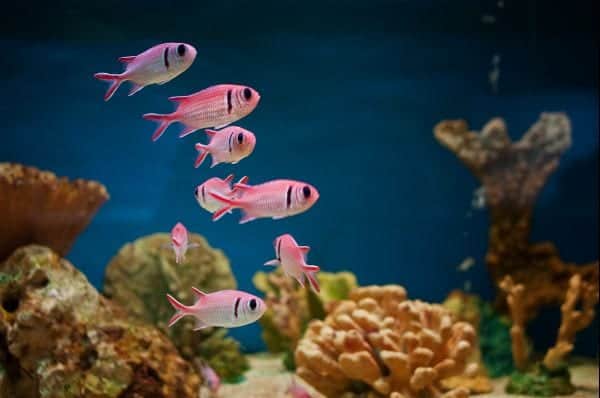
A properly stocked large aquarium gives fish room to thrive
You’re probably thinking “No way! More gallons equals more fish.” To understand what this means, we’ll need to look at smaller fish tanks.
The main cause of water quality problems and sick fish is overcrowding.
Since the aquarium is small, we want to pack it with livestock. There are so many beautiful fish, the temptation to add “just one more fish” is very strong. The tank may look great at first, but eventually the heavy bio load causes an ecological disaster. That’s because there are too many fish per gallon of water.
What you can’t see, unless you test the water, is a rise in ammonia, nitrite and nitrate due to the heavy fish load. Dissolved organics and accumulating solid fish waste also swing the water quality toward the danger zone.
Problems Caused by Overcrowding
- Parasitic worm infections
- Bacterial infections
- Reduced immune system response
- Chronic stress and shortened lifespan
Larger aquariums allow you to have a nice community of fish without having to overstock the tank. You’ll have more fish in the aquarium but less fish per gallon compared to a sickly 10 gallon aquarium packed with weak fish that continually die.
3. Less Compatibility Problems
If you entered the hobby with a ten or twenty gallon aquarium, you’ve experienced the frustration of a bully fish. That one fish that keeps chasing all the others ruins the fish keeping experience. Chances are, the bully is considered a friendly community fish.
So why does it fight so much? Tropical and saltwater fish need their own space. Nowhere in nature will they be forced to continuously live inches away from other fish. The constant face to face contact and lack of territory to call their own leads to mental stress and the “fight response.”
Larger aquariums give fish room to live. They’re able to swim around, hang out in an area they like and not have to feel pressured by other fish. There’s less nipping and shredded fins too.
4. More Aquarium Shapes and Sizes
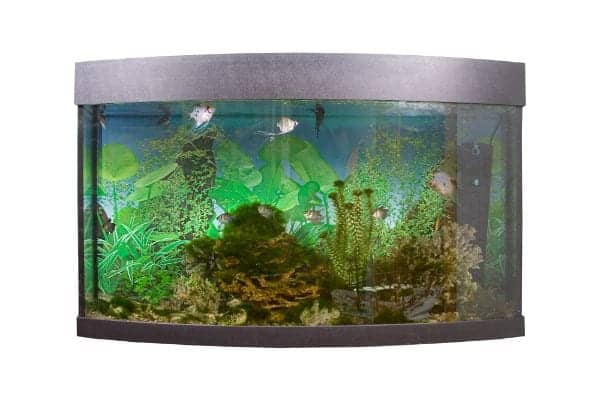
Bow front and curved aquariums create stunning visual depth
Today’s aquarium manufacturers are building aquariums in an array of shapes and configurations like never before.
In the 80’s almost all glass aquariums were assembled in the traditional rectangular shape. Today you can choose from an almost limitless selection of rimless, bent glass and even square aquariums. Matching aquarium stands are available in a variety of traditional and modern finishes, making it easy to choose an aquarium that blends well with your home or office decor.
5. Better Viewing
While we think nano aquariums are cool, nothing beats the widescreen effect of a large aquarium.
You can sit back in a comfortable chair and watch your reef or freshwater aquarium from across the room. With modern wireless LED light fixtures, you’ll be able to create a variety of looks ranging from natural daylight to moonlit nights. Some light fixtures even come pre-programmed with storm mode and lightning flashes.
Of course, you can get close to the tank to see all the action, but you’ll have even more to see with a large aquarium!
6. Create More Interesting Landscapes
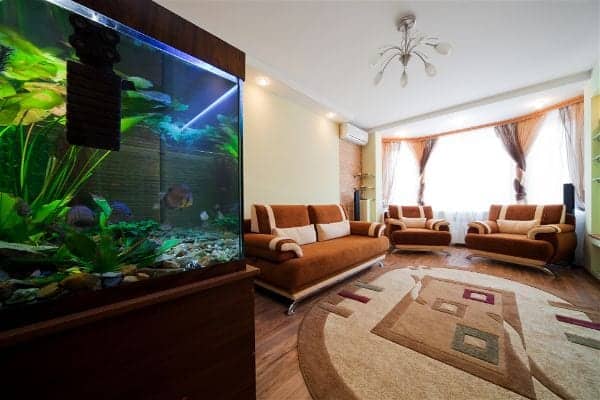
Large tanks allow for creative aquascaping that becomes a room's centerpiece
With a wider, taller and deeper aquarium, you’ll be able to create aquascapes impossible to achieve in small tanks.
You can create a really interesting reef with a large tank. Instead of piling rock against the back wall, build a simple mound of rock in the center of a cube-shaped aquarium. All the extra space around the reef is not wasted. It creates a three dimensional jewel loaded with corals.
The same goes for live plants. Driftwood looks great in a taller tank. The big sword plants will have room to grow and show off their leaves when they’ve got room to spread out.
7. More Natural Fish Behavior
When freshwater or saltwater fish are “packed” into a small aquarium, they’re always on the defensive. Their instincts tell them something is wrong when they’re forced into an over populated space.
Since the fish are always on edge, they can’t relax and show their unique traits and personality. Give them a larger tank and you’ll soon notice the interesting behavior that each species brings to the aquarium.
More room allows you to create a diverse aquascape, which provides the fish with a variety of niches to inhabit. They figure out which section of the tank suits them and stake out their territory.
8. Best Aquarium for Large Fish Species
If you’re a fan of big fish, a large aquarium is a must! But you don’t have to start with big fish to get big fish.
There are a variety of juvenile “big fish” species available from aquarium shops and online sellers. They’re much smaller than adults but will eventually grow quite large. Since they’ll live a long time, why not start them out in a big aquarium and watch them grow over the years?
Planning for Growth
Large species need room to exercise and explore. It’s unfair to force them to float motionless in a “too-small” aquarium. Big fish also eat more and produce more waste, so the dilution factor of more gallons per fish helps manage the increased bio load.
9. More Stable Environment
Larger aquariums, properly stocked with fish and invertebrates, are less prone to chemical and biological fluctuations. That’s because there are less fish per gallon!
Right after feeding, fish and invertebrates release ammonia and organic wastes into the water. The larger water volume dilutes the wastes while biological processes break them down.
Stability Benefits of Large Tanks
- More oxygen capacity due to larger surface area
- Better carbon dioxide exchange
- Reduced stress from stable parameters
- Fewer disease outbreaks
10. Large Aquariums Save Money
No one plans it, but many aquarists end up constantly upgrading their aquarium as their collection expands or the fish outgrow the tank.
The constant need to get a larger aquarium costs more money than buying a large aquarium right from the start. It will cost more at first but over time larger tanks cost less compared to continuously upgrading the aquarium, stand, light and filter system.
Add to this the work involved in taking down the old aquarium and setting up the new one. It can be fun but it is messy and can stress the fish and invertebrates.
Final Thoughts on Large Aquariums
The main takeaway is to think through your aquarium purchase or upgrade. Aquarium shops often recommend getting the largest aquarium possible. It may sound like a sales pitch designed to upsell, but it really is good advice.
You’ll find your aquarium keeping experience much more enjoyable with less work maintaining water quality and cleaning the tank. Your fish, plants and corals will stay healthy because they’re thriving under ideal conditions.
Larger tanks look better too. Who doesn’t like to sit back and relax by watching healthy fish, plants and corals, right in their own living room? So, follow the advice of experienced aquarists: start with the largest aquarium you can and enjoy all the benefits it brings to fish keeping!
For more guides on tanks, filters, lighting, and everything else you need, browse our complete equipment guide.
Are large aquariums harder to maintain than small ones?
Contrary to popular belief, large aquariums are actually easier to maintain. The larger water volume provides more stable water parameters, dilutes waste more effectively, and is more forgiving of minor mistakes. While you may need more time for water changes, the overall maintenance is simpler.
What size aquarium is best for beginners?
A 20-30 gallon tank is ideal for beginners. This size provides good water stability while remaining manageable for new aquarists. Avoid starting with tanks under 10 gallons, as they require more precise maintenance.
How many fish can I keep in a large aquarium?
While large tanks can hold more fish, the key is maintaining a lower fish-per-gallon ratio. This reduces stress, improves water quality, and allows each fish to establish territory. Quality over quantity leads to healthier, longer-lived fish.
Is it more expensive to run a large aquarium?
Initial costs are higher, but large aquariums often save money long-term. You avoid the costs of multiple upgrades as your fish grow, and the stable environment means fewer sick fish and replacement costs. Equipment for larger tanks also tends to be more efficient.
Related Topics
Found this helpful?
Share this guide with your fellow aquarium enthusiasts!
Written by
FTW Team
The FishTankWorld editorial team brings together experienced aquarists to help you succeed in the hobby.