Koi and goldfish look alike at first glance — both are colorful, domesticated members of the carp family kept in ponds and aquariums worldwide. But these are distinct species with very different care needs, sizes, and lifespans. Understanding their differences helps you choose the right fish for your setup. For broader goldfish guidance, explore our full goldfish resource hub.
Common Ancestry
Both koi and goldfish descended from carp, but they diverged thousands of years ago through selective breeding in different regions — goldfish in China and koi in Japan.
1. Origin
Both koi and goldfish originated from domesticated carp, but their development took different paths across Asia.
Goldfish were first bred in China during the Tang Dynasty (618–907 CE). Selective breeding of Prussian carp that displayed unusual orange and gold coloration eventually produced the modern goldfish (Carassius auratus) varieties we know today.
Koi descended from amur carp (Cyprinus rubrofuscus), with Japanese breeding efforts beginning in the 1820s. The Japanese term “nishikigoi” — meaning brocaded carp — describes these ornamental fish that farmers originally bred for color mutations in rice paddy ponds.
2. Size
Size is one of the most dramatic differences between koi and goldfish, and it directly affects housing requirements.
Koi are sold as young specimens starting at approximately 3 inches, but they grow to average around 3 feet in length as adults. Their elongated body shape comes from their carp ancestors, and they never stop growing throughout their lives.
Goldfish stay much smaller. Common varieties (comets, shubunkins) reach a maximum of about 12 inches. Fancy goldfish types — Black Moors, Fantails, Orandas, and Ryukins — develop distinctive egg-shaped bodies and typically mature at approximately 10 inches.
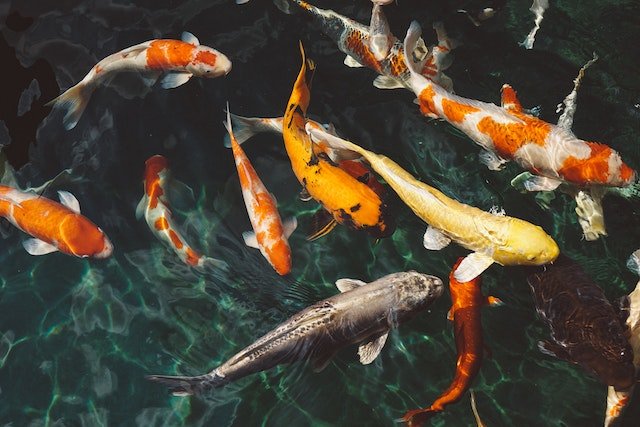
Koi grow up to 3 feet long, dwarfing even the largest goldfish varieties
3. Appearance
Mouth and Barbels
The most reliable way to tell koi and goldfish apart is the presence of barbels — sensory whiskers near the mouth.
Identifying Features
- Koi have two pairs of barbels (sensory whiskers) on each side of their mouth
- Goldfish lack barbels entirely
- Koi have downward-facing mouths designed for bottom foraging
- Goldfish have forward-facing mouths
Body Shape
Koi maintain an elongated, torpedo-like body throughout their lives. Goldfish vary considerably — common goldfish are elongated similar to koi, while fancy varieties like Orandas and Ryukins develop rounded, egg-shaped bodies that sacrifice swimming efficiency for visual appeal.
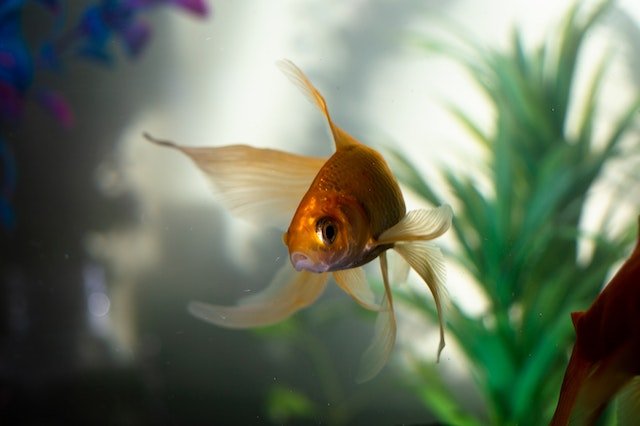
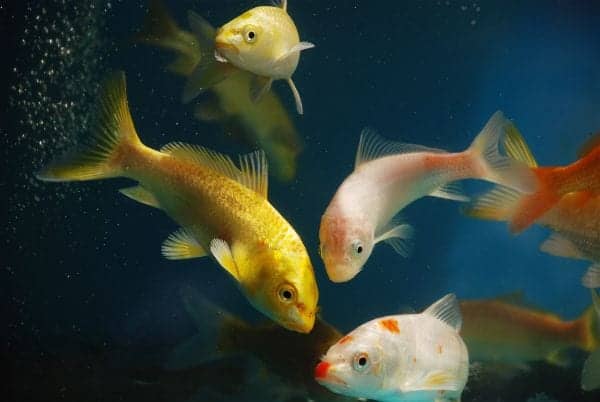
Goldfish remain much smaller than koi, making them suitable for aquariums
4. Colors
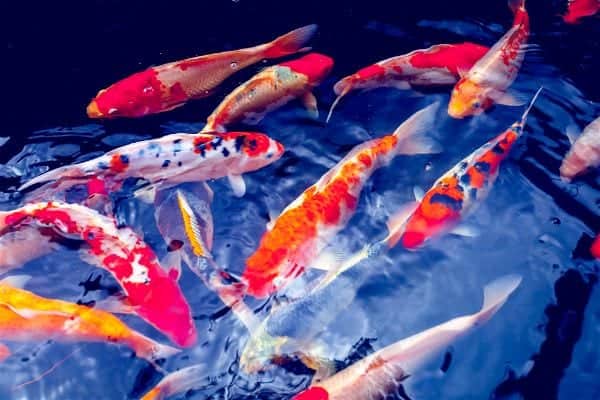
Koi Color Patterns: Koi offer extraordinary color variety with over 23 recognized color categories. Primary colors include white, black, blue, red, yellow, and cream. Named varieties include Kohaku (white with red markings), Taisho Sanshoku (white with red and black), and Goshiki (mostly black with red, white, brown, and blue accents).
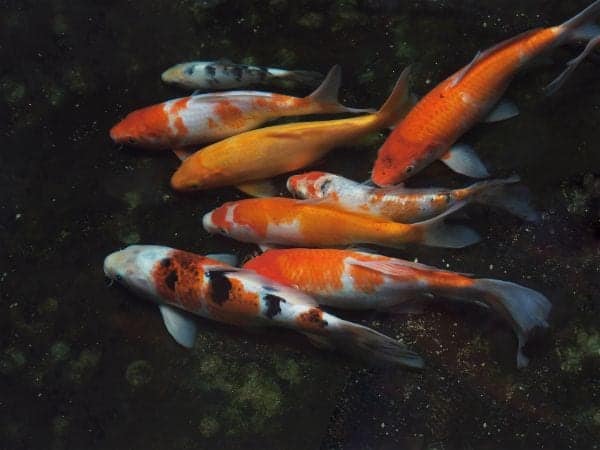
Koi display over 23 recognized color categories, far more variety than goldfish
Goldfish Colors: Goldfish show simpler coloring, limited to black, red, yellow, white, gray, brown, and blue pigment variations. Both metallic and matte scale types are available, but goldfish lack the dramatic multi-pattern combinations seen in koi.
5. Fins
Koi Fins: Most koi display basic carp-like fin structures. The exception is the butterfly koi, which features longer, flowing fins. Butterfly koi were originally discovered in Indonesian drainage ditches and later refined through selective breeding. Traditional koi enthusiasts still debate whether butterfly koi qualify as true nishikigoi.
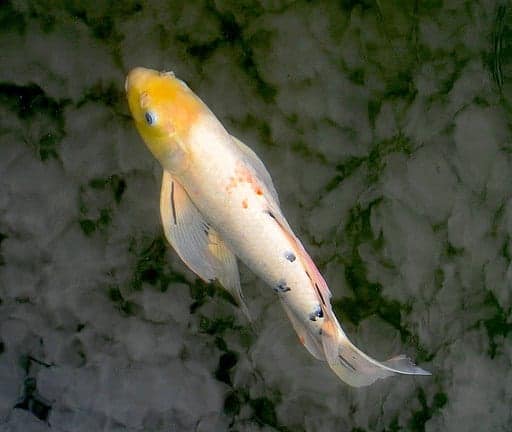
Butterfly koi feature distinctive long, flowing fins unlike standard koi varieties
Goldfish Fin Varieties: Goldfish show far more fin diversity than koi:
- Single-tailed: Common goldfish with one caudal fin — the strongest swimmers
- Deep-lobed: Shubunkins and comets with longer, deeper tails
- Double-tailed: Fancy varieties including orandas and pearlscales with two caudal and anal fins
- Triple or quadruple-lobed: Japanese ryukins with elaborate multi-lobed tail fins
6. Lifespan
Koi dramatically outlive goldfish — averaging 50 years compared to 10–15 years for most goldfish varieties. This lifespan difference makes koi a much larger commitment.
Lifespan Comparison
- Koi average 50 years with proper care in well-maintained ponds
- Record koi (Hanako) lived 226 years (1751–1977) in Japan
- Common goldfish record: 43 years (Tish, kept in the UK)
- Fancy goldfish average approximately 15 years
Longevity depends heavily on care quality, genetics, and environment for both species. Koi can genuinely become multi-generational family fish, passed down as living heirlooms.
7. Diet and Feeding
Both koi and goldfish are omnivorous, but they have unique digestive traits that affect how they should be fed.
Neither koi nor goldfish have stomachs — food passes directly from the esophagus to the intestines. Both species also possess pharyngeal teeth (molar-like teeth in the throat) rather than jaw teeth, which they use to crush food before it enters the digestive tract.
Koi Diet: Koi have large, downward-facing mouths built for bottom foraging. In the wild, koi eat planktonic crustaceans, insects, worms, aquatic plants, and fish eggs. In captivity, koi thrive on prepared pellets and food sticks sized for their larger mouths.
Goldfish Diet: Goldfish eat similar foods in smaller portions. They accept flake food, small pellets, frozen or live brine shrimp, and worms. Commercial goldfish food is formulated with smaller pellet sizes appropriate for their mouths. For a deeper dive into goldfish nutrition, see our complete guide to feeding goldfish.
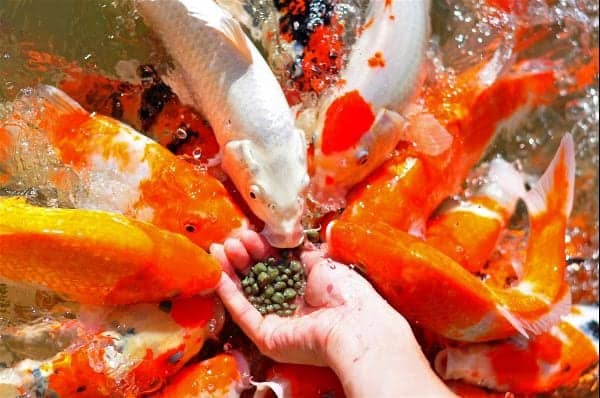
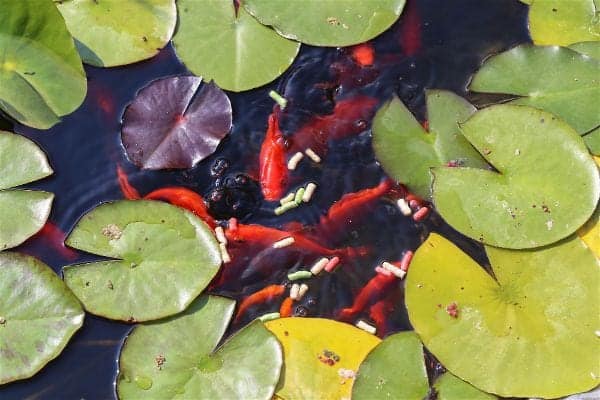
Koi feeding at the surface — their downward-facing mouths are adapted for bottom foraging
Feeding Tip
Because neither species has a stomach, feed koi and goldfish small amounts multiple times daily rather than one large meal. Overfeeding leads to water quality problems and health issues.
Recommended Foods:
For goldfish, Aqueon Goldfish Granules are a reliable staple — slow-sinking granules that reduce surface gulping and air intake.
For outdoor koi, TetraPond Variety Blend provides a mix of sticks, flakes, and shrimp for balanced nutrition across seasons.
8. Housing Requirements
Koi require over 100 gallons minimum, but outdoor ponds are the preferred environment. Adults reaching 3 feet need substantial swimming space that indoor aquariums simply cannot provide. Koi are also best viewed from above, making ponds the ideal setting for appreciating their color patterns.
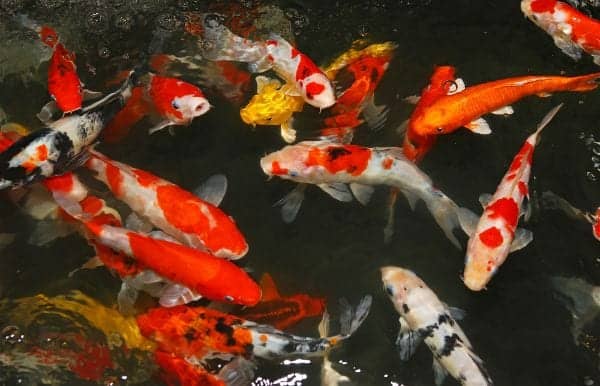
Outdoor ponds are the ideal environment for koi, allowing viewing from above
Goldfish thrive in properly sized aquariums — never bowls. Not sure what size to get? Our guide to choosing the right fish tank size can help. Shubunkins, comets, and common goldfish varieties suit aquariums or outdoor ponds. Fancy goldfish types should remain separate from fast-swimming tropical fish, as their slow swimming makes them unable to compete for food. See our goldfish aquarium setup guide for step-by-step instructions.
No Bowls
Neither koi nor goldfish should be kept in bowls. Both species require filtered, adequately sized environments to thrive.
9. Compatibility with Plants
Koi and Plants: Koi are notorious plant destroyers. Their powerful mouths snap and crunch lily leaves and floating plant roots with ease. Koi also dig around potted plants, uprooting them and spilling soil into the water. Keeping live plants in a koi pond requires creative barriers or plant species that koi find unpalatable.
Goldfish and Plants: Goldfish leave most plants relatively unmolested, making them far more compatible with planted environments. Some goldfish dig in gravel and may uproot loosely planted species, which is why plastic plants are often preferred in display aquariums. Overall, goldfish are a much better choice if you want a planted setup.
Koi are beautiful but destructive toward aquatic plants in their ponds
10. Handling and Disease Treatment
Handling
Koi are powerful fish that require sturdy, large nets with long handles for capture. Even smaller koi put up a strong fight, and larger specimens need a two-handed grip. Netting koi in large ponds can be genuinely challenging.
Goldfish are manageable with standard aquarium nets. Fancy goldfish can be gently cradled with one or two hands. Common varieties and comets flop considerably during capture but are still far easier to handle than koi due to their smaller size.
Disease Treatment
Treatment approaches differ primarily due to housing differences. Large koi ponds require significant amounts of medication, and catching a sick fish in a spacious pond can be difficult. If a hospital tank is not available, treating the entire pond volume becomes expensive.
Goldfish aquariums simplify treatment — smaller water volumes require less medication, hospital tanks are easier to set up, and fish are more accessible for observation. Water changes and treatments cost less overall. If you’re dealing with a disease outbreak, our guide on how to clean your aquarium after disease covers the full recovery process.
Goldfish can live in ponds or aquariums, offering more flexible housing options than koi
Quick Comparison Table
| Koi | Goldfish | |
|---|---|---|
| Adult Size | Up to 3 feet | 6–12 inches |
| Barbels | Yes (2 pairs) | No |
| Average Lifespan | 50 years | 10–15 years |
| Minimum Tank | 100+ gal (pond preferred) | 20+ gallons |
| Diet | Pellets, sticks, live foods | Flakes, small pellets, live foods |
| Plant Compatibility | Poor | Good |
| Beginner Friendly | No | Yes |
| Color Varieties | 23+ categories | Limited |
Which Is Right for You?
Choose Koi If:
- You have or plan to build an outdoor pond
- You want long-lived fish that can become family heirlooms
- You enjoy viewing fish from above
- You do not plan to keep live plants
Choose Goldfish If:
- You prefer indoor aquariums
- You have limited space
- You want to include live plants
- You are new to fishkeeping
- You want easier maintenance and treatment options
For more goldfish guidance, see our goldfish care guide for beginners.
Conclusion
While koi and goldfish share carp ancestry and look similar as juveniles, they are distinct species with very different needs. Koi require outdoor ponds and substantial space but reward their keepers with decades of companionship. Goldfish adapt well to properly sized aquariums and offer more flexibility for indoor setups. Understanding these ten differences helps you choose the right species for your environment and provide the best care possible.
Can koi and goldfish live together?
Yes, koi and goldfish can coexist in the same pond. They have similar water requirements and generally peaceful temperaments. However, large koi may inadvertently consume small goldfish, so size matching is important.
Are koi harder to keep than goldfish?
Koi require more space and larger water volumes than goldfish, making them more challenging for beginners. They need outdoor ponds rather than indoor aquariums. Goldfish are more versatile and can thrive in properly sized aquariums.
Which lives longer, koi or goldfish?
Koi typically live longer, averaging 50 years with some recorded living over 200 years. Common goldfish average 10-15 years, with records of 40+ years. Fancy goldfish generally live shorter lives of about 10-15 years.
Do koi and goldfish eat the same food?
Both are omnivorous and can eat similar foods. Neither species has a stomach — food passes directly to the intestines. Commercial koi food and goldfish food differ mainly in pellet size. Both species accept pellets, flakes, vegetables, and live foods like worms and insects.
How can you tell koi and goldfish apart?
The most reliable identifier is barbels — koi have two pairs of sensory whiskers on each side of their mouth, while goldfish have none. Koi also have downward-facing mouths for bottom foraging, whereas goldfish have forward-facing mouths.
Related Topics
Found this helpful?
Share this guide with your fellow aquarium enthusiasts!
Written by
FTW Team
The FishTankWorld editorial team brings together experienced aquarists to help you succeed in the hobby.