
Aquarium filter flow that is too strong creates stress for fish and disrupts plant growth. Plants may look like they are caught in a windstorm, betta fish may struggle against the current, and smaller species may hide constantly behind decorations. While water movement is essential for distributing oxygen, maintaining temperature, and supporting biological filtration, excessive flow does more harm than good. This guide covers seven effective methods to reduce your aquarium filter’s water flow while preserving water quality. For more on choosing and configuring freshwater aquarium equipment, start with the right filter for your setup.
Why Water Flow Matters in an Aquarium
Water flow serves several critical functions that keep an aquarium healthy and stable:
Benefits of Proper Water Flow
- Temperature regulation — distributes warm water from heaters throughout the tank evenly, preventing hot and cold zones
- Oxygen distribution — surface agitation increases gas exchange at the water surface, keeping dissolved oxygen levels adequate for fish
- Biological filtration — beneficial bacteria in filter media require consistent water movement to process ammonia and nitrite
- Nutrient transport — distributes nutrients to live plants and flushes waste from coral and plant surfaces
- Debris removal — keeps particulate matter suspended so mechanical filtration can capture it before it decomposes
Many freshwater fish also enjoy some degree of current, as it simulates the rivers and streams they originate from. The challenge is finding the balance between enough flow for healthy water parameters and gentle enough conditions for your specific fish and plants.
Signs Your Filter Flow Is Too Strong
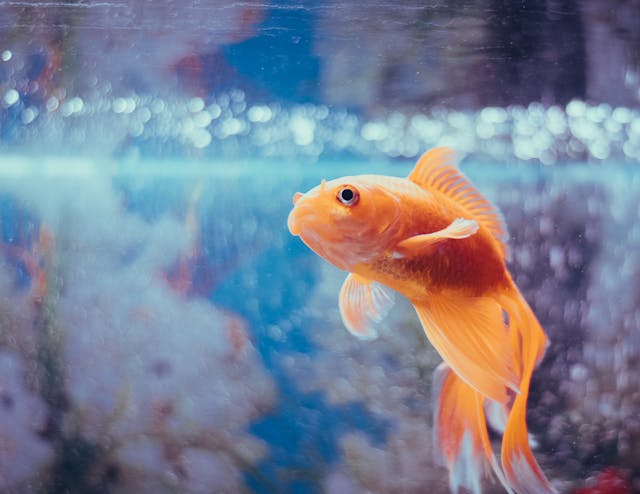
Fish constantly fighting the current indicates filter flow is too strong for the tank
Before making changes to your filter, confirm that excessive flow is the actual problem. Several visible signs indicate your aquarium filter current is too strong:
Signs of Excessive Filter Flow
- Fish hiding behind rocks, decorations, or in corners to escape the current
- Fish constantly swimming against the filter output without rest
- Substrate erosion — gravel or sand visibly swept away near the filter outlet
- Plants being pushed flat, constantly swaying, or uprooted
- Stress indicators — reduced eating, faded colors, or damaged fins
- Fish appearing fatigued from fighting the current
Species Most Sensitive to Strong Flow
The right amount of flow depends on the specific fish species in your aquarium. Species with long fins or slow-swimming body types struggle the most in strong currents:
- Betta fish are especially vulnerable to strong aquarium filter flow. Their long, flowing fins act like sails, making it exhausting to swim against even moderate current. Betta fish that stop eating, hide constantly, or show fin damage may be stressed by excessive flow.
- Discus prefer slow-moving water that mimics their natural Amazonian habitat where currents are gentle and diffused.
- Fancy goldfish — varieties like orandas, ranchus, and telescope-eye goldfish — have round bodies and long flowing fins that make them poor swimmers against current.
- Fancy guppies with oversized tail fins tire quickly in high-flow tanks and may develop fin tears from constant current resistance.
In contrast, species like zebra danios, hillstream loaches, and tiger barbs naturally prefer stronger water movement and thrive with higher flow.
Aquarium Filtration vs Water Flow
Understanding the difference between filtration capacity and water flow helps you make better decisions about your setup. Your filter’s GPH (gallons per hour) rating indicates how much water the filter can process, but this does not mean all that flow needs to blast through the tank as a concentrated stream.
Some aquarists argue that high GPH ratings help stir debris and prevent sludge buildup on the substrate. While this is true to a degree, excessively powerful filters create currents that stress fish and uproot plants. In many cases, the problem is not the flow rate itself — it is the flow pattern that causes problems for fish and plants. A filter processing 200 gallons per hour through a narrow nozzle creates far more disruptive current than the same volume spread across a spray bar.
Flow Rate vs Flow Pattern
The goal is maintaining adequate filtration volume while distributing the output gently. You want your filter to process enough water for biological and mechanical filtration, but the return flow should not create areas of intense current that fish cannot escape.
7 Ways to Reduce Filter Water Flow
1. Adjust Your Filter’s Built-In Settings
Many aquarium filters include adjustable flow controls that let you reduce output without any modifications. The adjustment options vary by filter type:
Hang-on-back (HOB) filters sometimes feature a flow control knob or lever on the top or side of the unit. Adjusting this setting slows down or speeds up the impeller pump, giving you direct control over flow rate.
Canister filters often include an adjustable valve on the outlet hose. Turning this valve partially closed reduces the rate of water returning to the aquarium. Some canister filter models also allow you to adjust the intake valve for further control.
Internal filters are generally less adjustable, though some models include flow rate settings controlled by a knob on the filter body.
Sponge filters powered by air pumps can be adjusted by controlling the air pump output. Many air pumps include an adjustable dial, or you can add an inline air valve to fine-tune the bubble rate and resulting water flow.
Undergravel filters are typically not adjustable for flow directly, but you can control water movement by selecting a less powerful powerhead or air pump to drive them.
Start Gradually
When adjusting filter flow settings, reduce the flow gradually rather than making a dramatic change all at once. This lets you find the minimum flow that keeps your fish comfortable while still maintaining effective filtration. If you are installing a new filter, see our fish tank filter setup guide for tips on configuring flow from the start.
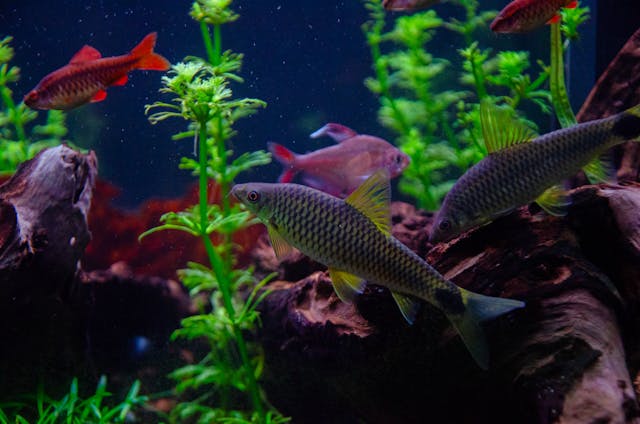
Fish swimming freely throughout the tank is a sign of well-balanced water flow
2. Attach a Sponge to the Filter Outlet
Placing a filter sponge over the outlet diffuses the concentrated stream into a gentle, dispersed flow across multiple directions. This simple modification is one of the most effective ways to reduce aquarium filter flow without reducing the total volume of water processed.
Benefits of an Outlet Sponge
- Reduces flow velocity by dispersing water through the sponge material in multiple directions
- Provides additional biological filtration surface area for beneficial bacteria colonies
- Works with HOB filters, canister filters, and internal filters
- Easy to install — cut a piece of filter sponge to size and secure with a rubber band or friction fit
A sponge with smaller pores slows water flow more effectively but requires more frequent cleaning. Rinse the outlet sponge every two to three weeks in old tank water (not tap water) to remove accumulated debris without destroying the beneficial bacteria colony that develops on the sponge surface.
Intake Sponge for Fry Protection
A sponge placed over the filter intake tube serves a different purpose — it prevents baby fish (fry) and small shrimp from being sucked into the filter. Intake sponges also reduce flow slightly by adding resistance, making them a worthwhile addition in breeding tanks and shrimp tanks.
3. Install a Spray Bar or Diffuser
Spray bars spread the filter output across the full width of the tank through a series of small holes, dramatically reducing flow intensity at any single point. Spray bar attachments distribute water evenly and eliminate the concentrated jet that comes from a standard nozzle.
Spray Bar Benefits
- Distributes flow evenly across the full tank width instead of one concentrated point
- Creates gentle surface agitation for improved gas exchange and oxygenation
- Eliminates concentrated high-flow zones that stress fish
- Adjustable angle lets you direct flow upward, downward, or along the surface
- Simulates natural water movement patterns like gentle rainfall or river current
Spray bars are traditionally included with canister filters, but aftermarket spray bar attachments have become more versatile. Some hang-on-back filters and internal filters now offer compatible spray bar accessories. If your filter does not include a spray bar, universal spray bar kits are available that attach to standard outlet tubing sizes.
4. Build a DIY Baffle
A baffle is a physical barrier placed at the filter outlet that redirects and disperses water flow. Baffles intercept the direct stream and scatter it sideways or upward, reducing the downward force that pushes through the tank.
Common DIY aquarium filter baffles include:
DIY Baffle Options
- Plastic water bottle — cut the bottom off and slide it over the filter outlet so water disperses gently through the open end
- Filter media bag — fill loosely with filter floss and secure over the output nozzle to diffuse flow
- Aquarium-safe plastic sheet — position at an angle to redirect the stream sideways
- Commercial baffle attachments — pre-made baffles designed for specific filter brands
The plastic water bottle method is the most popular DIY baffle for HOB filters. Cut the bottom off a clean plastic bottle, slide it over the filter outlet, and the water flows into the bottle and exits gently through the open bottom rather than as a concentrated stream. This method costs nothing and takes minutes to set up.
5. Use Rocks, Plants, and Hardscape as Natural Flow Breakers
Strategic placement of decorations, rocks, and plants naturally breaks up aquarium filter flow and creates sheltered areas where fish can rest. This approach also creates varied flow zones throughout the tank, allowing fish to choose their preferred current level.
Rocks and driftwood act as physical buffers that redirect strong currents. Placing large river rocks or driftwood pieces near the filter outlet forces the water to flow around them, reducing velocity. These structures create quiet zones behind them where fish can float with minimal effort. Resin cave structures like the PENN-PLAX Reptology Shale Scape serve double duty — they break up flow while providing hiding spots for fish that need a break from current.
Live plants with broad leaves offer excellent current-breaking potential. Species like Amazon sword plants, Anubias, and Java fern create natural barriers that diffuse water flow. Live plants also absorb nitrate and provide biological benefits beyond flow management.
Artificial plants made from plastic or silk provide the same flow-breaking effect without requiring special lighting or plant-specific maintenance. A bundle of artificial plants placed near the filter output can significantly reduce the current felt in the swimming areas of the tank.
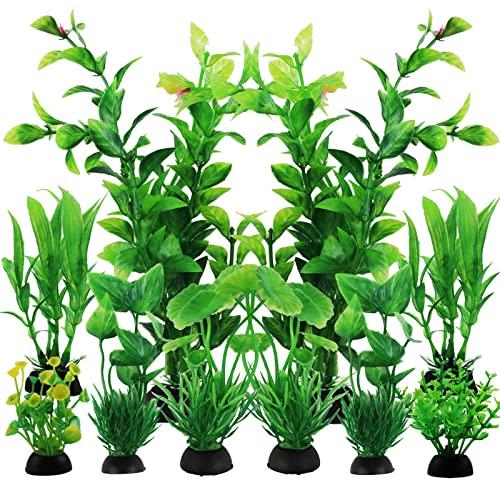
Artificial plant bundles come in multiple sizes, making them easy to position as flow barriers near filter outlets
Affordable bundles like the PietyPet Fish Tank Plants pack include multiple sizes that work well as flow barriers.
Create Flow Zones
Position hardscape to create both high-flow and low-flow areas within the same tank. This lets current-loving species like zebra danios enjoy stronger flow near the filter, while slow-swimming species like betta fish or fancy goldfish rest in calmer zones behind rocks and plants.
6. Redirect the Filter Output
Sometimes the solution is not reducing flow volume but redistributing it. Redirecting the filter output changes where the current goes without reducing filtration effectiveness.
Redirection Options
- Point the output toward the glass — the flow bounces off and disperses in multiple directions
- Angle upward toward the water surface — creates gentle ripples for gas exchange without deep current
- Direct toward the back wall — keeps strong flow away from the main swimming area
- Position to create a circular flow pattern — avoids dead spots while distributing current evenly
Canister filters often include specialized outlet nozzles designed to split the water flow into two directions — left and right simultaneously. These dual-output nozzles halve the force at each point of return while maintaining full filtration volume.
Flow diverter attachments are available for filters that do not include splitting nozzles. These add-on diverters connect to the outlet hose and distribute water into multiple streams directed at different areas of the tank.
Best Setup for Betta Fish Tanks
For betta fish tanks, angle the filter output toward the back glass and slightly upward. The flow bounces off the glass and creates gentle surface movement without producing strong currents in the swimming area where betta fish spend most of their time.
7. Switch to a Different Filter
If adjustments and modifications do not resolve the problem, the filter itself may be oversized or poorly suited for the tank’s inhabitants. Switching to a filter designed for gentler flow can be the most effective long-term solution.
Lower-Flow Filter Options
- Sponge filters — powered by air pumps, producing gentle bubbling flow with excellent biological filtration
- Smaller HOB filters — properly sized for the tank volume rather than oversized
- Internal filters with adjustable flow — compact units with built-in flow control
- Adjustable-flow canister filters — offer precise flow control while maintaining large media capacity
Sponge filters are particularly popular for betta fish tanks and breeding setups because they produce gentle current through air-driven operation rather than a water pump. The sponge material also provides excellent biological filtration surface area for beneficial bacteria.
When selecting a replacement filter, look for models with adjustable flow rated for your tank size rather than choosing one rated well above your volume. A filter rated for 20-30 gallons on a 20-gallon tank provides adequate filtration without overwhelming the inhabitants. HOB filters with built-in flow control and UV sterilization offer both adjustability and water clarity in a single unit. For more guidance on filter selection, see our best aquarium filter guide.
20-75 Gallon Adjustable Water Flow Filter
- Built-in adjustable flow control for 20-75 gallon tanks
- Eliminates the need for DIY baffles or sponge modifications
- Suitable for betta fish, discus, and other flow-sensitive species
Finding the Right Balance
After reducing your aquarium filter flow, observe your fish over several days to confirm the adjustments are working:
Signs of Properly Adjusted Flow
- Fish swimming comfortably throughout the entire tank, not just in sheltered areas
- Plants standing upright and growing naturally
- Gentle surface movement providing adequate gas exchange
- Debris still reaching the filter intake for removal
- No stagnant areas where waste visibly accumulates
Monitor Water Quality After Changes
While reducing flow, ensure your filter still processes enough water to maintain healthy water parameters. Some flow is necessary for removing waste and supporting the biological filter. Test ammonia, nitrite, and nitrate levels regularly for the first two weeks after making changes. If ammonia or nitrite readings rise above zero, the flow reduction may be too aggressive.
Reducing aquarium filter flow does not have to compromise water quality. Using these seven methods — from simple knob adjustments to equipment changes — you can create a comfortable environment for flow-sensitive species while maintaining effective biological and mechanical filtration. Start with the easiest solutions like adjusting filter settings or adding a sponge, and progress to spray bars, baffles, or a filter swap only if simpler methods are not sufficient.
Why is my fish swimming against the filter current?
Fish swimming constantly against the current indicates the flow is too strong. While some fish enjoy occasional swimming in current, persistent struggling is a sign of stress. Reduce the flow using one of the methods in this guide to give your fish calmer water.
Is too much water flow bad for betta fish?
Yes, betta fish are especially sensitive to strong currents. Their long, flowing fins act like sails, making it exhausting to swim against filter flow. Betta fish prefer calm, still water and may hide, refuse to eat, or become stressed in tanks with excessive filtration flow.
How much filter flow do I need for my tank?
A general guideline is 4-6 times tank turnover per hour for most community tanks. For example, a 20-gallon tank needs a filter rated for 80-120 gallons per hour. However, the actual flow in the tank should feel gentle, not create strong visible currents.
Can I use a sponge filter instead to reduce flow?
Sponge filters naturally produce gentle water flow because they are powered by air pumps rather than water pumps. They are a popular choice for betta tanks, fry-rearing tanks, and shrimp tanks where minimal current is essential.
Will reducing filter flow hurt my water quality?
Reducing flow velocity does not necessarily reduce filtration effectiveness. Methods like spray bars and baffles redirect flow rather than restrict it, maintaining the same volume of water processed. Monitor water parameters after making changes to ensure ammonia and nitrite remain at zero.
Related Topics
Found this helpful?
Share this guide with your fellow aquarium enthusiasts!
Written by
FTW Team
The FishTankWorld editorial team brings together experienced aquarists to help you succeed in the hobby.