Goldfish Complete Care Guide
Everything you need to know about keeping Carassius auratus — from first-time tank setup to advanced care. Expert-backed guides on tank requirements, water parameters, diet, compatible tank mates, fancy and single-tail varieties, and health management.
20+ Gallons
Minimum Tank Size
65-75°F
Ideal Temperature
7.0-7.5
pH Range
10-15+ Years
Average Lifespan
6-12+ in
Adult Size Range
Omnivore
Diet Type
About Goldfish (Carassius auratus)
The goldfish — known scientifically as Carassius auratus — is a freshwater fish in the family Cyprinidae, originally domesticated from wild Prussian carp (Carassius gibelio) in ancient China over 1,000 years ago. Goldfish were first selectively bred during the Jin Dynasty (265-420 AD) for their gold coloration, making them one of the earliest domesticated fish species in history. Today, goldfish are among the most widely kept aquarium fish in the world, with an extraordinary range of body shapes, fin types, and color patterns developed through centuries of selective breeding.
Goldfish are not suited for bowls or small containers — a persistent myth that leads to shortened lifespans and preventable suffering. Goldfish produce more ammonia than most tropical fish of comparable size, requiring a cycled aquarium of at least 20 gallons for the first fancy goldfish (30-40 gallons for single-tail varieties), a powerful filter rated for 2-3x the tank volume, and weekly water changes of 25-30% to maintain ammonia at 0 ppm and nitrite at 0 ppm. Goldfish are cold-water fish that thrive at 65-75°F (18-24°C), making them distinct from tropical species and generally not requiring a heater in most homes.
With proper care, goldfish commonly live 10-15 years, with documented cases exceeding 20 years — and the oldest recorded goldfish, Tish, lived to 43 years. Goldfish are social fish that recognize their owners, can be trained to perform simple tricks, and develop distinct personalities over time. Goldfish are broadly divided into two categories: single-tail goldfish (commons, comets, shubunkins) that grow 10-12+ inches and are best suited for large tanks or ponds, and fancy goldfish (orandas, ryukins, black moors, ranchus) with double tails and rounded bodies that reach 6-8 inches and require specialized care.
Scientific Classification
- Kingdom
- Animalia
- Phylum
- Chordata
- Class
- Actinopterygii
- Order
- Cypriniformes
- Family
- Cyprinidae
- Genus
- Carassius
- Species
- C. auratus
- Common Names
- Goldfish, Carassius auratus
- Native Range
- East Asia (China)
- Difficulty
- Beginner-Friendly
First scientifically described by Linnaeus in 1758. Domesticated from Prussian carp over 1,000 years ago in China. Over 200 recognized varieties exist worldwide.
Essential Goldfish Care Requirements
The non-negotiable fundamentals every goldfish keeper needs to get right. Goldfish are hardier than many tropical fish, but their heavy bioload and growth potential demand proper planning.
Tank Size
Minimum 20 gallons for one fancy goldfish, plus 10 gallons per additional fish. Single-tail goldfish (commons, comets) need 30-40 gallons minimum and grow over 12 inches — they are best suited for large aquariums or outdoor ponds. Goldfish produce significantly more waste than tropical fish, so larger tanks provide critical dilution of ammonia between water changes.
Temperature
65-75°F (18-24°C) — goldfish are cold-water fish, not tropical. Most homes maintain this range naturally, so a heater is typically unnecessary. Goldfish can tolerate temperatures as low as 50°F, which makes them suitable for unheated indoor tanks and outdoor ponds in temperate climates. Avoid temperatures above 80°F, which reduce dissolved oxygen and stress goldfish.
Water Parameters
pH 7.0-7.5, ammonia 0 ppm, nitrite 0 ppm, nitrate under 40 ppm. A fully cycled nitrogen cycle is essential before adding goldfish. Test weekly with a liquid test kit (API Master Test Kit recommended). Perform 25-30% water changes weekly — goldfish tanks accumulate nitrate faster than most freshwater setups due to their high waste output.
Filtration
Filter rated for 2-3x your actual tank volume. Goldfish produce more ammonia per inch of body than most freshwater fish. A 40-gallon goldfish tank needs filtration rated for 80-120 gallons. Canister filters are ideal for goldfish aquariums over 30 gallons. HOB (hang-on-back) filters work well for smaller setups. Prioritize biological filtration media capacity over mechanical filtration.
Diet & Feeding
Omnivorous — varied diet is essential. Feed high-quality sinking pellets (not flakes) as a staple to prevent air gulping. Supplement with blanched peas, spinach, zucchini, and frozen bloodworms or brine shrimp for variety. Feed 2-3 times daily, only what goldfish consume in 2 minutes. Fancy goldfish are prone to swim bladder issues from overfeeding and floating foods.
Substrate & Decor
Sand or bare-bottom tanks are safest. Goldfish are habitual substrate foragers and will swallow small gravel, which can cause fatal intestinal blockages. Use sand, large river rocks too big to fit in their mouths, or no substrate at all. Hardy live plants like anubias and java fern add biological filtration, but goldfish will uproot or eat most soft-leaved plants.
Goldfish Care Guides
In-depth guides covering every aspect of goldfish keeping, from beginner setup to advanced variety-specific care.
Tank Setup & Getting Started
Everything you need to set up a proper goldfish aquarium from scratch.
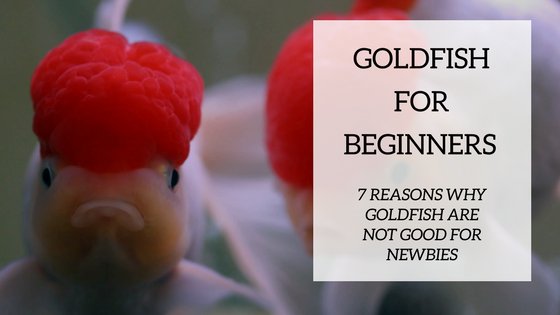
Goldfish Care: Why They're Harder Than You Think
Think goldfish are easy beginner fish? Learn the truth about goldfish care requirements including tank size, filtration, temperature, diet, and why they often die in bowls.
Read Guide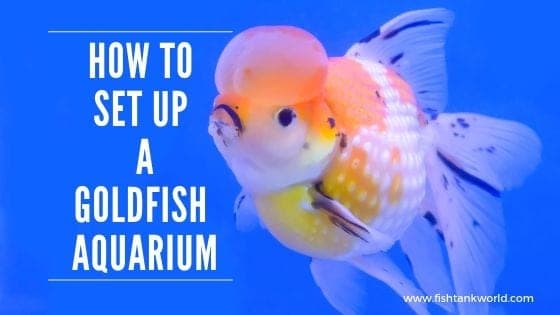
How to Set Up a Goldfish Aquarium the Right Way
The ultimate guide on how to set up a new goldfish aquarium the right way. How to choose the best aquarium, filter, lighting, plants, and tank mates for your goldfish.
Read GuideFeeding & Nutrition
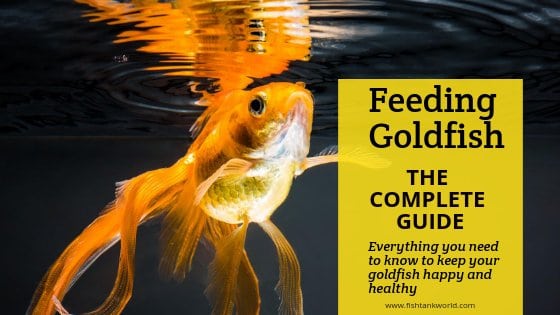
What to feed goldfish, how much, and how often for optimal health and color.
Tank Mates & Compatibility
Which species can safely share an aquarium with your goldfish.
Varieties & Species Profiles
In-depth care guides for specific goldfish varieties.
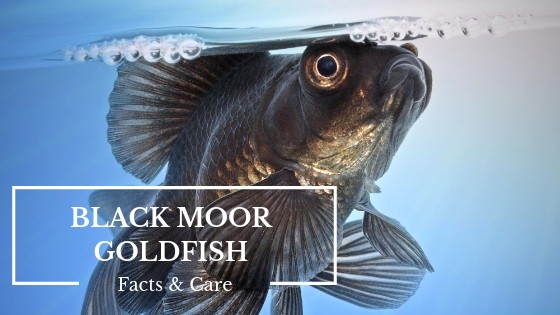
The Ultimate Guide to Black Moor Goldfish Care
Complete care guide for Black Moor goldfish covering tank setup, feeding, water conditions, and compatible tank mates. Learn how to keep these unique telescope-eyed fancy goldfish healthy.
Read Guide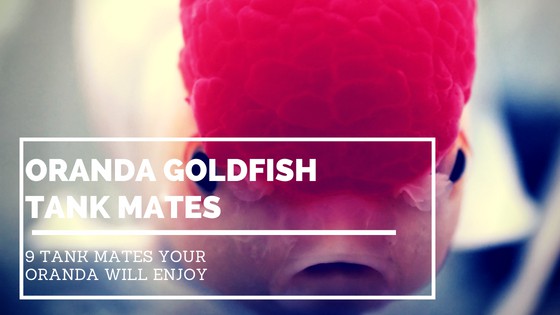
12 Safe Tank Mates for Oranda Goldfish
Find compatible tank mates for your Oranda goldfish. Learn which fancy goldfish varieties, schooling fish, bottom dwellers, and invertebrates can safely share a tank with your Oranda.
Read GuideComparisons
Side-by-side comparisons to help you make informed decisions.
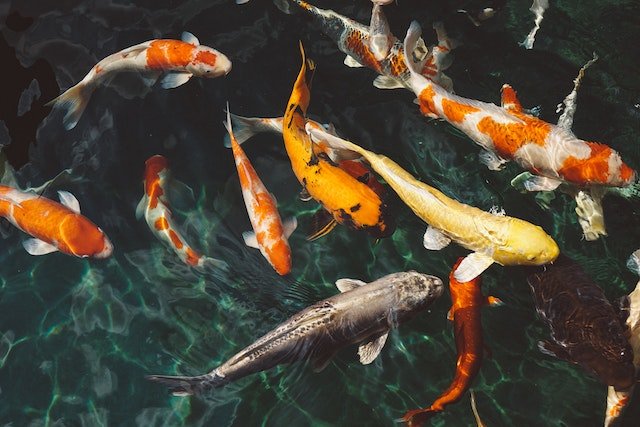
Goldfish Varieties
Over 200 goldfish varieties exist worldwide, divided into two main groups: fancy goldfish with double tails and rounded bodies, and single-tail goldfish that retain the streamlined shape of their carp ancestors.
Fancy Goldfish
Fancy goldfish feature double tails, rounded (egg-shaped) bodies, and various distinctive features developed through selective breeding. Fancy goldfish are slower swimmers that grow 6-8 inches and need 20+ gallons per fish. Never house fancy goldfish with single-tail varieties — the faster single-tails will outcompete fancies for food.
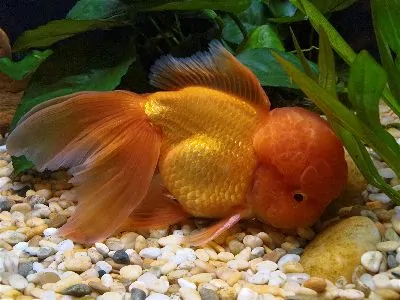
Oranda Goldfish
Oranda goldfish are distinguished by their prominent raspberry-like head growth called a wen, which develops as the fish matures. Orandas grow to 8-12 inches, come in red, orange, red-cap, calico, and blue varieties, and are one of the most popular fancy goldfish breeds. The wen requires clean water to prevent bacterial infection.
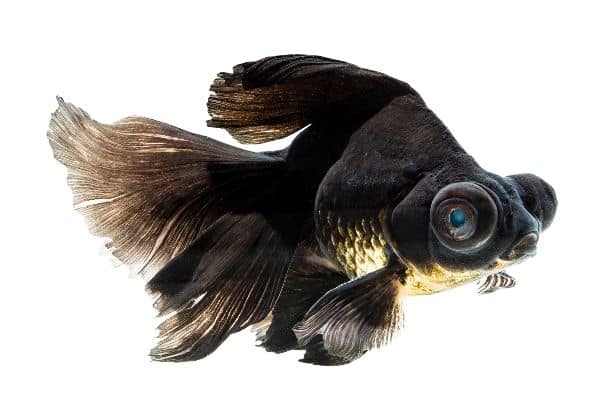
Black Moor Goldfish
Black moor goldfish are a telescope-eye variety with a distinctive velvety black coloration and protruding eyes. Black moors grow to 6-8 inches and are among the hardiest fancy goldfish, making them ideal for beginners. Their poor eyesight means they should only be housed with other slow-swimming fancy varieties.
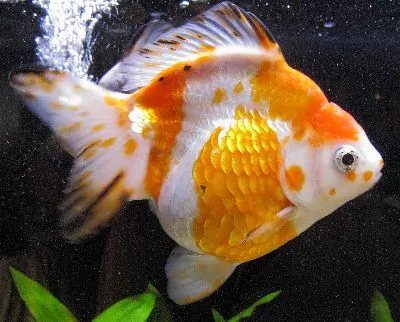
Ryukin Goldfish
Ryukin goldfish are a Japanese variety recognized by their tall dorsal hump and pointed head profile. Ryukins are among the more active fancy goldfish, reaching 6-10 inches, and are available in red, white, calico, and chocolate colorations. Ryukins are hardier than most fancies and tolerate slightly cooler temperatures.
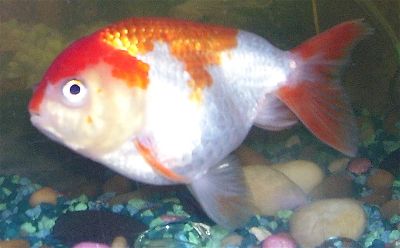
Ranchu / Lionhead
Ranchu and lionhead goldfish lack a dorsal fin entirely, giving them a smooth, curved back profile. Ranchu goldfish are often called the "king of goldfish" in Japan, where competitive breeding is a serious hobby. These varieties grow to 5-8 inches and are among the slowest swimmers, requiring tankmates of similar ability.
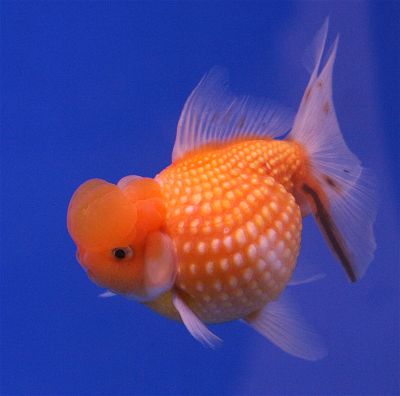
Pearlscale Goldfish
Pearlscale goldfish have uniquely raised, dome-shaped scales that resemble tiny pearls covering their round body. Pearlscales are one of the most delicate fancy varieties, growing to 4-6 inches, and are particularly susceptible to swim bladder issues due to their extremely compressed body shape. Handle with care — damaged scales do not regenerate in their original pearlscale form.
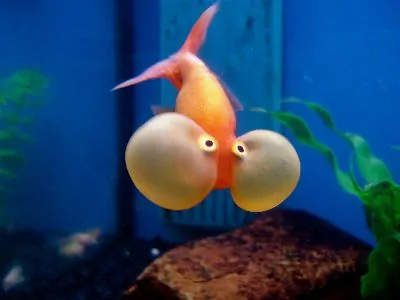
Bubble Eye Goldfish
Bubble eye goldfish feature large, fluid-filled sacs beneath their upward-facing eyes — one of the most unusual fish appearances in the aquarium hobby. Bubble eye goldfish require tanks with no sharp decorations, no strong filtration currents, and very gentle tankmates, as the delicate sacs can rupture (they do regrow, but not always symmetrically).
Single-Tail Goldfish
Single-tail goldfish retain the streamlined body of their carp ancestors. Single-tail goldfish are fast, active swimmers that grow 10-12+ inches and can live 20+ years in proper conditions. These varieties need large aquariums (40+ gallons) or outdoor ponds to reach their full potential.
Common Goldfish
The common goldfish is the closest domestic variety to the original Prussian carp, featuring a single tail, streamlined body, and typically orange coloration. Common goldfish grow to 10-12 inches and are among the hardiest freshwater fish available. Common goldfish are the best choice for outdoor ponds and large aquariums.
Comet Goldfish
Comet goldfish are an American-developed variety distinguished by their long, deeply forked tail fin — up to three-quarters of their body length. Comet goldfish are extremely active swimmers that can reach 12 inches or more. The comet's speed and energy level make them unsuitable for housing with fancy goldfish.
Shubunkin Goldfish
Shubunkin goldfish are a calico-patterned single-tail variety with blue, red, orange, black, and white patches on a nacreous (partially transparent) scale type. The most prized shubunkins have a predominantly blue base color. Shubunkins grow to 12-14 inches and are excellent pond fish that tolerate a wide range of temperatures.
Important: Never mix single-tail and fancy goldfish in the same tank. Single-tail goldfish are significantly faster swimmers and will outcompete fancy goldfish for food, leading to malnutrition in the fancies. The two groups have different space requirements, swimming abilities, and care needs.
Common Goldfish Health Issues
Most goldfish health problems result from poor water quality, overcrowding, or improper diet. Maintaining clean water and proper feeding prevents the majority of goldfish diseases.
Swim Bladder Disorder
Swim bladder disorder is the most common health issue in fancy goldfish, causing buoyancy problems — the fish floats sideways, sinks, or struggles to maintain position. Swim bladder disorder in goldfish is most often caused by overfeeding, constipation, or swallowing air while eating floating foods. Treatment: fast the goldfish for 2-3 days, then feed blanched, deshelled peas. Switching to sinking pellets prevents recurrence.
Ich (White Spot Disease)
Ich (Ichthyophthirius multifiliis) presents as white salt-like spots covering the goldfish's body and fins. Ich in goldfish is highly contagious but very treatable when caught early. Treatment: gradually raise temperature to 78-80°F to speed the parasite's lifecycle, add aquarium salt at 1 tablespoon per 5 gallons, and treat with ich medication. Maintain pristine water quality throughout treatment.
Fin Rot
Fin rot in goldfish is a bacterial infection that causes progressive fraying, discoloration, and deterioration of the fins and tail. Fin rot is almost always caused by poor water quality — elevated ammonia or nitrite levels damage fin tissue and allow bacterial colonization. Treatment: correct water quality first (0 ammonia, 0 nitrite), increase water change frequency. Severe cases may require antibiotics such as kanamycin or erythromycin.
Dropsy
Dropsy in goldfish appears as extreme bloating with scales raised outward in a "pinecone" appearance — a symptom of internal organ failure rather than a disease itself. By the time dropsy is visible in goldfish, internal damage is often severe. Dropsy is typically caused by bacterial infection secondary to chronic stress or poor water conditions. Treatment: Epsom salt baths (1 tablespoon per gallon for 15 minutes) and antibiotics, though prognosis is guarded.
Velvet (Gold Dust Disease)
Velvet (Piscinoodinium) creates a fine gold or rust-colored dust on goldfish skin, best visible with a flashlight held at an angle. Velvet is more dangerous than ich because it is harder to detect in early stages. Treatment: darken the tank completely (the velvet parasite photosynthesizes), raise temperature slightly, and treat with copper-based medication. Quarantine affected goldfish immediately.
Ammonia Poisoning
Ammonia poisoning is a leading cause of goldfish death, especially in new or undersized tanks. Symptoms include red or inflamed gills, gasping at the surface, lethargy, and loss of appetite. Goldfish produce more ammonia than most tropical fish, making them especially vulnerable in uncycled or underfiltered tanks. Treatment: immediate 50% water change with dechlorinated water, add a bacterial supplement, and test ammonia daily until levels reach 0 ppm.
Goldfish Behavior & Intelligence
Goldfish are far more intelligent than popular culture suggests. Research published in the journal Animal Cognition has demonstrated that goldfish can remember information for at least five months, definitively disproving the "3-second memory" myth. Goldfish can learn to navigate mazes, recognize their owners' faces, and associate specific stimuli with feeding time.
Goldfish are social, shoaling fish that benefit from living with other goldfish. In the wild, Carassius auratus form loose groups in slow-moving rivers, lakes, and ponds across East Asia. Goldfish kept alone may become lethargic and less active compared to goldfish housed in groups of two or more. When kept together, goldfish develop social hierarchies and demonstrate cooperative foraging behavior.
Goldfish can be trained using positive reinforcement — they learn to swim through hoops, push levers for food, and come to the surface when their owner approaches. Training goldfish is straightforward: pair a consistent visual or auditory cue with a food reward, and goldfish will learn the association within 1-2 weeks. This level of cognitive ability is comparable to many species traditionally considered more intelligent.
Origin & Natural Habitat
Carassius auratus (goldfish) were first domesticated in China during the Jin Dynasty (265-420 AD) from wild Prussian carp that occasionally displayed gold or orange color mutations. Chinese breeders began selectively breeding these color variants in ornamental ponds, and by the Song Dynasty (960-1279 AD), keeping goldfish had become a popular pastime among the Chinese aristocracy. Goldfish were introduced to Japan in the 1600s and to Europe in the 1700s.
Wild Carassius auratus inhabit slow-moving rivers, lakes, ponds, and ditches across East Asia, preferring shallow, vegetated areas with soft substrate. Wild goldfish are olive-brown or dark gray — the gold coloration is a recessive trait maintained only through selective breeding. Feral goldfish populations in North America, Australia, and Europe demonstrate how quickly domestic goldfish revert to wild coloration and body shape when natural selection replaces human selection.
Goldfish belong to the family Cyprinidae, making them relatives of carp, koi (Cyprinus carpio), barbs, danios, and minnows. The close relationship between goldfish and koi is a common source of confusion — while both are cold-water cyprinids, koi are a domesticated form of common carp and grow to 24-36 inches, requiring outdoor ponds rather than aquariums.
Frequently Asked Questions About Goldfish
Quick answers to the most common goldfish care questions.
How long do goldfish live?
Can goldfish live in a bowl?
How big do goldfish get?
What do goldfish eat?
Do goldfish need a heater?
Do goldfish have a 3-second memory?
Can goldfish live with other fish?
What is the difference between goldfish and koi?
Related Resources
Explore related topics across Fish Tank World to level up your goldfish keeping.
Aquarium Equipment
Canister filters, tank kits, and accessories rated for goldfish bioload.
Aquarium Care
Water quality, tank cycling, maintenance, and troubleshooting guides.
Betta Fish
The other beginner favorite — tropical care, varieties, and tank setup.
Shrimp
Cherry shrimp, ghost shrimp, and other nano tank inhabitants.