
Aquarium pH is one of the most important water parameters for fish health. When pH drifts outside a species’ comfort zone, fish become stressed, vulnerable to disease, and can even die. The good news: managing fish tank pH levels is straightforward once you understand what causes imbalances and how to correct them safely. Below you’ll find ideal ranges for different tank types, common causes of pH swings, testing methods, and seven proven ways to raise or lower aquarium pH safely.
What Is pH and Why Does It Matter in Aquariums?
Aquarium pH measures how acidic or alkaline the water is on a scale from 0 to 14:
- 0–6.9 = Acidic (lower numbers mean higher acidity)
- 7.0 = Neutral
- 7.1–14 = Alkaline/basic (higher numbers mean higher alkalinity)
When testing with a liquid test kit, acidic water appears yellow to red on the color chart, neutral water appears green, and alkaline water appears blue to purple. These color indicators make it easy to get a quick visual read on your aquarium pH.
The pH scale is logarithmic, meaning each whole number represents a tenfold difference in acidity. Water at pH 6 is ten times more acidic than water at pH 7. Water at pH 5 is one hundred times more acidic than pH 7. This is why even small pH shifts can have major effects on fish health.
Stability Over Perfection
Most fish can adapt to a range of pH levels, but they cannot tolerate rapid changes. A stable aquarium pH of 7.2 is better than a pH that swings between 6.8 and 7.4. Stability matters more than hitting a perfect number.
Ideal pH Ranges by Tank Type
Different aquatic environments require different pH levels. The correct aquarium pH depends on which species you keep:
Target pH Ranges
Always research the specific pH requirements of your fish species before adjusting water chemistry. Discus thrive in acidic water (pH 5.5–6.5), African cichlids need alkaline conditions (pH 7.8–8.6), and most common community fish like tetras, guppies, and corydoras do well in a slightly acidic to neutral range (pH 6.5–7.5). Keeping fish in water that matches their natural habitat reduces stress and promotes natural behavior.
How Incorrect pH Affects Fish Health
Fish have evolved to thrive in specific pH ranges. When aquarium pH falls outside a species’ comfort zone, physiological stress begins almost immediately:
Effects of Incorrect Aquarium pH
- Stress hormones increase, weakening the immune system
- Gill membranes become irritated, causing difficulty breathing
- Appetite decreases and growth slows
- Reproductive function shuts down
- Susceptibility to bacterial and parasitic infections rises
- Ammonia toxicity increases in alkaline water (pH above 7.0 makes ammonia more dangerous)
- Severe pH shock can kill fish within hours
Rapid pH changes are even more dangerous than a stable but slightly suboptimal level. A sudden shift of just 0.5 pH units can send fish into osmotic shock, which affects their ability to regulate internal fluid balance.
What Causes pH Imbalances in a Fish Tank?
Understanding the root causes of aquarium pH changes helps you prevent problems rather than constantly chasing corrections.
Factors That Lower Aquarium pH (More Acidic)
Acidifying Factors
- Nitrogen cycle byproducts — beneficial bacteria convert ammonia to nitrate, producing acidic compounds along the way
- Fish waste and decomposing organic matter (uneaten food, dead plant leaves)
- CO2 buildup from fish respiration and inadequate surface agitation
- Driftwood and botanicals releasing tannic and humic acids into the water
- Certain substrates like peat, aquarium soil, and active planted tank substrates
- Infrequent water changes — acids accumulate as buffering minerals get consumed
Factors That Raise Aquarium pH (More Alkaline)
Alkalizing Factors
- Tap water with high mineral content (hard water with elevated KH)
- Crushed coral, limestone, or aragonite substrates and decorations
- Shells, coral skeletons, and calcium-rich rocks dissolving minerals into the water
- Concrete or cement-based decorations leaching alkaline compounds
- Heavy aeration or surface agitation driving off dissolved CO2
How to Test Aquarium pH
Regular testing is the foundation of aquarium pH management. You cannot fix a problem you don’t know about, and fish rarely show obvious symptoms until pH has drifted significantly.
Liquid Test Kits
Liquid test kits provide accurate aquarium pH readings through color comparison with a reference chart. They are affordable, reliable, and the preferred method for most fishkeepers. The API Master Test Kit is the most popular option, testing pH along with ammonia, nitrite, and nitrate in a single package.
Test Strips
Test strips offer convenience for quick pH checks but sacrifice accuracy compared to liquid reagents. They work well as a fast screening tool between more thorough liquid tests, but should not be your only testing method for critical parameters like aquarium pH.
Digital pH Meters
Digital pH meters provide precise numerical readings down to 0.01 units. They excel for frequent testing and situations where exact values matter — such as breeding sensitive species or managing a planted CO2 system. Digital meters require regular calibration with buffer solutions to maintain accuracy.
Always Test Your Tap Water
Tap water pH varies by location and can change seasonally depending on your municipality’s water treatment process. Test your tap water separately before every water change so you know exactly what you’re adding to the aquarium. If your tap water pH differs significantly from your tank water, large water changes can cause dangerous pH swings. An aquarium monitoring system can track pH continuously if manual testing isn’t frequent enough.
7 Ways to Adjust Aquarium pH
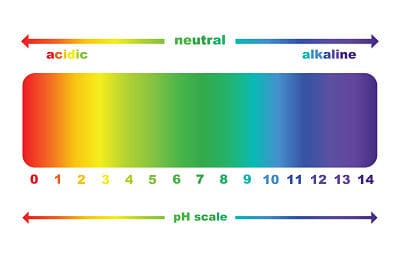
The pH scale ranges from 0 (highly acidic) to 14 (highly alkaline), with 7.0 being neutral
Adjust pH Gradually
Never change aquarium pH by more than 0.2–0.3 units per day. Rapid corrections stress fish more than the original pH problem. When making significant adjustments, work over several days or weeks, monitoring fish behavior at each step. For major changes, consider moving fish to a temporary container with their current water while you adjust the main tank.
Methods to Raise Aquarium pH (More Alkaline)
1. Baking Soda (Sodium Bicarbonate)
Baking soda is a safe, affordable way to raise aquarium pH gradually. Sodium bicarbonate has a pH of 8.4, so it cannot push aquarium pH above that level — making accidental overdose less dangerous than chemical pH adjusters.
Using Baking Soda to Raise Aquarium pH
Calculate the dosage
Use 1 teaspoon of baking soda per 5 gallons of aquarium water. This typically raises pH by approximately 0.2-0.4 units.
Dissolve completely before adding
Mix the baking soda in a cup of tank water until fully dissolved. Never add dry powder directly to the aquarium — undissolved particles can burn fish gills.
Add slowly near the filter output
Pour the dissolved solution gradually near the filter outflow for even distribution throughout the tank.
Wait, test, and repeat if needed
Wait 24 hours, test aquarium pH again, and repeat if necessary. Don't try to reach your target pH in a single day.
2. Increase Aeration and Surface Agitation
Surface agitation drives off dissolved CO2, which raises aquarium pH naturally. Adding an air pump with an airstone, a powerhead, or increasing filter output improves gas exchange at the water surface.
This method is gentle, continuous, and completely fish-safe. Increased aeration also benefits fish health by raising dissolved oxygen levels, making it a win-win adjustment for tanks with low pH caused by CO2 buildup.
3. Add Alkaline Substrates or Decorations
Crushed coral, limestone, and aragonite sand slowly dissolve in aquarium water, raising both pH and KH (carbonate hardness). This provides a long-term buffering effect that stabilizes pH between water changes rather than a one-time correction.
Crushed coral is ideal for tanks that need consistently higher pH, such as African cichlid setups or brackish aquariums. Place crushed coral in a mesh filter bag inside your filter for controlled release, or use it as a partial substrate layer.
Methods to Lower Aquarium pH (More Acidic)
4. Regular Water Changes
Regular partial water changes are the most reliable way to manage aquarium pH over time. Replacing 25% of the tank water every 1–2 weeks removes accumulated acids and waste while replenishing minerals that buffer pH.
If your tap water has lower pH than your tank, water changes naturally bring aquarium pH down. Always dechlorinate tap water and test its pH before adding it to avoid unexpected shifts. Consistent, smaller water changes are safer than infrequent large ones.
5. Peat Moss
Aquarium-safe peat moss releases tannic and humic acids that gradually lower pH and soften water — replicating the blackwater conditions many tropical fish species prefer.
Using Peat Moss to Lower Aquarium pH
Use aquarium-safe peat only
Garden peat often contains fertilizers and pesticides. Use peat moss sold specifically for aquarium use, and rinse it thoroughly before adding.
Place in a mesh bag inside your filter
Put the peat in a fine mesh bag and position it in your filter where water flows through it consistently. This ensures steady, controlled acid release.
Monitor pH over the first week
Peat moss works gradually over days to weeks. Test aquarium pH daily for the first week and adjust the amount as needed.
Expect amber water tinting
Peat typically tints aquarium water amber or light brown. This discoloration is harmless and actually beneficial for many tropical species like tetras, gouramis, and bettas that come from tannin-rich waters.
6. Driftwood
Natural driftwood releases tannins that lower aquarium pH while creating an attractive, natural aesthetic. Malaysian driftwood, mopani wood, and spider wood are popular choices that also provide hiding spots for fish and attachment surfaces for plants like Java fern and Anubias.
Boil driftwood for 1–2 hours before adding it to your aquarium. Boiling removes excess tannins if you want the pH-lowering effect without heavy water discoloration, and also eliminates any bacteria or fungi on the wood surface. For decorations or equipment that you suspect may be leaching tannins and lowering your pH unexpectedly, boiling is an effective way to neutralize those acids.
7. Reverse Osmosis (RO) Water
Reverse osmosis filtration removes dissolved minerals and produces nearly pure water with neutral to slightly acidic pH. Mixing RO water with tap water gives you precise control over both hardness and pH — you can dial in exact parameters for sensitive species.
RO/DI systems require an initial investment but provide the most precise water chemistry control available to home aquarists. They are particularly valuable for fishkeepers with hard, alkaline tap water who want to keep softwater species like discus, cardinal tetras, or crystal shrimp.
What to Avoid When Adjusting Aquarium pH
Dangerous pH Adjustment Methods
- Commercial pH adjusting chemicals — these liquid pH 'up' and 'down' products work quickly but wear off fast, causing pH to bounce back and forth. Repeated dosing creates dangerous instability.
- Vinegar or citric acid — difficult to dose accurately, and the pH-lowering effect is temporary. Vinegar also introduces organic compounds that can fuel bacterial blooms.
- Making large adjustments at once — changing pH by more than 0.3 units in a single day risks osmotic shock, even if the target pH is ideal for your species.
- Chasing a 'perfect' number — constantly tweaking pH does more harm than a slightly off but stable reading. Treat the underlying cause, not the symptom.
Maintaining Stable Aquarium pH Long-Term
Prevention is easier and safer than correction. These practices keep aquarium pH stable so you rarely need to intervene:
pH Stability Practices
- Perform consistent, regular water changes on a fixed schedule — this is the single most effective pH stabilizer
- Avoid overfeeding — excess food decomposes into acidic compounds that push pH down between water changes
- Maintain adequate filtration with healthy biological media to keep the nitrogen cycle running efficiently
- Test aquarium pH weekly and track results over time to spot gradual trends before they become problems
- Know your tap water parameters — pH, KH, and GH — so water changes don't surprise you
- Use appropriate buffers or substrates for your target pH rather than relying on chemical additives
- Avoid overstocking — more fish means more waste, faster acid buildup, and less stable pH
- Boil new driftwood and decorations before adding them to prevent unexpected pH drops from tannic acid leaching
Key Takeaway
Stable aquarium pH is more important than perfect aquarium pH. Most freshwater fish adapt well to water within a reasonable range of their ideal, and many community species thrive anywhere from pH 6.5 to 7.5. Focus on preventing dramatic swings through consistent maintenance rather than chasing a specific number. If your tap water naturally falls within an acceptable range for your fish, you may never need to adjust pH at all.
Conclusion
Aquarium pH management doesn’t need to be complicated. Test regularly with a reliable test kit, understand what influences your tank’s pH, and make gradual adjustments only when necessary. Choose fish species suited to your natural tap water chemistry whenever possible — this eliminates the need for constant pH intervention and makes routine maintenance far simpler.
The most common pH problems stem from inconsistent maintenance habits rather than genuinely difficult water chemistry. Stay on top of water changes, don’t overfeed, and your aquarium pH will stay where it should. For more water quality and tank maintenance guides, see our freshwater care hub.
What pH should my fish tank be?
The ideal aquarium pH depends on your tank type and fish species. Freshwater tanks generally range from 5.5-7.5, tropical tanks from 6.0-7.0, and marine tanks from 7.6-8.4. Research the specific requirements of your fish species, as some prefer acidic water while others need alkaline conditions.
How often should I test my aquarium pH?
Test aquarium pH weekly during routine maintenance and whenever you notice behavioral changes in your fish. New tanks should be tested more frequently during cycling. Consistent testing helps you catch gradual pH shifts before they become dangerous.
Why does my fish tank pH keep dropping?
Aquarium pH naturally drops over time due to the nitrogen cycle producing acidic compounds, fish waste decomposition, and CO2 accumulation. Driftwood and certain substrates can also lower pH. Regular water changes help maintain stable aquarium pH by replenishing buffering minerals.
Can I use vinegar to lower aquarium pH?
Vinegar is not recommended for aquarium pH adjustment. While vinegar does lower pH, the effect is temporary, difficult to control, and can harm fish if overdosed. Use safer methods like peat moss, driftwood, or reverse osmosis water for gradual, stable pH reduction.
How fast can I change my aquarium pH?
Aquarium pH changes should be gradual — no more than 0.2-0.3 units per day. Rapid pH swings stress fish more than slightly suboptimal but stable levels. When making pH adjustments, work slowly over several days or weeks, monitoring fish behavior throughout the process.
What is the difference between pH and KH in an aquarium?
Aquarium pH measures how acidic or alkaline the water is, while KH (carbonate hardness) measures the water's buffering capacity — its ability to resist pH changes. Low KH makes aquarium pH unstable and prone to sudden crashes. Maintaining adequate KH (4-8 dKH for most freshwater tanks) keeps pH stable between water changes.
Related Topics
Found this helpful?
Share this guide with your fellow aquarium enthusiasts!

Written by
FTW Team
The FishTankWorld editorial team brings together experienced aquarists to help you succeed in the hobby.