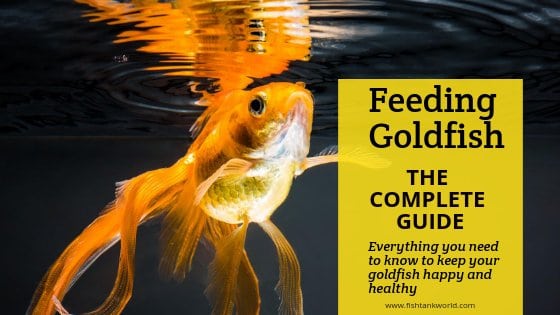
Feed goldfish 2-3 times daily with portions no larger than the fish’s eye, combining quality sinking pellets or gel food with blanched vegetables and occasional protein treats like freeze-dried bloodworms or brine shrimp. Goldfish are omnivores that need dietary variety — relying on flakes alone leads to digestive problems, faded color, and shortened lifespans.
Goldfish are one of the most commonly kept fish in the world, descended from Chinese carp domesticated over a thousand years ago. Yet many goldfish owners still get feeding wrong — overfeeding, choosing the wrong foods, or relying entirely on a pinch of flakes. Goldfish don’t thrive on neglect or inconsistent care, and proper goldfish nutrition comes down to three questions: what to feed, how much to feed, and how often to feed.
Goldfish Digestive System
Goldfish have no stomach — food passes directly from the mouth through an intestinal tract roughly twice their body length. This unique anatomy means goldfish can’t process large meals efficiently and need smaller, more frequent feedings throughout the day. Soft foods work better than hard foods because goldfish digest them faster.
Four Fun Goldfish Feeding Facts
Goldfish anatomy is surprisingly specialized for feeding, and understanding these four traits explains why goldfish eat the way they do.
1. Goldfish Have Pharyngeal Teeth
Goldfish possess teeth, but not where you’d expect. Pharyngeal teeth sit in the throat behind the nasal cavity and above the esophagus. These teeth crush and grind food rather than bite it, which is why goldfish can handle pellets, vegetable pieces, and even small snail shells.
2. Goldfish Have a Protractile Jaw
A goldfish’s jaw extends forward during feeding, allowing the fish to sift through gravel and substrate while foraging. This protractile jaw lets goldfish push their mouth into the substrate, sieve out food particles, and expel the gravel — mimicking their wild carp ancestors.
3. Goldfish Have No Tongue
Instead of a tongue, goldfish have a structure called a gullet with taste buds distributed throughout the mouth interior and around the lips. Goldfish sample potential food items by biting them to determine whether something is edible before swallowing.
4. Goldfish Have No Stomach
The lack of a stomach is the single most important fact for goldfish feeding. Goldfish lack a stomach entirely, so food passes directly into an intestinal tract roughly twice the fish’s body length. Food is broken down and nutrients absorbed as it moves through this long intestine. The result? Goldfish produce a lot of waste, and they need multiple smaller feedings rather than one large meal.
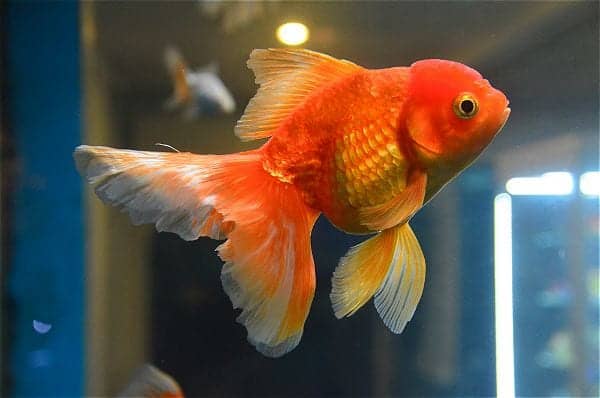
Healthy goldfish are active foragers that constantly search for food throughout the tank.
What Do Goldfish Eat in the Wild?
Wild goldfish are true omnivores that eat both plant matter and animal protein. Their natural diet includes insects and larvae, aquatic plants and algae, worms, shrimp, various crustaceans, and occasionally small fish. Goldfish are greedy and will essentially eat anything they can swallow.
Wild goldfish are primarily foragers rather than active hunters. Like their carp ancestors, goldfish sift through substrate searching for food particles. They also nibble on live plants for fiber and nutrition — a behavior you’ll see in aquariums where goldfish routinely destroy planted tanks.
The key principle for feeding goldfish in captivity: a diet that closely mimics what goldfish eat in their natural environment produces the healthiest fish. That means a mix of protein, vegetables, and plant matter — not just flakes from a container.
Commercial Goldfish Food: Flakes and Pellets
Why Flakes and Pellets Alone Aren’t Enough
Commercial goldfish flakes and pellets are convenient and provide balanced baseline nutrition, but they have significant limitations that goldfish keepers should understand.
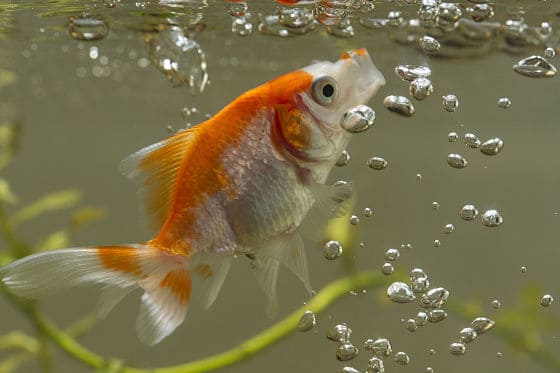
Many commercial goldfish foods are padded out with bulking agents and carbohydrates despite being labeled as “complete goldfish food.” Goldfish fed solely on commercial dry food often develop trouble with digestion or become constipated. Floating flakes encourage goldfish to gulp air at the surface, which can contribute to swim bladder problems — especially in fancy goldfish varieties. Flakes also decompose quickly in water, clouding the tank if not eaten within minutes.
Pellets present their own problems. Dry pellets absorb water and expand to two or three times their original size inside the fish’s digestive tract. This expansion causes bloating and constipation, particularly in round-bodied fancy goldfish like Orandas and Ranchus.
Another issue: the nutritional value of commercial food diminishes once the packaging is opened. Exposure to air causes moisture absorption that degrades the food over time.
Soak Pellets Before Feeding
Soaking pellets in tank water for 5-10 minutes before feeding allows them to expand outside the fish rather than inside. This simple step prevents bloating and swim bladder issues, especially for fancy goldfish varieties like Orandas, Ranchus, and Lionheads.
Recommended Commercial Goldfish Foods
While commercial food shouldn’t be the entire diet, quality brands provide a reliable nutritional foundation. These three goldfish foods stand out for their ingredients and formulation:
TetraFin Balanced Diet Goldfish Flake Food is designed specifically for goldfish nutritional needs. TetraFin flakes contain high-protein fish meal and are formulated to remain firm in water longer than budget brands, which helps prevent clouding. TetraFin Balanced Diet flakes work well as a daily staple when supplemented with fresh foods.
Aqueon Goldfish Granules are made from natural ingredients and suit common goldfish, fancy orandas, and koi alike. Aqueon Goldfish Granules are formulated to reduce waste output, which helps maintain water quality in goldfish tanks that already run high on bioload.
Hikari Lionhead Sinking Pellets are the premium option for fancy goldfish keepers. Hikari Lionhead pellets sink rather than float, which prevents the air-gulping that causes swim bladder problems in round-bodied fancy goldfish varieties like Lionheads, Orandas, Ranchus, and Azumanishiki. Hikari Lionhead pellets are more expensive than standard goldfish food but promote vivid coloration and healthy head growth (wen development) in fancy varieties.
Gel Food: The Best Alternative to Dry Food
Repashy Super Gold gel food offers the best of both worlds — the convenience of commercial food with the digestive benefits of fresh food. Repashy Super Gold is a meal replacement gel designed specifically for goldfish, with no bulking agents or artificial additives.
Preparing Repashy Super Gold is straightforward: mix the powder with boiling water, microwave briefly to set, then let the gel cool. Cut the finished gel into cubes or shred it for feeding. Store Repashy Super Gold in the refrigerator for up to two weeks, or freeze portions for up to six months.
Repashy Super Gold gel food allows customization — mix in blanched vegetables, spirulina powder, or bell pepper for enhanced color. The high moisture content aids goldfish digestion, and the gel sinks naturally so goldfish don’t gulp air while eating.
Best Goldfish Foods Compared
| Food Type | Sinking pellet | Slow-sinking granule | Floating flake |
| Best For | Fancy goldfish (Lionhead, Oranda, Ranchu) | Common goldfish, orandas, koi | Budget daily staple |
| Sinks (No Air-Gulping) | — | ||
| Swim Bladder Safe | — | ||
| Color Enhancing | — | — | |
| Preparation | Soak 5 min before feeding | Ready to feed | Ready to feed |
| Check Price | Check Price | Check Price |
- Food Type
- Sinking pellet
- Best For
- Fancy goldfish (Lionhead, Oranda, Ranchu)
- Sinks (No Air-Gulping)
- Swim Bladder Safe
- Color Enhancing
- Preparation
- Soak 5 min before feeding
- Food Type
- Slow-sinking granule
- Best For
- Common goldfish, orandas, koi
- Sinks (No Air-Gulping)
- Swim Bladder Safe
- Color Enhancing
- —
- Preparation
- Ready to feed
- Food Type
- Floating flake
- Best For
- Budget daily staple
- Sinks (No Air-Gulping)
- —
- Swim Bladder Safe
- —
- Color Enhancing
- —
- Preparation
- Ready to feed
Preparing fresh foods and gel food gives goldfish a varied, nutritious diet beyond what flakes alone provide.
Vegetables for Goldfish
Fresh vegetables provide fiber and essential nutrients that commercial goldfish food often lacks. Vegetables are especially important for preventing constipation — one of the most common goldfish health problems.
Safe Vegetables for Goldfish
Goldfish readily eat a wide range of blanched vegetables:
Goldfish-Safe Vegetables
- Peas (shelled, blanched, and lightly mashed) — the go-to remedy for goldfish constipation
- Cucumber slices (blanched, cut thin)
- Zucchini slices (blanched)
- Lettuce leaves (tear into pieces or clip to tank wall)
- Spinach leaves (blanched, torn into small pieces)
- Corn kernels (blanched, with outer skin removed)
- Rice (cooked, unseasoned, plain white)
- Seaweed sheets (nori — a favorite of many goldfish)
Seaweed fish food sheets designed for aquarium fish are a convenient option — they’re pre-cut to the right size and free of seasonings that human nori sometimes contains.
Always Blanch Vegetables First
Always blanch or lightly boil vegetables before feeding them to goldfish. Blanching breaks down cellulose fibers that goldfish cannot digest raw, and it softens the food for easier consumption. Raw vegetables may cause intestinal blockages. Cut blanched vegetables into pieces about one or two millimeters in diameter — roughly the size of the goldfish’s eye.
A veggie clip attached to the aquarium glass makes feeding leafy greens and seaweed sheets easy — just clip a leaf of lettuce, spinach, or nori to the side of the tank and let goldfish graze throughout the day.
Live aquatic plants also provide natural grazing opportunities for goldfish. Duckweed is an excellent option — this fast-growing floating plant gives goldfish something to nibble on between feedings and reproduces quickly enough to keep up with goldfish appetites.
Fruits as Occasional Treats
Goldfish enjoy fruit, but all fruit should be treated as an occasional treat due to high fructose (sugar) content. Fruit is not a substitute for vegetables or protein in a goldfish’s diet.
Safe Fruit Treats for Goldfish
- Grapes (peeled and quartered into small pieces)
- Apple slices (peeled, no seeds — apple seeds are toxic)
- Strawberry pieces (cut small)
- Orange segments (remove membrane)
- Mango pieces (peeled, cut small)
- Banana slices (peeled, cut thin)
Limit fruit treats to once or twice per week at most. The sugar content can cause digestive issues if fed too frequently.
Live and Frozen Food Options
Live and frozen foods provide excellent protein and stimulate goldfish natural foraging instincts. Watching goldfish chase live daphnia or brine shrimp is one of the most entertaining parts of goldfish keeping.
Live Foods for Goldfish
Protein-Rich Live Foods
- Daphnia (water fleas) — excellent for digestive health
- Brine shrimp — a goldfish favorite
- Bloodworms — high in protein
- Tubifex worms
- Earthworms (chopped into small pieces)
- Aquarium snails — goldfish crush these with their pharyngeal teeth
- Krill
- Plankton
Live food carries a small risk of introducing diseases or parasites to goldfish, though the risk is minimal when purchasing from reputable suppliers. Frozen and freeze-dried versions of these same foods significantly reduce disease risk while maintaining most of the nutritional value.
Recommended Freeze-Dried Foods
Freeze-dried foods offer the nutritional benefits of live food with the convenience and safety of commercial food. These three freeze-dried products are reliable choices for goldfish:
Hikari Freeze-Dried Bloodworms undergo a pharmaceutical-grade freeze-drying process that eliminates parasites and bacteria while preserving nutritional content. Hikari Freeze-Dried Bloodworms won’t cloud tank water and can serve as treats or a regular component of the goldfish diet.
Hikari Freeze-Dried Tubifex Worms use the same pharmaceutical-grade process. Feed Hikari Freeze-Dried Tubifex Worms as-is or soak them briefly in tank water to soften. Goldfish enjoy tearing apart the compressed tubifex cubes, which provides enrichment alongside nutrition.
San Francisco Bay Brand Freeze-Dried Brine Shrimp are enriched, saltwater-raised brine shrimp rich in essential fatty acids, protein, and natural pigments. San Francisco Bay Brand Freeze-Dried Brine Shrimp enhance goldfish color vibrancy over time. Crumble them to powder for small goldfish or break into chunks for larger fish.
Best Freeze-Dried Treats for Goldfish
| Food Type | Bloodworms | Tubifex worms (cubes) | Brine shrimp (enriched) |
| Protein Level | High | High | High |
| Color Enhancing | — | — | |
| Parasite-Free Process | |||
| How to Feed | Drop in or soak | Stick to glass or break apart | Crumble or break into chunks |
| Check Price | Check Price | Check Price |
- Food Type
- Bloodworms
- Protein Level
- High
- Color Enhancing
- —
- Parasite-Free Process
- How to Feed
- Drop in or soak
- Food Type
- Tubifex worms (cubes)
- Protein Level
- High
- Color Enhancing
- —
- Parasite-Free Process
- How to Feed
- Stick to glass or break apart
- Food Type
- Brine shrimp (enriched)
- Protein Level
- High
- Color Enhancing
- Parasite-Free Process
- How to Feed
- Crumble or break into chunks
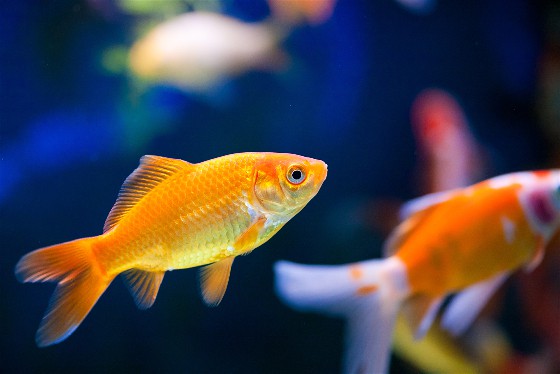
Goldfish are enthusiastic eaters that benefit from a varied diet of commercial food, vegetables, and protein treats.
Foods to Avoid: What Goldfish Should Never Eat
Some common foods are harmful or dangerous to goldfish. Never feed goldfish anything outside their natural diet range.
Never Feed These to Goldfish
- Bitter vegetables — cabbage, Brussels sprouts, broccoli (cause digestive distress)
- Onions, leeks, and shallots (toxic to fish)
- Bread and crackers (carbohydrates are very difficult for goldfish to digest)
- Cookie crumbs, sweets, or anything with added sugar
- Any food containing salt, seasoning, or dairy
- Raw meat of any kind
- Any processed human food
How Much and How Often to Feed Goldfish
The single most common goldfish care mistake is overfeeding. Goldfish have no stomach and process food continuously, so they never feel “full.” Their constant foraging behavior makes goldfish appear hungry even when they’ve been adequately fed.
Goldfish are the Labrador dogs of the aquatic world — they will happily eat themselves sick if given the chance. Don’t give in to begging behavior after feeding time.
The Eye Rule for Portion Size
Feed only the amount of food that would equal the size of your goldfish’s eye per feeding. This surprisingly small quantity is all a goldfish needs. The eye rule applies to each individual feeding, not the entire day’s food.
Goldfish Feeding Schedule
Feed adult goldfish twice daily as a baseline. If feeding three or four times daily, reduce each portion proportionally. Consistency in timing matters more than hitting a specific number of feedings.
Recommended Feeding Routine
- Feed 2-3 times daily at consistent times
- Offer only what goldfish consume within 2-3 minutes
- Scoop out uneaten food immediately to prevent decomposition
- Consider one fasting day per week for digestive health
- Vary the diet — rotate between pellets, vegetables, and protein foods
Vacation Feeding Solutions
Going on vacation doesn’t mean your goldfish will starve. Healthy adult goldfish can generally go without food for up to eight days, and sometimes as long as two weeks. In an extreme case, two New Zealand goldfish survived 134 days without food after the 2011 Christchurch earthquake trapped them — though this kind of extended fasting is obviously not advisable.
The real concern during extended absences isn’t just nutrition. Without regular feeding and observation, water quality issues can go unnoticed and become dangerous.
Feeder Blocks
Slow-dissolving feeder blocks are inexpensive and easy to drop into the tank before leaving. However, feeder blocks have drawbacks: they frequently cloud tank water, alter water chemistry, and some contain copper that’s toxic to invertebrates. Many experienced goldfish keepers avoid feeder blocks entirely.
Automatic Fish Feeders
Battery-powered or plug-in automatic fish feeders dispense pre-measured portions on a programmable schedule. Fill an automatic fish feeder with pellets or flakes, set the feeding times, and the device handles the rest. Automatic fish feeders are the most reliable vacation feeding option besides a trusted human.
House Sitters
Having a trusted person feed your goldfish is the best option — as long as that person understands proper portions. The biggest risk with house sitters is overfeeding.
Pre-Measure Portions for Pet Sitters
For pet sitters, place each individual feeding in a labeled compartment of a pill organizer or small container. Mark each compartment with the day and time (Monday AM, Monday PM, etc.). This prevents well-meaning friends from accidentally dumping half a container of food into the tank.
Signs of Proper Goldfish Nutrition
Well-fed goldfish on a balanced diet display clear signs of good health:
Signs of Good Goldfish Nutrition
- Vibrant, consistent coloration without fading
- Active, curious swimming behavior and steady foraging
- Smooth, even body shape without bloating or wasting
- Clear eyes and intact, undamaged fins
- Regular, normal waste production (not stringy or discolored)
Faded color, lethargy, bloating, clamped fins, or stringy white feces often indicate dietary problems. Review the feeding routine and diet variety if these symptoms appear. For more on maintaining overall goldfish health, see our goldfish care for beginners guide.
Putting It All Together
Feeding goldfish properly requires understanding their unique digestive system and resisting the constant urge to overfeed. A varied diet of quality sinking pellets or gel food, supplemented with blanched vegetables twice a week and occasional live or freeze-dried protein treats, keeps goldfish healthy, colorful, and active for years.
The ideal goldfish feeding routine combines convenience and variety: use a quality commercial food like Hikari Lionhead Sinking Pellets or Repashy Super Gold as the daily base, add blanched peas or cucumber two to three times per week, and offer freeze-dried bloodworms or brine shrimp as a treat once or twice weekly.
For more goldfish guidance, explore our complete goldfish guide or dive into specific topics like setting up a goldfish aquarium, choosing compatible tank mates for Orandas, and understanding the differences between koi and goldfish.
How often should I feed my goldfish?
Feed adult goldfish 2-3 times daily, offering only what they can consume in 2-3 minutes per feeding. Each portion should be roughly the size of the goldfish's eye. Young goldfish benefit from more frequent, smaller feedings. Consistency matters more than exact timing.
How long can goldfish go without food?
Healthy adult goldfish can survive up to 8 days without food, sometimes up to two weeks. In an extreme case, two New Zealand goldfish survived 134 days without food after the 2011 Christchurch earthquake. However, regular feeding is essential for long-term health. For vacations, use an automatic fish feeder or arrange for someone to feed your fish with pre-measured portions.
Why is my goldfish always hungry?
Goldfish have no stomachs and process food through an intestinal tract roughly twice their body length. This means they don't feel 'full' the way humans do. Their constant foraging behavior is completely natural — not a sign they need more food. Goldfish are the Labrador dogs of the aquatic world and will happily eat themselves sick if given the chance. Overfeeding causes far more problems than underfeeding.
What is the best food for goldfish?
A varied diet works best for goldfish. Combine a quality sinking pellet like Hikari Lionhead or Aqueon Goldfish Granules with blanched vegetables (peas, cucumber, zucchini), occasional live or freeze-dried protein (bloodworms, brine shrimp, daphnia), and gel food like Repashy Super Gold. This variety mimics the omnivorous diet goldfish eat in the wild.
Can goldfish eat vegetables and fruit?
Yes, goldfish benefit from blanched vegetables like shelled peas, cucumber, zucchini, lettuce, and spinach. Always blanch or lightly boil vegetables first to break down cellulose fibers. Fruits like peeled grapes, apple slices, and strawberries can be offered as occasional treats, but limit fruit due to high fructose content.
Related Topics
Found this helpful?
Share this guide with your fellow aquarium enthusiasts!
Written by
FTW Team
The FishTankWorld editorial team brings together experienced aquarists to help you succeed in the hobby.