
Cloudy aquarium water signals an imbalance in your tank — whether from bacterial activity, algae growth, or organic buildup. The cloudiness itself is rarely dangerous, but it points to a problem that needs attention. Identifying the type of cloudiness by its color and appearance is the first step toward choosing the right fix.
Diagnosis First
The color of cloudy aquarium water reveals the cause. White or gray cloudiness, green water, yellow-tinted water, and dusty particles all have different origins and require different treatments. Identify what you’re dealing with before taking action.
Types of Cloudy Aquarium Water
Cloudy aquarium water falls into three visual categories, each pointing to a different underlying cause:
- Clear water with a color tint — The water is transparent but has a green, yellow, brown, or pinkish hue
- Clear water with suspended particles — Visible specks or dust floating throughout the tank
- Opaque cloudy water — The water is murky and difficult to see through, appearing white, gray, or green
Each type has specific causes and solutions covered below.
White or Gray Cloudy Water (Bacterial Bloom)
White or gray cloudiness is the most common type of cloudy aquarium water, especially in tanks that are new, recently cleaned, or overstocked. The milky appearance comes from a rapid explosion in bacterial populations.
What Causes White Cloudy Aquarium Water
Bacterial blooms occur when free-floating bacteria multiply faster than the tank’s biological filtration can manage. Common triggers include:
- New tank syndrome — The nitrogen cycle is establishing and beneficial bacteria are colonizing filter media and surfaces
- Aggressive cleaning — Scrubbing the filter, replacing all media at once, or deep-cleaning the substrate removes the beneficial bacteria that keep water clear
- Overstocking — Adding too many fish at once overwhelms the existing biological filtration capacity
- Overfeeding — Excess uneaten food decays and provides nutrients that fuel bacterial growth
New Tank Cloudiness Is Normal
Bacterial blooms during the first 2-4 weeks of a new aquarium are a normal part of the nitrogen cycle. Beneficial bacteria are colonizing your filter and tank surfaces, which is exactly what needs to happen for a healthy aquarium. This cloudiness typically resolves within 1-2 weeks without intervention.
How to Fix White Cloudy Aquarium Water
What to Do
- Be patient — most bacterial blooms clear naturally in 1-2 weeks as biological filtration establishes
- Reduce feeding to once daily with only what fish consume in 2 minutes
- Avoid adding more fish until the water clears completely
- Perform small water changes (10-15%) only if ammonia levels spike
- Ensure your filter has adequate biological media and is running continuously
What NOT to Do
- Don't do massive water changes — this disrupts the nitrogen cycle and can restart the bloom
- Don't add chemicals unless water testing shows dangerous ammonia or nitrite levels
- Don't clean the filter during a bloom — you'll remove the beneficial bacteria you need
- Don't tear down and restart the tank — this resets the cycling process entirely
Green Water (Algae Bloom)
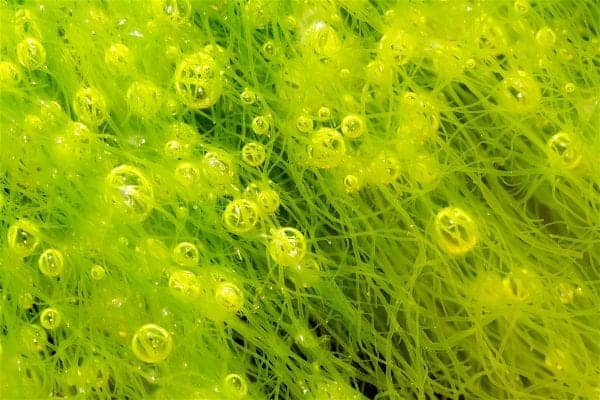
Green aquarium water is caused by millions of microscopic single-celled algae suspended in the water column
Green aquarium water — from a slight haze to thick “pea soup” — is caused by free-floating single-celled algae reproducing rapidly in the water column. Unlike the algae that grows on glass and decorations, these algae cells are microscopic and suspended throughout the water.
What Causes Green Aquarium Water
Free-floating algae blooms are fueled by a combination of excess light and excess nutrients. Common triggers include:
- Excessive lighting — Running aquarium lights for more than 10 hours daily
- Direct sunlight — A tank positioned near a window receives uncontrolled light that fuels algae growth
- Overfeeding — Uneaten food breaks down into phosphates and nitrates that algae consume
- High nitrate or phosphate levels — Often caused by infrequent water changes or overstocking
Severe Algae Blooms Affect Oxygen
Severe green water blooms can deplete dissolved oxygen at night when algae switch from photosynthesis to respiration. Fish gasping at the surface in the morning is a warning sign. Increase surface agitation immediately and begin treatment.
How to Clear Green Aquarium Water
Clearing Green Water Step by Step
Reduce light immediately
Cut light duration to 6 hours daily. For severe blooms, perform a complete blackout by turning off lights and covering the tank with a blanket for 3-5 days. Aquarium plants can survive short blackouts; the algae bloom cannot.
Cut back on feeding
Feed once daily with only what fish consume in 2 minutes. Less food means fewer dissolved nutrients for algae to feed on.
Perform partial water changes
Change 25-30% of the water every few days to physically remove algae cells and dilute the nutrients fueling the bloom.
Add fast-growing live plants
Fast-growing plants like hornwort, water sprite, and floating plants (water lettuce, frogbit) compete directly with algae for nutrients. Floating plants also block light from above.
Consider a UV sterilizer for persistent blooms
A UV sterilizer kills free-floating algae as water passes through the unit. This is highly effective for recurring green water without harming fish, plants, or beneficial bacteria.
For persistent green water that doesn’t respond to light reduction and feeding changes, a UV sterilizer is the most reliable solution. Adding algae-eating fish or invertebrates won’t solve green water — most algae eaters consume surface algae, not the microscopic cells floating in the water column.
Yellow or Brown Tinted Water
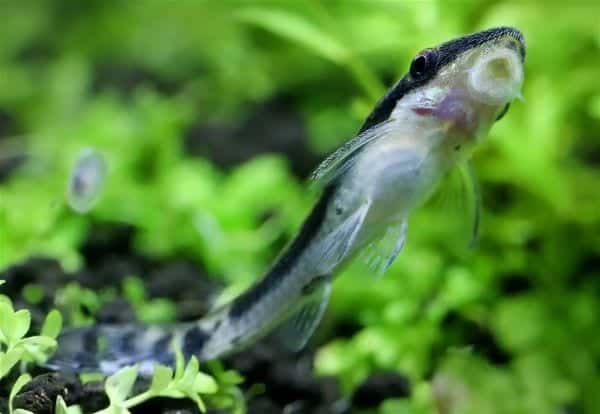
Yellow or brown water tints are commonly caused by tannins from driftwood or decaying organic matter
Yellow or brown aquarium water appears tea-colored or amber-tinted. The water is still clear — you can see through it — but it has a noticeable warm discoloration caused by dissolved organic compounds.
What Causes Yellow or Brown Aquarium Water
- Driftwood tannins — New or untreated driftwood leaches tannins that tint the water brown. This is harmless and often desirable for fish from blackwater habitats like tetras and bettas.
- Decaying organic matter — Dead plant leaves, uneaten food, and fish waste release colored compounds as they decompose. This indicates the tank needs better maintenance habits.
Note: if the brown discoloration appears as a dusty coating on glass and surfaces rather than a tint in the water itself, the cause is likely brown algae (diatoms) rather than dissolved organics — and the treatment is different.
- Exhausted activated carbon — Old carbon that has reached its absorption capacity can release previously captured compounds back into the water.
How to Clear Yellow or Brown Aquarium Water
Clearing Discolored Water
- Install fresh activated carbon in your filter — it absorbs dissolved organic compounds that cause discoloration
- Replace activated carbon every 3-4 weeks, as it becomes saturated and stops working
- Pre-soak new driftwood in a bucket for 1-2 weeks before adding it to your tank
- Remove decaying plant leaves and uneaten food promptly
- Vacuum the substrate during water changes to remove accumulated organic debris
- Perform regular 20-25% water changes to dilute discoloration
Tannins Can Be Beneficial
Some aquarists deliberately add tannins using Indian almond leaves, driftwood, or blackwater extract to create natural conditions. Tannins lower pH slightly and have mild antifungal properties. Fish from tannin-rich habitats — including many tetras, rasboras, and bettas — may actually thrive in slightly tinted water.
Reddish or Pink Tinted Water
Reddish or pink tinted aquarium water is less common but usually traces back to one cause: colored fish food dye leaching into the water. Some lower-quality fish foods use artificial dyes that dissolve when the food sits uneaten in the tank.
How to Fix Pink or Red Tinted Water
Reduce feeding immediately — the tint indicates uneaten food is sitting in the tank long enough for dye to leach out. Feed only what your fish consume within 2 minutes and remove any visible uneaten food. A partial water change clears the discoloration, and switching to a higher-quality fish food without artificial dyes prevents recurrence. Activated carbon also absorbs the dissolved colorants.
Dusty or Gritty Cloudy Water
Cloudy aquarium water with fine dust or grit floating through it is caused by physical particles, not biological activity. Particle cloudiness clears fastest because mechanical filtration removes the debris within 24-48 hours.
What Causes Particle Cloudiness
- Unwashed substrate — New gravel or sand that wasn’t rinsed before adding to the tank releases dust and fine particles
- Disturbed substrate — Aggressive gravel vacuuming, fish digging, or rearranging decorations stirs up settled debris
- Inadequate filtration — An undersized or malfunctioning filter can’t capture particles fast enough, especially in tanks with large, active fish like cichlids that constantly move substrate
How to Clear Particle Cloudiness
Clearing Dusty Water
- Let the filter run — mechanical filtration removes most particles within 24-48 hours
- Add filter floss or a fine polishing pad to your filter for faster clearing
- Avoid disturbing the substrate again until the water clears
- Always rinse new gravel or sand thoroughly before adding it to any tank
- Water clarifiers (flocculants) clump fine particles together so filters catch them faster — change filter media every 1-2 days when using clarifiers
Quick Reference: Cloudy Aquarium Water by Color
White/Gray Cloudiness
Bacterial bloom
- Most common in new tanks
- Clears naturally in 1-2 weeks
- Caused by nitrogen cycle bacteria
- Reduce feeding, be patient
- Avoid large water changes
Green Cloudiness
Algae bloom
- Caused by excess light + nutrients
- Reduce light to 6-8 hours daily
- Try blackout for severe cases
- Regular water changes help
- UV sterilizer for persistent blooms
Yellow/Brown Tint
Organic compounds or tannins
- Often from driftwood tannins
- Or decaying organic matter
- Activated carbon removes it
- Remove dead plant matter
- May be beneficial for some fish
Dusty/Particles
Substrate debris
- Unwashed or disturbed gravel
- Filter clears in 24-48 hours
- Add fine filter media or floss
- Always rinse new substrate
- Flocculants speed up clearing
Water Treatments for Cloudy Aquarium Water
Chemical treatments can help clear cloudy aquarium water but should be used as supplements to fixing the root cause — not as the primary solution.
Water clarifiers (flocculants) cause tiny particles to clump together so your filter can capture them. Clarifiers work well for particle cloudiness but require frequent filter media changes (every 1-2 days during treatment) to prevent the clumped debris from breaking apart and re-clouding the water.
Activated carbon absorbs dissolved organic compounds that cause yellow, brown, or pink discoloration. Fresh activated carbon is highly effective but becomes saturated after 3-4 weeks and must be replaced. Exhausted carbon stops absorbing and can even release captured compounds back into the water.
Algaecides kill algae but don’t address the light and nutrient conditions that caused the bloom. Dead algae can also release nutrients that fuel the next bloom. Use algaecides only as a last resort after reducing light and feeding first, and follow dosing instructions exactly to avoid harming fish.
Bacterial supplements add beneficial bacteria to help establish or restore biological filtration. These are most useful when setting up a new aquarium or after a major filter disruption — not for treating established tank cloudiness.
Follow Dosing Instructions
When using any aquarium water treatment, follow the manufacturer’s dosing instructions exactly. Overdosing can stress fish, harm plants, and crash biological filtration — creating worse problems than the cloudiness you’re trying to fix.
Preventing Cloudy Aquarium Water Long-Term
Consistent aquarium maintenance prevents most causes of cloudy water from developing in the first place.
Long-Term Water Clarity Habits
- Feed appropriate amounts — only what fish consume in 2-3 minutes, once or twice daily
- Maintain a consistent light schedule of 8-10 hours maximum per day
- Perform regular 20-25% water changes weekly or biweekly
- Vacuum substrate during water changes to remove waste buildup
- Replace filter media gradually — never replace all media at once to preserve beneficial bacteria
- Avoid overstocking — more fish means more waste and higher nutrient levels
- Remove dead plant leaves and uneaten food promptly before they decay
- Test water parameters regularly with a reliable aquarium test kit to catch issues early
Cloudy aquarium water always has an identifiable cause, and matching the solution to that specific cause is the key to lasting clarity. White cloudiness from bacterial blooms resolves with patience. Green water clears when you control light and nutrients. Yellow or brown tints disappear with activated carbon and better organic waste management. Focus on correcting the underlying imbalance rather than chasing quick chemical fixes, and your aquarium water will stay clear.
Is cloudy water dangerous for fish?
Most causes of cloudy water aren't immediately dangerous, but they indicate underlying problems that can become harmful. Bacterial blooms in new tanks are normal and temporary. However, severe algae blooms can deplete oxygen at night, and ammonia buildup from overfeeding is toxic. Address the root cause rather than just the appearance.
Why is my new fish tank cloudy after one day?
Cloudy water in a brand-new tank is typically caused by dust from unwashed gravel or a bacterial bloom as the nitrogen cycle begins establishing. If you didn't rinse the substrate before adding it, dust particles are floating in the water. This usually settles within 24-48 hours with filtration running.
How long does bacterial bloom last in a new aquarium?
Bacterial blooms typically clear on their own within 1-2 weeks as the tank establishes biological filtration. The milky white cloudiness results from beneficial bacteria multiplying rapidly. Don't do excessive water changes or restart the tank - this prolongs the process. Continue normal maintenance and let the nitrogen cycle complete.
Will a filter clear cloudy water?
A filter helps with some types of cloudiness but not all. Fine mechanical filtration removes suspended particles like gravel dust. Activated carbon clears yellow or brown discoloration from dissolved organics. However, filters alone won't resolve bacterial or algae blooms - you need to address the root cause through feeding reduction and light management.
Should I do a water change if my tank is cloudy?
A partial water change of 20-30% can help but isn't always the solution. For bacterial blooms in new tanks, frequent large water changes can actually prolong the cloudiness by disrupting the cycling process. For algae blooms or organic buildup, water changes remove excess nutrients and provide temporary clarity while you address the underlying cause.
Related Topics
Found this helpful?
Share this guide with your fellow aquarium enthusiasts!

Written by
FTW Team
The FishTankWorld editorial team brings together experienced aquarists to help you succeed in the hobby.