
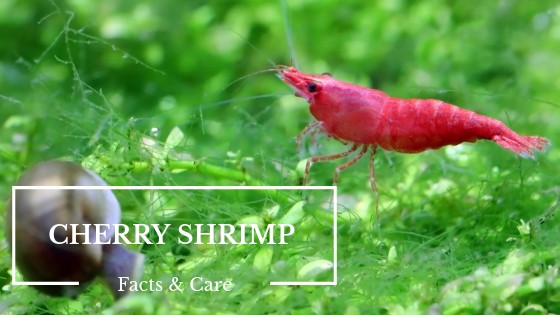
Cherry shrimp (Neocaridina davidi), formerly classified as Neocaridina denticulata sinensis, are among the most popular freshwater invertebrates in the aquarium hobby. These small, vibrant red shrimp thrive in planted tanks and nano aquariums, making them accessible to aquarists of all experience levels. Cherry shrimp live up to two years in captivity and breed readily, often establishing self-sustaining colonies with minimal intervention.
Perfect for Beginners
Cherry shrimp are one of the easiest shrimp species to keep. They tolerate a wide range of water parameters, breed readily in captivity, and actively clean your tank by consuming algae and detritus. For a complete setup walkthrough, see our nano shrimp tank guide.
Cherry Shrimp at a Glance
Care Requirements
Cherry Shrimp Colors and Grades
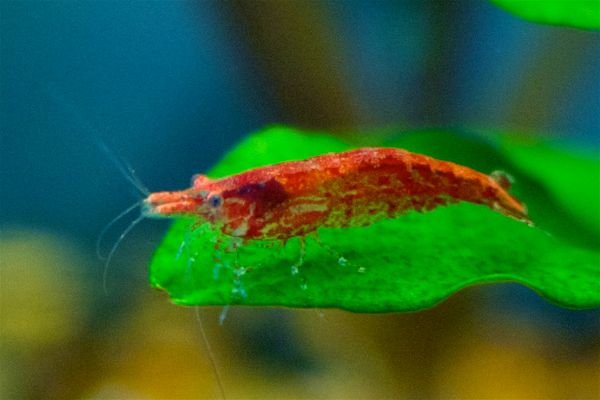
A high-grade red cherry shrimp displaying vibrant coloration
Cherry shrimp display a spectrum of red coloration intensities based on their grade. Higher-grade cherry shrimp show deeper, more opaque red coloring across their entire body, while lower grades retain some transparency.
Color Grades (Low to High)
- Cherry — light red with some transparency, the most affordable grade
- Sakura — deeper red with reduced transparency, a good balance of color and price
- Fire Red — solid red with minimal transparency across the body
- Painted Fire Red — intense solid red covering the entire body including legs, the highest grade
How Cherry Shrimp Get Their Color
Cherry shrimp coloration originates from specialized pigment cells called chromatophores embedded in their exoskeleton. Each type of chromatophore produces a distinct color:
- Erythrophores produce the signature red pigment that defines cherry shrimp
- Xanthophores create yellow pigments found in yellow Neocaridina varieties
- Leucophores reflect white light, producing white or pale patches
- Iridophores reflect and refract light, creating blue and iridescent effects
- Melanophores produce black and brown pigments seen in chocolate and black Neocaridina varieties
Cherry shrimp with few or no active chromatophores appear nearly transparent — the wild-type coloration. Selective breeding has concentrated erythrophores to produce the deep red color that makes cherry shrimp so popular in the aquarium hobby.
Male vs Female Cherry Shrimp
Female cherry shrimp are larger, more colorful, and rounder than males. Adult female cherry shrimp grow to approximately 1.5 inches and display deep, vibrant red coloration across their entire body. Male cherry shrimp are smaller (about 1 inch), slimmer, and often appear lighter or more translucent with less saturated color.
The easiest way to identify female cherry shrimp is by looking for the “saddle” — a greenish-yellow patch visible behind the head through the carapace. The saddle indicates developing eggs in the ovaries and is only present in sexually mature females. Males lack this marking entirely.
Maintaining Color Quality
Female cherry shrimp typically display brighter, more intense coloration than males. Dark substrate — brown or black — encourages cherry shrimp to display their deepest colors, while light-colored substrates cause cherry shrimp to appear washed out and pale.
Color Genetics Warning
Different Neocaridina color varieties — red, blue, yellow, orange, and chocolate — will interbreed when kept in the same aquarium. Offspring from mixed-color pairings gradually revert to dull greenish-brown wild-type coloration over several generations. Keep each Neocaridina color variety in a separate tank to maintain vibrant coloring.
Tank Setup Requirements
Cherry shrimp thrive in smaller, well-established aquariums with stable water parameters and plenty of surfaces to graze on.
Tank Size
An aquarium in the 5-10 gallon range provides the best environment for cherry shrimp. Tanks in this size range offer stable water chemistry while remaining easy to maintain. Cherry shrimp can survive in tanks as small as 3 gallons, but smaller volumes fluctuate more easily and limit colony growth. Popular choices include the Fluval SPEC (5 gallon) with its built-in LED and 3-stage filtration, the Marineland Portrait (5 gallon) with hidden filtration, and the Aqueon Starter Kit (10 gallon) which includes a heater.
Essential Equipment
Required Equipment
- LED lighting — promotes algae and biofilm growth that cherry shrimp feed on
- Gentle filter — sponge filters work best for cherry shrimp; cover HOB filter intakes with pre-filter sponges to protect baby shrimp from being pulled in
- Heater (optional) — helpful for temperature stability in tanks below 10 gallons or in cooler rooms
- Substrate — fine gravel or aquasoil in dark brown or black enhances cherry shrimp coloration
- Water test kit — the API Freshwater Master Test Kit reliably monitors ammonia, nitrite, nitrate, and pH levels
Decorations and Hiding Spots
Cherry shrimp feel most secure with plenty of cover, especially during vulnerable molting periods. Include a combination of the following:
Recommended Decorations
- Driftwood — develops beneficial biofilm that cherry shrimp graze on continuously
- Aquarium-safe rocks — creates caves and sheltered areas for molting cherry shrimp
- Specialty shrimp caves and tubes — purpose-built hiding spots designed for shrimp safety
- Live or artificial aquatic plants — both provide cover, though live plants offer additional grazing surfaces and water quality benefits
Recommended Plants
Live plants serve multiple purposes in a cherry shrimp tank — they provide grazing surfaces, create hiding spots for baby shrimp, and absorb nitrates to help maintain water quality.
Ideal Plants for Cherry Shrimp Tanks
- Java moss — the single best plant for cherry shrimp; provides shelter for shrimplets and hosts the microorganisms they feed on
- Java fern — hardy, low-light plant with broad leaves that develop biofilm over time
- Anubias — tough, slow-growing leaves that accumulate beneficial biofilm cherry shrimp love to graze on
- Floating plants (Salvinia, Amazon Frogbit) — provide shade, reduce stress, and offer additional grazing surface
- Marimo moss balls — popular cherry shrimp playgrounds and supplemental food sources
Water Quality
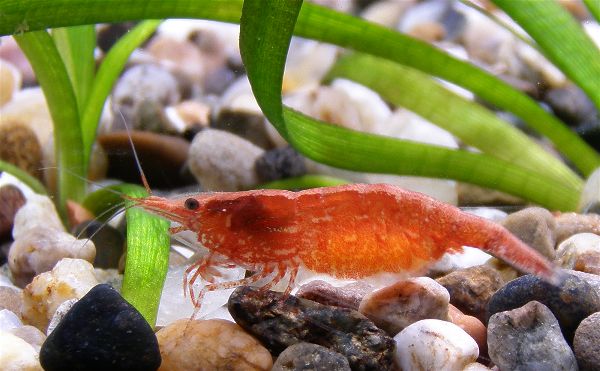
A healthy female cherry shrimp — females display brighter colors and develop a visible egg saddle behind their head
Cherry shrimp (Neocaridina davidi) tolerate a broad range of water conditions but remain sensitive to specific contaminants and sudden parameter changes.
Parameters
- Temperature: 65-80°F (optimal breeding range: 70-75°F)
- pH: 6.0-7.6
- GH (General Hardness): 4-8 dGH
- KH (Carbonate Hardness): 3-10 dKH
- Ammonia/Nitrite: 0 ppm (mandatory — any detectable level harms cherry shrimp)
- Nitrate: Below 20 ppm
Copper Is Deadly to Cherry Shrimp
Cherry shrimp are extremely sensitive to copper. Even trace amounts of copper in water can be fatal to Neocaridina shrimp. Tap water may contain copper leached from household plumbing, especially in older homes with copper pipes. Use a water conditioner that detoxifies heavy metals, or switch to spring water or RO water if copper is a concern. Never use medications containing copper in a cherry shrimp tank.
Water Changes
Cherry shrimp require small, consistent water changes to maintain quality without causing dangerous parameter swings:
- Weekly: 10% water change
- Biweekly alternative: 20% water change
Always temperature-match new water before adding it to the cherry shrimp tank. Large water changes or mismatched parameters stress cherry shrimp and can trigger fatal molting failures.
Acclimating New Cherry Shrimp
Cherry shrimp are more sensitive to sudden parameter changes than most aquarium fish. Drip acclimation is the safest method for introducing new cherry shrimp to an established tank:
- Float the sealed bag in the tank for 15-20 minutes to equalize temperature
- Open the bag and pour the cherry shrimp and water into a clean container
- Set up airline tubing with a loose knot or valve to create a slow drip from the tank into the container — approximately 2-3 drops per second
- Let the drip run for 45-60 minutes until the water volume in the container has roughly tripled
- Gently net the cherry shrimp from the container and release them into the tank — discard the mixed water rather than adding it to the aquarium
Never Rush Acclimation
Dropping cherry shrimp directly into new water without acclimation can cause osmotic shock, immediate molting failure, or death within 24-48 hours. The drip method gradually adjusts cherry shrimp to differences in pH, GH, KH, and temperature between the source water and your tank.
Feeding Cherry Shrimp
Cherry shrimp are omnivorous scavengers that spend most of their time grazing on algae, biofilm, and detritus covering every surface in the aquarium.
Primary Diet
Cherry shrimp in a mature, planted tank often find sufficient food without supplementation:
Natural Food Sources
- Algae growing on glass, rocks, and decorations
- Biofilm developing on plants, driftwood, and substrate
- Decomposing plant matter and fallen leaves
- Microorganisms living in substrate and moss
Java moss deserves special mention as a cherry shrimp food source. Cherry shrimp constantly pick through java moss because it hosts a rich community of microorganisms and biofilm that serves as a primary food source, especially for newborn shrimplets.
Supplemental Foods
Cherry shrimp colonies that outgrow their natural food supply benefit from targeted supplementation:
Recommended Supplemental Foods
- Algae wafers — break into small pieces appropriate for cherry shrimp
- Blanched vegetables — zucchini, spinach, and cucumber in small portions
- Specialty shrimp pellets — formulated specifically for Neocaridina nutritional needs
- Dried leaves — Indian almond leaves and oak leaves provide tannins and promote biofilm growth
- Occasional protein — blanched fish or shrimp to support breeding females
Feeding Frequency
In established tanks with healthy biofilm growth, supplemental feeding every 2-3 days is sufficient for cherry shrimp. Remove uneaten food after 2-3 hours to prevent water quality issues. Overfeeding causes far more problems than underfeeding — cherry shrimp rarely go hungry in a mature, planted tank.
Compatible Tankmates
Cherry shrimp are peaceful but vulnerable due to their small size. Tankmate selection directly determines whether a cherry shrimp colony thrives or becomes an expensive snack.
Safe Tankmates
Compatible Species
- Other Neocaridina shrimp — keep the same color variety to maintain color quality when breeding
- Crystal shrimp and Bee shrimp (Caridina species) — different genus, will not crossbreed with Neocaridina cherry shrimp
- Nerite snails — excellent algae eaters that cannot reproduce in freshwater
- Indonesian gold rabbit snails — peaceful, attractive snails that coexist well with cherry shrimp
- Mystery snails — safe, slow-moving tank companions
- Freshwater clams — filter feeders that share space peacefully with cherry shrimp
- Otocinclus catfish — gentle algae eaters, though they may compete with cherry shrimp for food
- Chili rasboras (Boraras brigittae) — tiny, peaceful fish that may eat some baby shrimp but leave adults alone
Tankmates to Avoid
Incompatible Species
- Most freshwater fish — cherry shrimp are small enough to be eaten by the majority of fish species
- Betta fish — many bettas actively hunt and eat cherry shrimp despite heavy planting
- Cichlids — aggressive predators that view cherry shrimp as food
- Goldfish — opportunistic feeders that eat anything small enough to swallow
- Crayfish — will catch and eat cherry shrimp
- Large snails like apple snails — may compete aggressively for food resources
A species-only cherry shrimp tank or a cherry shrimp-and-snail setup produces the best results for establishing a thriving breeding colony. For more on compatible invertebrates, see our ghost shrimp care guide.
Breeding Cherry Shrimp
Cherry shrimp breed readily in captivity with minimal intervention. Providing stable conditions and removing predators is usually all that’s needed for a colony to grow rapidly.
Conditions for Breeding
Cherry shrimp begin breeding when these conditions are met:
Breeding Requirements
- Stable water parameters within the recommended ranges
- Temperature maintained in the 70-75°F optimal breeding range
- Both male and female cherry shrimp present (start with at least 10 shrimp for reliable pairing)
- Adequate food supply to support egg development
- No predators threatening shrimplet survival
The Breeding Process
- Sexual maturity — Cherry shrimp reach breeding age at 4-6 months old
- Saddle development — Female cherry shrimp develop a greenish-yellow “saddle” visible through their carapace behind the head, indicating developing eggs in the ovaries
- Mating — After molting, female cherry shrimp release pheromones that trigger a “mating frenzy” where males swim actively throughout the tank
- Egg carrying — Fertilized eggs transfer to the female’s swimmerets (pleopods) under her tail; a female carrying eggs is called “berried” because the egg cluster resembles a small bunch of berries
- Incubation — Berried female cherry shrimp carry 20-30 eggs for approximately three weeks, constantly fanning them to maintain oxygen flow
- Hatching — Baby cherry shrimp (shrimplets) emerge as tiny but fully formed miniature adults, immediately independent
Baby Cherry Shrimp Care
Newborn cherry shrimp are tiny but fully independent from the moment they hatch. Shrimplets need no special feeding — they graze on biofilm and microorganisms naturally present in a mature tank. Provide java moss, fine-leaved plants, and sponge filter surfaces for shrimplets to hide in and feed from. The only requirement is keeping predators out of the tank.
Molting
Cherry shrimp regularly molt — shedding their exoskeleton — as they grow. Molting is a normal, essential process but leaves cherry shrimp temporarily vulnerable to predators and water quality issues.
Molting Facts
- Young cherry shrimp molt frequently as they grow; adult cherry shrimp molt every 3-8 weeks
- Cherry shrimp hide during and immediately after molting while their new shell hardens
- Leave molted exoskeletons in the tank — cherry shrimp eat them to recycle calcium and minerals
- Failed molts usually indicate mineral deficiency (low GH or KH) or sudden water parameter changes
- Adequate GH (4-8 dGH) and KH (3-10 dKH) are essential for proper cherry shrimp shell development
Common Problems
White Ring of Death
A white band encircling a cherry shrimp’s body between the head and tail segments indicates a failed molt. The old exoskeleton cracked but did not separate cleanly, trapping the cherry shrimp inside. White ring of death in cherry shrimp is most commonly caused by mineral deficiency (low GH or KH) or rapid water parameter changes. Maintaining proper mineral content and consistent water chemistry prevents this fatal condition.
Cherry Shrimp Deaths After Water Changes
Large or sudden water changes cause parameter shock in cherry shrimp, triggering stress and potentially fatal premature molting. Cherry shrimp are far more sensitive to parameter swings than most aquarium fish. Always match new water temperature and chemistry to the existing tank water, and keep water changes small (10-20%) and consistent.
Population Explosion
Cherry shrimp breed prolifically under good conditions, and colonies can grow beyond the tank’s carrying capacity. Managing an overpopulated cherry shrimp colony:
- Reduce supplemental feeding to naturally slow reproduction rates
- Sell or give away surplus cherry shrimp to other hobbyists
- Add a small fish species like chili rasboras that eat shrimplets but cannot prey on adult cherry shrimp
Conclusion
Cherry shrimp (Neocaridina davidi) remain one of the most rewarding freshwater invertebrates for aquarists at every skill level. With stable water parameters, a mature planted tank, and careful tankmate selection, a cherry shrimp colony will thrive and provide constant activity and vibrant color. Their willingness to breed, low maintenance requirements, and natural algae-cleaning behavior make cherry shrimp an excellent choice for any peaceful freshwater aquarium.
Looking for more shrimp information? Check out our ghost shrimp care guide or learn how to set up a nano shrimp tank.
How many cherry shrimp should I start with?
Start with a group of 10-20 cherry shrimp for the best chance of establishing a breeding colony. Cherry shrimp are social creatures and display more natural behavior in groups. A larger starting population also increases genetic diversity and colony resilience.
Do cherry shrimp need a heater?
Cherry shrimp tolerate a wide temperature range (65-80°F) and often don't need a heater if your room temperature stays stable within this range. However, a heater provides consistency and prevents stress from temperature swings, especially in smaller tanks that fluctuate more easily.
Can cherry shrimp live with betta fish?
This pairing is risky. Some bettas ignore shrimp, but many will hunt and eat cherry shrimp. Cherry shrimp are small and make tempting targets. If you want to try this combination, provide heavy planting and hiding spots, and be prepared for losses. A species-only shrimp tank is safer.
Why are my cherry shrimp dying?
Common causes include copper in water (extremely toxic to shrimp), ammonia or nitrite spikes, rapid parameter changes, inadequate acclimation, or pesticide contamination from plants. Test water parameters immediately, ensure your water source is copper-free, and always drip acclimate new cherry shrimp slowly.
How fast do cherry shrimp reproduce?
Under good conditions, a single female cherry shrimp can produce 20-30 babies every 4-6 weeks once mature. A small starting colony can grow to hundreds within months. If you want to control population, limit feeding and consider adding fish that eat baby shrimp but not adults.
What does berried mean for cherry shrimp?
A berried cherry shrimp is a female carrying fertilized eggs under her tail, attached to her swimmerets. The eggs resemble tiny berries, which is where the term comes from. Berried females fan their eggs constantly to keep them oxygenated during the approximately three-week incubation period.
How do I tell male from female cherry shrimp?
Female cherry shrimp are larger (about 1.5 inches), more colorful, and rounder than males. The easiest identifier is the saddle — a greenish-yellow patch behind the head visible through the carapace, indicating developing eggs. Males are smaller (about 1 inch), slimmer, and more translucent with less intense coloration.
What color cherry shrimp should I get?
For beginners, standard cherry grade or sakura grade Neocaridina davidi offer vibrant color at an affordable price. Higher grades like Fire Red and Painted Fire Red display more intense, opaque coloration but cost significantly more. All grades require the same care.
Related Topics
Found this helpful?
Share this guide with your fellow aquarium enthusiasts!
Written by
FTW Team
The FishTankWorld editorial team brings together experienced aquarists to help you succeed in the hobby.