
Buying aquarium fish successfully depends on evaluating seven factors before you purchase: species type, compatibility, health, food, adult size, tank size, and equipment. Skipping any of these leads to fish deaths, wasted money, and frustration — the most common outcome for unprepared beginners.
A well-planned aquarium rewards the effort. A 2015 study published in the journal Environment & Behavior found that watching aquarium fish reduces heart rate, blood pressure, and self-reported anxiety. Fish also serve as ideal pets for people with allergies to dogs or cats, or those with limited living space. But keeping aquarium fish healthy demands significant time, attention, and financial investment — preparation before buying makes the difference between a thriving tank and a cycle of dead fish.
Research Before You Buy
Read as much as you can about caring for aquarium fish before purchasing. Seek advice from experienced fishkeepers or staff at a local fish store so you choose the right combination of species for your tank size and experience level.
1. Choose the Right Fish Species
Understanding the differences between fish categories determines what equipment, water conditions, and maintenance each species needs.
Saltwater Fish
Saltwater species like clownfish, royal gramma, and marine angelfish display the most vivid coloration in the hobby but require careful attention to water salinity, specific gravity, and more complex maintenance routines than freshwater species. Saltwater aquariums also cost more to set up and maintain due to specialized equipment like protein skimmers, live rock, and reef-grade lighting.
Beginners interested in saltwater should start with hardy species like ocellaris clownfish or firefish goby before attempting sensitive species like tangs or butterflyfish. Read our guide on starting a saltwater aquarium for beginners for a step-by-step walkthrough.
Freshwater Tropical Fish
Freshwater tropical species like danios, guppies, neon tetras, and corydoras catfish are popular choices for beginner aquarists. These species are generally hardier than saltwater fish but still require stable water temperature between 74°F and 80°F (23°C to 27°C), proper filtration, and regular water changes.
Many tropical community fish — including harlequin rasboras, cherry barbs, and bristlenose plecos — coexist peacefully in the same tank when water parameters align. Our guide to exotic fish for beginners covers hardy species that tolerate the learning curve of a new fishkeeper.
Coldwater Fish
Goldfish, white cloud mountain minnows, and hillstream loaches thrive at lower temperatures without a heater. Despite common misconceptions, goldfish require large tanks — not bowls. A single fancy goldfish needs a minimum of 20 gallons, and common goldfish need 40 gallons or more due to their potential 12-inch adult size.
Coldwater species produce heavy bioloads, making strong filtration essential. Read our goldfish care guide to understand why these fish are harder to keep than most beginners expect.
2. Evaluate Fish Compatibility
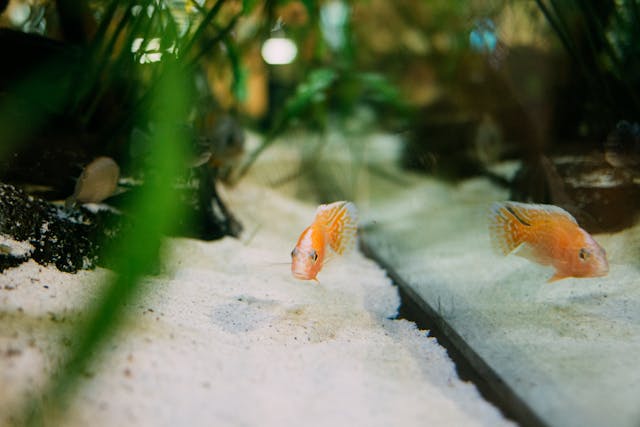
Choosing compatible species that share similar water parameter and temperament requirements is essential for a peaceful community tank.
Combining different fish species in the same aquarium requires careful consideration across multiple dimensions. Incompatible tankmates cause stress, aggression, injury, and death — even among species that appear peaceful individually.
Water Parameter Requirements
Different fish species thrive in different water chemistry. African cichlids from Lake Malawi prefer hard, alkaline water with a pH between 7.8 and 8.6, while many South American species like cardinal tetras and ram cichlids require soft, acidic water with a pH between 5.0 and 7.0. Keeping species with mismatched water parameter requirements prevents optimal coloration, healthy growth, and successful breeding.
Research the temperature range, pH preference, and water hardness requirements for every species before combining them in the same tank. Our guide to managing aquarium pH levels explains how to test and adjust water parameters.
Behavioral Compatibility
Behavioral Factors That Affect Compatibility
- Swimming speed differences create tension — fast-moving danios and barbs stress slower species like bettas and gouramis
- Aggressive feeders like tiger barbs consume more food at the surface, leaving bottom-dwelling species underfed
- Territorial species like convict cichlids and red-tailed sharks defend areas of the tank, restricting other fish's movement
- Fin-nipping species like serpae tetras damage slow-moving, long-finned tankmates like angelfish and guppies
- Nocturnal species like plecos and kuhli loaches may disturb daytime species if hiding spots are limited
Our guide to betta tank mates provides a detailed example of matching temperament, swimming level, and water parameters for one popular species.
Dietary Compatibility
Combining fish with different dietary requirements makes proper nutrition difficult. Herbivorous species like mollies need algae-based foods, carnivorous species like African butterfly fish require protein-rich foods, and omnivores like guppies eat both. When all three types share a tank, some fish inevitably receive inadequate nutrition.
Plan feeding strategies before buying mixed-diet species. Sinking pellets reach bottom feeders like corydoras catfish, while floating flakes serve surface feeders like hatchetfish.
3. Assess Fish Health Before Buying
Evaluating fish health before purchase prevents introducing diseases like ich, velvet, or columnaris into your established aquarium. Spend at least 10 to 15 minutes observing fish in the store tank before deciding to buy.
Signs of a Healthy Aquarium Fish
- Alert and responsive to movement outside the tank
- Active swimming at the appropriate tank level for the species
- Clear, bright eyes without cloudiness or swelling
- Intact, smooth scales with no missing patches or raised edges
- Clean fins without tears, white edges, or clamped posture
- Steady breathing — gill movement should be regular, not rapid
- Rounded belly — neither sunken (underfed) nor bloated (disease)
Warning Signs — Do Not Buy Fish Showing These Symptoms
- Bulging or cloudy eyes (popeye or bacterial infection)
- Missing scales or open sores (physical damage or ulcer disease)
- White spots on body or fins (ich / white spot disease)
- Velvety or fuzzy gold patches on skin (velvet disease)
- Cotton-like white growths (fungal infection or columnaris)
- Erratic swimming, spinning, or inability to maintain balance
- Gasping at the water surface (oxygen deprivation or gill disease)
- Scraping or flashing against objects (external parasites)
Avoid Entire Tanks With Sick Fish
If any fish in a store display tank appears diseased or dead, do not buy any fish from that tank. Disease spreads rapidly in the confined space of a retail aquarium. Even apparently healthy tankmates may already be carrying the same infection. Choose fish only from tanks where every inhabitant looks active and healthy.
Quarantine New Fish
Quarantining new fish for 2 to 4 weeks in a separate tank before adding them to your main aquarium is the single most effective way to prevent disease outbreaks. A basic quarantine tank needs only a heater, sponge filter, and a hiding spot like a PVC pipe or terra cotta pot.
During quarantine, observe new fish for signs of ich, velvet, internal parasites, or bacterial infections that may not have been visible under store lighting. If disease appears during quarantine, treat the quarantine tank without exposing your established fish. Read our guide on cleaning an aquarium after disease if an outbreak does occur.
4. Select Proper Fish Food
Proper nutrition directly affects fish health, coloration, immune function, and lifespan. Choosing the right food type for each species and feeding correctly prevents the most common mistake new fishkeepers make — overfeeding.
Food Types by Species Need
Common Aquarium Fish Food Types
- Flake food — suitable for most small to medium community fish like tetras, guppies, and barbs; buy high-quality brands with whole fish or shrimp as the first ingredient
- Pellet food — better for larger species like cichlids and goldfish; available in floating and sinking varieties to match feeding behavior
- Freeze-dried food — bloodworms, brine shrimp, and daphnia provide protein supplementation for omnivorous and carnivorous species
- Frozen food — more nutritious than freeze-dried; frozen bloodworms, mysis shrimp, and spirulina cubes retain more vitamins
- Algae wafers and vegetable-based food — essential for herbivorous species like plecos, otocinclus catfish, and mollies
- Species-specific formulas — betta pellets, goldfish flakes, and cichlid sticks are formulated for each species' nutritional requirements
Buying and Storing Fish Food
Buy fish food from reputable pet stores that stock fresh products with current expiration dates. Select small containers rather than bulk sizes — the nutritional value of fish food deteriorates within 3 to 6 months after opening due to vitamin oxidation. A large container that takes a year to finish provides declining nutrition with every feeding.
Feeding Practices
Overfeeding is the most common and most damaging mistake aquarists make. Uneaten food decomposes on the tank bottom, producing ammonia that poisons fish and fuels algae blooms. Feed only what fish consume completely within 2 to 3 minutes, once or twice daily.
Learn to recognize the signs of overfeeding before they cause water quality problems.
Feeding During Vacations
Weekend or vacation feeding blocks dissolve slowly as fish nibble on them, maintaining balanced nutrition without clouding water. These slow-release blocks work well for absences of 2 to 4 days. For longer trips, read our guide to caring for fish while on vacation.
5. Consider Adult Fish Size
Fish size compatibility matters more than most beginners realize. Aquarium fish naturally eat whatever fits in their mouths — this behavior is instinct, not aggression, and catches many new fishkeepers off guard.
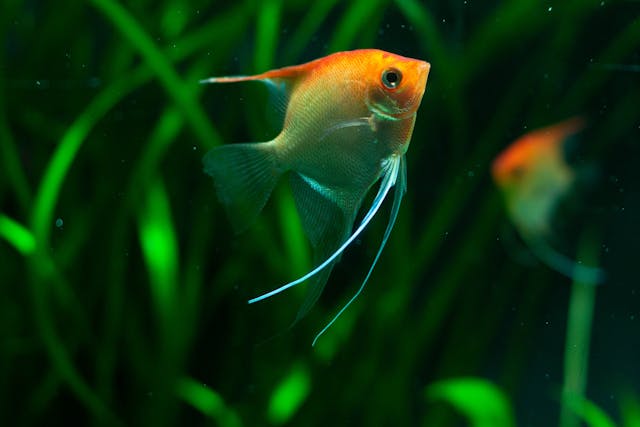
Angelfish grow to 6 inches tall and will eat small tankmates like neon tetras — always research adult size before buying.
Species that coexist peacefully when young often become incompatible as they grow. Young neon tetras and angelfish may share a tank without conflict, but adult angelfish reach 6 inches tall and readily eat small tetras. Similarly, oscar cichlids sold at 2 inches in pet stores grow to 12 to 14 inches and eat any fish small enough to swallow.
Common Fish That Outgrow Expectations
Many popular aquarium fish are sold as small juveniles that grow dramatically larger:
Fish That Grow Much Larger Than Expected
- Common plecostomus — sold at 2 to 3 inches, grows to 18 to 24 inches; needs 100+ gallon tank as an adult
- Oscar cichlid — sold at 1 to 2 inches, grows to 12 to 14 inches; needs 75+ gallon tank
- Bala shark — sold at 2 to 3 inches, grows to 12 to 14 inches; needs 120+ gallon tank and a school of 5+
- Common goldfish — sold at 1 to 2 inches, grows to 10 to 12 inches; needs 40+ gallons per fish
- Iridescent shark catfish — sold at 3 to 4 inches, grows to 3 to 4 feet; unsuitable for any home aquarium
- Red-tailed catfish — sold at 3 to 5 inches, grows to 3 to 5 feet; requires a pond or 1,000+ gallon system
Always research the adult size of any fish species before purchasing — not the juvenile size displayed in the store tank. Ask store staff how large the fish will grow, and verify their answer with an independent source.
6. Match Tank Size to Species Requirements
Adequate tank volume supports healthy growth, stable water chemistry, and reduced stress for aquarium fish. Undersized tanks cause stunted growth, shortened lifespans, and chronic stress.
Tank Size Guidelines
- Research adult size of every fish species before buying — stock based on adult size, not juvenile size
- Some species like Columbian shark catfish lack growth-limiting hormones and will outgrow virtually any home aquarium
- Larger tanks are more chemically stable and more forgiving of beginner mistakes than small tanks
- Cramped conditions elevate stress hormones, suppress immune function, and reduce lifespan even in species that appear to stop growing
- Stock conservatively — fewer fish in a properly sized tank thrive better than a crowded tank at maximum capacity
The popular “one inch of fish per gallon” stocking rule is an oversimplification that ignores body mass, bioload, and swimming space requirements. A 10-inch oscar produces far more waste than ten 1-inch neon tetras. Our guide on the one-inch-per-gallon rule explains why this formula fails and what to use instead.
For practical stocking ideas at specific tank sizes, see our 20-gallon tank setup ideas with proven species combinations.
7. Invest in Proper Aquarium Equipment
Proper equipment maintains the water quality, temperature stability, and biological filtration that keep aquarium fish alive. Cutting corners on equipment is the most expensive mistake in the hobby — replacing dead fish costs far more than buying adequate equipment from the start.
Filtration
Every aquarium needs filtration that provides three types of water treatment:
Three Types of Aquarium Filtration
- Biological filtration — beneficial bacteria colonies convert toxic ammonia from fish waste into less harmful nitrate through the nitrogen cycle
- Mechanical filtration — filter pads and sponges physically trap debris, uneaten food, and particulate waste from the water column
- Chemical filtration — activated carbon or specialty resins remove dissolved toxins, medications, odors, and discoloration from the water
Most quality hang-on-back and canister filters provide all three filtration types in a single unit. Choose a filter rated for at least the volume of your tank — oversizing filtration is always better than undersizing. Learn how to change your filter without losing beneficial bacteria to maintain a stable nitrogen cycle.
Temperature Control
Tropical fish species require stable water temperature between 74°F and 80°F (23°C to 27°C). An adjustable aquarium heater rated at 3 to 5 watts per gallon maintains consistent temperature. A separate thermometer — not the built-in gauge on the heater — verifies accuracy.
Temperature fluctuations of more than 2°F within a few hours stress fish and suppress immune function. Read our guide on choosing an aquarium heater for sizing and placement advice.
Water Testing
Aquarium water test kits monitor the four critical parameters that determine whether fish survive or die: ammonia, nitrite, nitrate, and pH. Liquid test kits like the API Freshwater Master Test Kit provide more accurate readings than paper test strips.
Test water weekly in established tanks and daily during the initial cycling period. Ammonia and nitrite should read zero in a properly cycled tank. Any detectable ammonia or nitrite indicates a cycling problem that requires immediate attention.
Additional Equipment
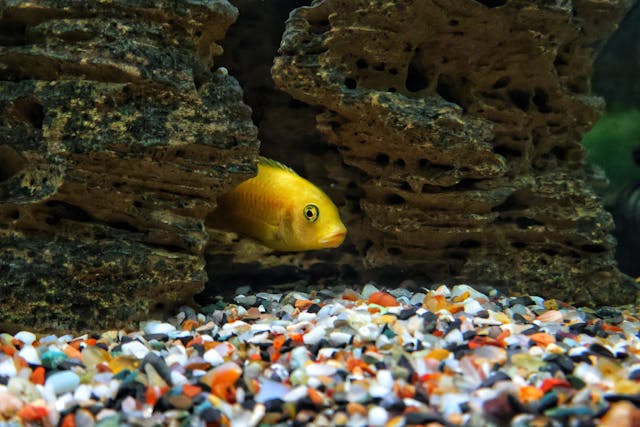
Rocks, caves, and decorations provide essential hiding spots that reduce stress and territorial aggression in aquarium fish.
Additional Equipment Worth Considering
- Air pump and airstone — provide supplemental oxygenation, especially in heavily stocked tanks or warm water with lower dissolved oxygen
- Ultraviolet sterilizer — kills free-floating parasites, bacteria, viruses, and algae spores as water passes through the UV chamber
- Gravel vacuum / siphon — removes waste from the substrate during weekly water changes
- Plants and decorations — live or artificial plants, driftwood, and rocks create natural habitats and provide essential hiding spots that reduce fish stress
Where to Buy Aquarium Fish
Where you purchase aquarium fish affects the health, variety, and long-term survival of your new fish. Each source has distinct advantages and risks.
Local Fish Stores (LFS)
Local fish stores — independently owned aquarium shops — typically offer the healthiest fish, most knowledgeable staff, and widest species selection. Staff at dedicated fish stores can advise on species compatibility, tank setup, and troubleshooting problems. Local fish stores also quarantine new shipments before selling, reducing the risk of bringing home diseased fish.
Ask the staff how long fish have been in the store. Fish that have been eating and thriving in a store tank for at least two weeks are safer purchases than fish that arrived the same day.
Chain Pet Stores
National chains like Petco and PetSmart offer convenience and consistent pricing but generally employ staff with less specialized aquarium knowledge. Fish health varies by location — some chain stores maintain excellent tanks while others show signs of neglect. Evaluate each store individually by checking for dead fish in display tanks, algae overgrowth, and water clarity before purchasing.
Online Retailers
Online aquarium fish retailers offer rare and specialty species unavailable locally, but shipping adds stress. Overnight shipping in insulated bags with oxygen reduces mortality but does not eliminate it. Reputable online sellers like LiveAquaria and Aquatic Arts include live arrival guarantees. Always acclimate shipped fish carefully, as water chemistry in the shipping bag differs from your tank.
How to Acclimate New Fish
Proper acclimation transitions new aquarium fish from the water chemistry in the store bag to the water chemistry in your tank. Dumping fish directly into different water parameters causes pH shock, temperature shock, or osmotic stress — any of which can kill fish within 24 to 48 hours.
Float-and-Release Method (Basic)
The float-and-release acclimation method works for fish moving between tanks with similar water parameters:
- Float the sealed bag in your aquarium for 15 to 20 minutes to equalize temperature
- Open the bag and add half a cup of aquarium water every 5 minutes for 30 minutes
- Net the fish out of the bag and release into your tank
- Discard the bag water — never pour store water into your aquarium, as it may contain parasites or disease
Drip Acclimation Method (Recommended)
Drip acclimation provides the safest transition for sensitive species, fish shipped long distances, or fish moving between tanks with different pH or hardness levels:
- Float the sealed bag for 15 minutes to equalize temperature
- Pour the fish and bag water into a clean bucket
- Use airline tubing with a loose knot to create a slow drip from your tank into the bucket — approximately 2 to 4 drips per second
- When the water volume in the bucket has doubled (approximately 30 to 45 minutes), net the fish and release into your tank
- Discard all bucket water
Dim the Lights
Turn off aquarium lights during and after introducing new fish. Dim lighting reduces stress and gives new arrivals time to explore hiding spots before established tankmates become active. Leave lights off for at least 4 to 6 hours after adding new fish.
Best Beginner Fish Species
Choosing hardy, forgiving species for a first aquarium dramatically improves success rates. These freshwater community fish tolerate the water parameter fluctuations that beginners inevitably encounter while learning.
Top Beginner-Friendly Freshwater Fish
- Zebra danios — extremely hardy schooling fish that tolerate temperatures from 64°F to 77°F and a wide pH range; active swimmers that thrive in groups of 6 or more
- Guppies — colorful livebearers available in dozens of color varieties; easy to feed, breed readily, and tolerate minor water quality issues
- Neon tetras — peaceful schooling fish with striking blue and red coloration; best in groups of 8 to 12 in tanks 10 gallons or larger
- Corydoras catfish — peaceful bottom-dwelling scavengers that help clean uneaten food from the substrate; social species that need groups of 4 to 6
- Cherry barbs — hardy, peaceful barbs with deep red coloration in males; one of the least aggressive barb species
- Bristlenose plecos — small algae-eating catfish that reach only 4 to 5 inches; far more suitable for home aquariums than common plecos that grow to 18 inches
- Harlequin rasboras — peaceful, hardy schooling fish that coexist well with nearly all community species; ideal for planted tanks
Our full guide to exotic fish for beginners covers additional hardy species with detailed care requirements for each.
Before You Buy: Cycle Your Tank First
Critical Step Most Beginners Skip
Never add fish to a brand-new aquarium that hasn’t been cycled. The nitrogen cycle takes 4 to 6 weeks to establish the beneficial bacteria colonies that convert toxic ammonia into less harmful compounds. Adding fish to an uncycled tank exposes them to lethal ammonia and nitrite spikes — the number one killer of new aquarium fish.
Cycling a freshwater aquarium involves running the filter, adding an ammonia source, and waiting for beneficial bacteria to colonize the filter media. Test water daily during cycling. When ammonia and nitrite both read zero and nitrate is present, the cycle is complete and the tank is safe for fish.
Our guide to preparing an aquarium for new fish covers the complete setup checklist from equipment installation through the cycling process.
Avoid Common Beginner Mistakes
Buying aquarium fish without adequate preparation leads to predictable problems. The most common mistakes — adding fish to an uncycled tank, overstocking, overfeeding, and combining incompatible species — kill more aquarium fish than disease does.
Read our comprehensive list of 22 common fishkeeping mistakes to learn what experienced aquarists wish they had known from the start. Taking time to research species requirements, cycle your tank properly, and stock gradually prevents the frustration and expense of replacing fish that die from preventable causes.
How do I know if a fish is healthy at the pet store?
Healthy aquarium fish display alert behavior, active swimming, clear eyes, and intact scales. Avoid fish with bulging or cloudy eyes, missing scales, white spots (ich), velvety patches, erratic swimming, gasping at the surface, or scraping against objects. Also check the entire tank — if any fish in the display tank appears sick, assume all fish in that tank may carry the same disease.
Should I buy fish from tanks with dead or sick fish?
Never buy fish from a tank containing dead or diseased fish. Disease spreads quickly in the confined space of a store display tank, meaning apparently healthy tankmates may already be infected. Choose fish only from tanks where every inhabitant appears healthy and active.
How long should I wait before adding fish to a new aquarium?
New aquariums need 4 to 6 weeks for the nitrogen cycle to establish beneficial bacteria colonies that process toxic ammonia and nitrite. Adding fish before cycling completes exposes them to dangerous ammonia spikes. After your tank is cycled, add fish gradually — no more than 2 to 3 at a time — to avoid overwhelming the biological filtration.
Can I keep any fish species together in the same tank?
No. Fish species vary widely in water parameter requirements, temperament, adult size, and dietary needs. Combining incompatible species causes stress, aggression, disease, and death. Research each species' temperature range, pH preference, aggression level, and adult size before purchasing. Peaceful community fish like neon tetras, corydoras catfish, and harlequin rasboras generally coexist well in similar water conditions.
Where is the best place to buy aquarium fish?
Local fish stores (LFS) typically offer healthier fish, more knowledgeable staff, and better species variety than large chain pet stores. Staff at dedicated fish stores can advise on compatibility and care. Online retailers offer rare species but add shipping stress. Wherever you buy, observe fish behavior before purchasing and ask how long the store has held the fish — newly arrived fish may still be stressed from transport.
How many fish can I put in my aquarium?
Stocking density depends on tank size, filtration capacity, and species requirements. The old one-inch-per-gallon rule is an oversimplification that ignores body mass, swimming needs, and bioload differences between species. A 2-inch goldfish produces far more waste than a 2-inch neon tetra. Research each species' space requirements individually and stock conservatively, especially in smaller tanks.
Do I need to quarantine new fish before adding them to my tank?
Quarantining new fish for 2 to 4 weeks in a separate tank before adding them to your main aquarium prevents introducing diseases like ich, velvet, or internal parasites to your existing fish. A basic quarantine tank needs a heater, sponge filter, and hiding spot. This simple precaution protects the entire investment in your established aquarium.
How do I acclimate new fish to my aquarium?
Float the sealed bag in your aquarium for 15 to 20 minutes to equalize temperature, then gradually add small amounts of tank water to the bag over 30 minutes. Net the fish into your tank and discard the bag water — never pour store water into your aquarium. For sensitive species, use drip acclimation with airline tubing to create a slow drip from your tank into a bucket containing the new fish.
What are the easiest fish for beginners?
Zebra danios, guppies, neon tetras, corydoras catfish, cherry barbs, and bristlenose plecos are among the hardiest freshwater species for beginners. These community fish tolerate minor water quality fluctuations, eat standard flake or pellet foods, and coexist peacefully in properly sized tanks. Start with one or two hardy species in schools of 6 or more before adding more sensitive fish.
Related Topics
Found this helpful?
Share this guide with your fellow aquarium enthusiasts!
Written by
FTW Team
The FishTankWorld editorial team brings together experienced aquarists to help you succeed in the hobby.