

Quick Summary
In a filtered 5+ gallon tank, change 20-25% of the water weekly. Match the replacement water temperature within 1-2°F and always treat tap water with a dechlorinator. Test ammonia and nitrite weekly — both should read 0 ppm.
Why Water Changes Matter for Bettas
Betta fish produce waste that breaks down into ammonia — a compound toxic to fish at concentrations as low as 0.25 ppm. In a properly cycled tank, beneficial bacteria convert ammonia to nitrite, then to nitrate. But nitrate still accumulates over time, and only water changes remove it.
Without regular water changes, nitrate levels climb above 40 ppm, dissolved organic compounds build up, pH drops, and your betta’s immune system weakens. The result is a fish that becomes lethargic, loses color, develops fin rot, or succumbs to bacterial infections that a healthy betta would fight off.
Water changes are the single most important maintenance task in fishkeeping. No filter, chemical additive, or UV sterilizer replaces the need for regular partial water changes.
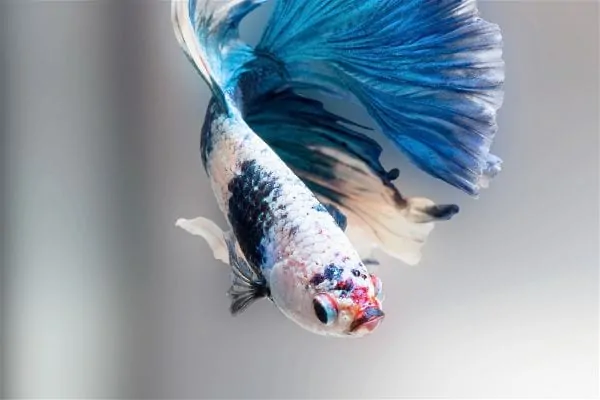
A healthy betta in clean, properly maintained water shows vibrant color and active behavior.
Ideal Betta Water Parameters
How Often to Change Betta Water
Water change frequency depends on three factors: tank size, whether you have a filter, and how heavily stocked the tank is. Larger, filtered tanks with a single betta need less frequent changes because they dilute waste more effectively and house beneficial bacteria in the filter media.
Filtered Tank (5+ gallons)
Recommended setup
- 20-25% water change once per week
- Gravel vacuum every 2 weeks
- Filter media rinse monthly (in tank water)
- Full parameter test weekly
Unfiltered / Small Tank (< 5 gal)
Requires more maintenance
- 30-50% water change twice per week
- Gravel vacuum with every change
- Complete substrate clean biweekly
- Parameter test twice weekly
Small Tanks Need More Work
Tanks under 5 gallons are significantly harder to maintain. Ammonia concentration spikes faster in less water, temperature fluctuates more, and pH swings are more dramatic. If you’re using a small tank without a filter, upgrading to a filtered 5-gallon setup reduces maintenance and dramatically improves your betta’s health and lifespan.
Signs You Need a Water Change Now
Don’t wait for the schedule if your betta shows distress. These signs indicate water quality has degraded:
- Betta gasping at the surface or breathing rapidly — possible ammonia or low oxygen
- Lethargy or sitting at the bottom — ammonia, nitrite, or temperature problem
- Clamped fins held tight against the body — stress response to poor water quality
- Loss of color or pale appearance — chronic exposure to elevated waste compounds
- Stringy white feces — can indicate parasites but often linked to water quality stress
- Visible film on the water surface — protein buildup from excess feeding or infrequent changes
If you see any of these signs, test your water immediately. If ammonia or nitrite reads above 0 ppm, do a 30-50% water change right away.
Equipment You’ll Need
Water Change Supplies:
- Two clean buckets dedicated to aquarium use only — never use soap. A dedicated aquarium water container works well if you want something purpose-built.
- Seachem Prime water conditioner — neutralizes chlorine, chloramine, and heavy metals instantly. The concentrated formula treats 50 gallons per capful, making it the most cost-effective dechlorinator available.
- Gravel vacuum with siphon hose sized for your tank
- Aquarium thermometer (digital or glass — avoid stick-on strips for accuracy)
- API Freshwater Master Test Kit (liquid tests, not strips, for reliable readings)
Dedicated Buckets Matter
Soap residue, cleaning chemicals, and detergents are lethal to fish even in trace amounts. Buy two inexpensive buckets and label them for aquarium use only. Never wash them with soap — rinse with plain water only.
Step-by-Step Water Change Process
How to Change Betta Water Safely
Prepare replacement water
Fill a clean bucket with tap water matching the volume you plan to remove (20-25% of tank volume). For a 5-gallon tank, that's about 1-1.25 gallons. Add the recommended dose of water conditioner and stir. Let the water sit for 5-10 minutes while the conditioner neutralizes chlorine and chloramine.
Match the temperature
Use your thermometer to check the tank water temperature, then adjust the replacement water to within 1-2°F. For most bettas, aim for 78-80°F. Run the tap warmer or cooler as needed. Temperature differences greater than 3°F cause thermal shock that suppresses your betta's immune system for days afterward.
Siphon out old water
Place the siphon tube into the tank and the other end into the empty (dirty water) bucket. Start the siphon by pumping the manual bulb or using the submerge-and-release method. Vacuum the gravel gently, hovering the tube about half an inch above the substrate to pull up debris without disturbing beneficial bacteria deep in the gravel. Remove 20-25% of the water.
Clean only what needs cleaning
While the water level is low, wipe algae from the glass with an aquarium-safe scraper if needed. Do NOT clean the filter media on the same day as a water change — this removes too many beneficial bacteria at once. Stagger filter maintenance and water changes by at least a week.
Add the conditioned water slowly
Pour the temperature-matched, conditioned water into the tank slowly — either against the glass wall or over a decoration to diffuse the flow. Pouring too quickly creates currents that stress your betta and stirs up settled debris. Refill to the original water line.
Observe your betta
Watch your betta for 15-20 minutes after the water change. Normal behavior includes brief hiding followed by active exploration. Prolonged hiding, erratic swimming, or gasping may indicate a temperature mismatch or insufficient dechlorination. If symptoms persist beyond 30 minutes, test the water parameters immediately.
Common Water Change Mistakes
Avoiding these common errors prevents the most frequent causes of betta illness and death related to water changes.
Mistakes That Harm Your Betta:
- Changing too much water at once — replacing more than 50% crashes the nitrogen cycle and shocks your betta with sudden parameter shifts
- Forgetting water conditioner — untreated tap water contains chlorine and chloramine that burn gill tissue and kill beneficial bacteria within minutes
- Not matching temperature — even a 5°F difference causes thermal shock that suppresses immune function for 3-7 days
- Cleaning everything at once — washing gravel, filter, and decorations on the same day destroys the bacterial colony your tank depends on
- Using soap on equipment — residual detergent is toxic to fish; rinse aquarium tools with plain water only
- Skipping water changes because the water looks clean — ammonia, nitrite, and nitrate are invisible; clear water can still be toxic
Keeping Water Clean Between Changes
Regular water changes are essential, but good habits between changes reduce waste buildup and extend the time your parameters stay in the safe range.
Daily and Weekly Habits:
- Feed only what your betta eats in 2 minutes — bettas have stomachs roughly the size of their eye
- Remove uneaten food within 5 minutes using a turkey baster or small net
- Check the heater is functioning and temperature is 76-82°F daily
- Remove any dead or dying plant leaves before they decompose
- Run the filter 24/7 — turning it off even overnight lets ammonia spike
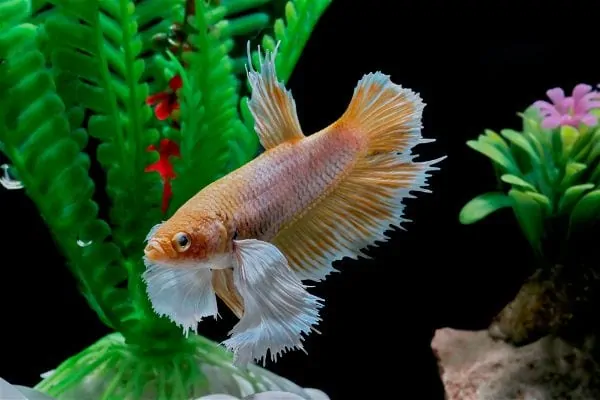
Live plants absorb nitrate between water changes, helping maintain water quality in a betta tank.
The Role of Live Plants
Live plants like java fern, anubias, and marimo moss balls absorb nitrate as fertilizer, helping maintain water quality between changes. A moderately planted betta tank may allow slightly less frequent changes (every 10 days instead of 7), but plants do not eliminate the need for water changes. They supplement your maintenance routine — they don’t replace it.
Filtration for Bettas
Bettas prefer gentle water flow because their long fins create drag in strong currents. Choose a filter with adjustable flow or use a sponge filter, which provides biological filtration with minimal current. A properly sized filter for a 5-10 gallon betta tank should turn over the tank volume 3-4 times per hour.
Related Guide
See our best filters for betta tanks guide for detailed filter recommendations, including sponge filters and betta-friendly options with adjustable flow.
Water Testing: Know Your Numbers
Testing water parameters is the only way to know if your water changes are sufficient. Visual inspection tells you nothing about ammonia, nitrite, or nitrate levels.
Weekly Testing Routine
Test ammonia first
Ammonia should always read 0 ppm in a cycled tank. Any detectable ammonia (0.25 ppm or above) means your biological filtration is insufficient or overwhelmed. Do an immediate 30% water change and retest in 24 hours.
Test nitrite
Nitrite should also read 0 ppm. Detectable nitrite indicates an incomplete or disrupted nitrogen cycle. This is common in new tanks (under 6 weeks old) or after antibiotic treatments that kill beneficial bacteria. Treat the same as ammonia — water change immediately.
Test nitrate
Nitrate should stay below 20 ppm for bettas (below 40 ppm at most). If nitrate is climbing between your weekly changes, increase the volume or frequency of changes. Persistent high nitrate may indicate overfeeding or an overstocked tank.
Check pH
Betta fish tolerate pH 6.5-7.5. The specific number matters less than stability — a stable pH of 7.2 is far better than a pH that swings between 6.5 and 7.0. If your tap water pH is within range, don't chase a specific number. Avoid pH-adjusting chemicals unless advised by an experienced fishkeeper.
Liquid Tests vs. Test Strips
The API Freshwater Master Test Kit (liquid reagent) costs more upfront (~$25) but provides 800+ accurate tests. Test strips are cheaper per purchase but less reliable — they can’t distinguish between 0 and 0.25 ppm ammonia, which is the difference between safe water and active poisoning. For betta care, the liquid kit is worth the investment.
Frequently Asked Questions
How often should I change betta fish water?
In a filtered tank of 5 gallons or more, change 20-25% of the water weekly. Unfiltered or smaller tanks need 30-50% changes twice per week. Test ammonia and nitrite weekly — any reading above 0 ppm means you need more frequent changes.
Can I do a 100% water change for my betta?
Full water changes should only happen in emergencies like ammonia spikes above 4 ppm or medication overdoses. Replacing all the water at once destroys beneficial bacteria, crashes the nitrogen cycle, and subjects your betta to sudden parameter shifts that cause severe stress. Stick to partial changes of 20-50%.
Do I need to remove my betta during water changes?
No. Removing your betta causes unnecessary stress from netting and temperature changes. Leave your betta in the tank during routine partial water changes. Only remove the fish if you're doing an emergency full tank clean, which should be rare.
What temperature should the new water be?
Match the new water within 1-2°F of the tank temperature (76-82°F for bettas). Use a thermometer to check both the tank and the replacement water before adding it. Temperature differences greater than 3°F can trigger temperature shock, which suppresses the immune system.
Is tap water safe for betta fish?
Tap water is safe after treatment with a water conditioner (dechlorinator) like Seachem Prime or API Stress Coat. These products neutralize chlorine, chloramine, and heavy metals in seconds. Never add untreated tap water — even small amounts of chlorine damage gill tissue and kill beneficial bacteria.
Why is my betta's water cloudy after a water change?
Cloudy water after a change usually indicates a bacterial bloom from disturbing the nitrogen cycle. This is common in newer tanks or after cleaning filter media and gravel on the same day. The cloudiness typically resolves within 2-4 days. Avoid additional water changes unless ammonia tests above 0.5 ppm.
Keep Your Betta's Tank in Top Shape
Water changes are just one part of betta care. Learn about proper filtration, tank setup, and ongoing maintenance.
Fish Tank World is reader-supported. When you purchase through links on our site, we may earn an affiliate commission at no extra cost to you. See our earnings disclaimer for details.
Related Topics
Found this helpful?
Share this guide with your fellow aquarium enthusiasts!

Written by
FTW Team
The FishTankWorld editorial team brings together experienced aquarists to help you succeed in the hobby.