
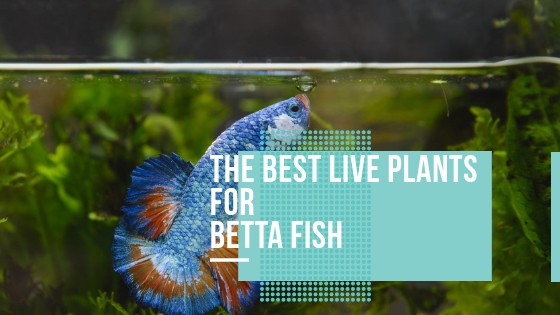
With their vibrant colors and long flowing fins, bettas are wonderfully attractive fish — and live plants make them look even better. More importantly, live plants recreate the dense vegetation bettas encounter in their native rice paddies of Thailand and Southeast Asia, reducing stress and supporting better health.
Every plant on this list is beginner-friendly. You don’t need a green thumb, CO2 injection, or special substrate. These are hardy, low-light species that thrive in typical betta tank conditions.
Why Live Plants Over Fake?
Live plants do what artificial plants can’t: they produce oxygen, absorb ammonia and nitrates, reduce algae growth, and provide natural fiber that bettas occasionally nibble. They also don’t carry the risk of tearing delicate betta fins the way cheap plastic plants can. If you’re on the fence — go live. Your betta and your water quality will both benefit.
Plants in a Betta’s Natural Habitat
Bettas (Betta splendens) originate from the shallow, slow-moving waters of Thailand, Cambodia, and Southeast Asia — rice paddies, floodplains, and river basins thick with aquatic vegetation. Wild bettas use plants for hiding from predators, resting near the surface, and hunting insect larvae among the leaves.
Bettas also have a special organ called a labyrinth that allows them to breathe air directly from the water surface. This is why surface access matters so much in a planted betta tank — fast-growing floating plants like Duckweed can completely block the surface if left unchecked, cutting off your betta’s air supply.
Live Plants vs. Plastic and Silk
Not all aquarium plants are created equal. Here’s how they compare for betta tanks:
Live Plants
Best for Bettas
- Absorb ammonia, nitrates, and toxins
- Produce oxygen naturally
- Reduce algae growth
- Soft leaves — no fin damage risk
- Provide dietary fiber when nibbled
Silk Plants
Acceptable Alternative
- Soft material won't tear betta fins
- No maintenance required
- No biological filtration benefit
- No oxygen production
- Purely decorative
Avoid Cheap Plastic Plants
Hard plastic plants are the most common cause of torn betta fins in planted tanks. The rough edges catch delicate fin tissue and cause rips that can lead to fin rot. If you’re using plastic plants, run a pair of pantyhose across the surface — if the fabric snags, it will snag your betta’s fins too. Replace with live or silk plants.
What to Look for When Buying Live Plants
Purchase aquarium plants from reputable aquarium shops — not garden centers, which sell terrestrial plants mislabeled as aquatic. Inspect every plant before buying:
- Healthy green coloration — avoid brown, yellow, or translucent leaves
- No signs of rot, mushiness, or foul smell
- No visible snails, algae, or parasites on leaves or stems
- Avoid plants from community display tanks that may carry fish diseases
- Check that the plant is truly aquatic — many pet stores sell semi-aquatic plants that die when fully submerged
10 Best Easy Plants for Betta Tanks
1. Amazon Sword (Echinodorus amazonicus)
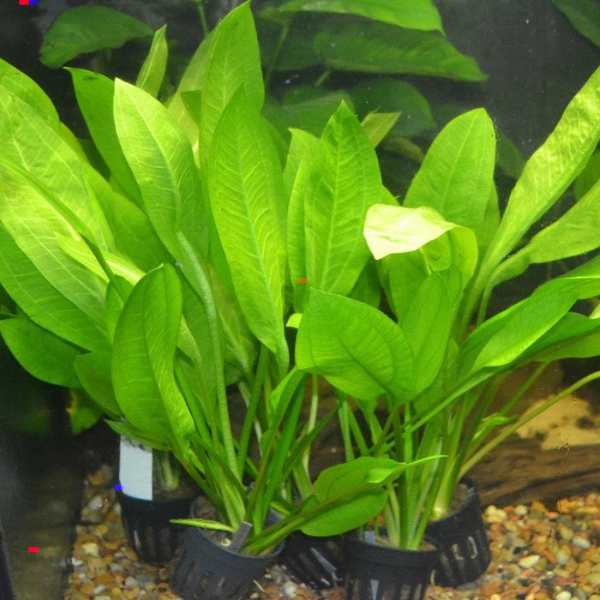
Amazon Sword makes an impressive centerpiece in betta tanks
Amazon Sword is one of the most popular aquarium plants for betta tanks, featuring long, flat sword-shaped leaves that create an attractive green backdrop. Multiple varieties are available in different sizes, making Amazon Sword suitable for tanks from 10 gallons up. The broad leaves also give bettas a resting surface near the water surface.
Amazon Sword is a root-feeding plant that requires 3-4 inches of substrate to anchor properly. It benefits from occasional root tab fertilizer, especially in tanks with inert gravel substrate. Growth is moderate — expect new leaves every few weeks under standard aquarium lighting.
- Easy care for beginners — tolerates a wide range of conditions
- Multiple varieties available in different sizes
- Requires 3-4 inches of substrate for root anchoring
- Benefits from root tab fertilizer in inert substrates
2. Anacharis/Waterweeds (Elodea)
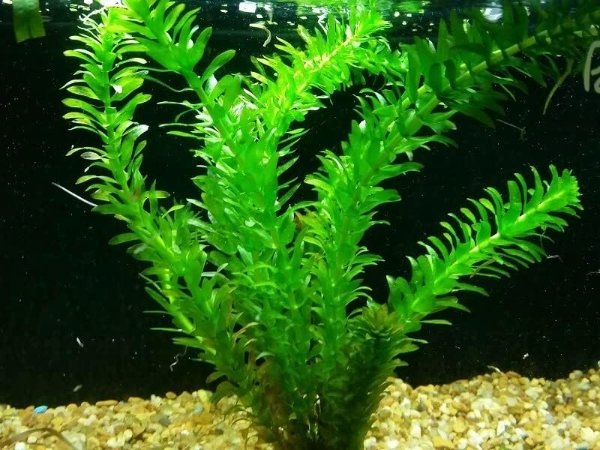
Anacharis grows rapidly and absorbs excess nutrients
Anacharis is one of the hardiest aquarium plants available — a resilient, fast-growing stem plant that absorbs ammonia and excess nutrients directly from the water column. Anacharis also secretes a natural chemical that helps inhibit blue-green algae growth, making it a double-duty plant for water quality. It’s a good choice if you want something that grows quickly to fill in your betta tank.
Anacharis grows either floating or rooted in substrate, and can even be attached to driftwood. Temperature tolerance ranges from 40-82°F, though Anacharis performs best between 60-82°F. It’s a fast grower, so expect regular trimming — just cut stems and replant the cuttings to propagate.
- Absorbs ammonia and inhibits blue-green algae naturally
- Fast growing and extremely resilient
- Can float, plant in substrate, or attach to driftwood
- Temperature range: 40-82°F — thrives in typical betta tank temps
3. Anubias (Anubias barteri)
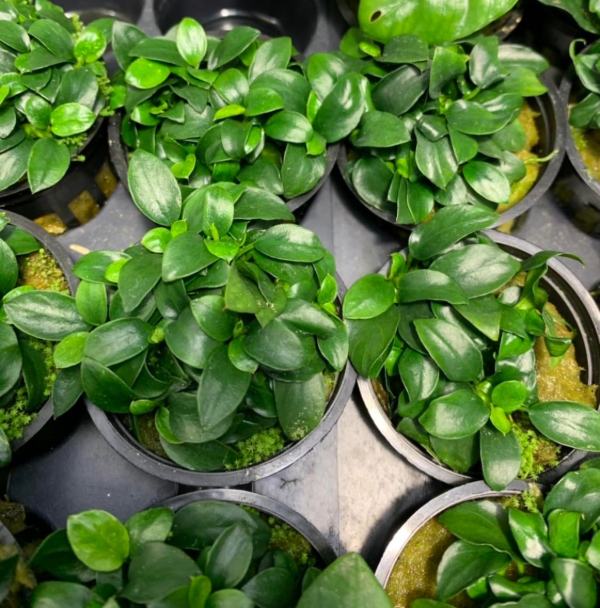
Anubias varieties are perfect for low-light betta tanks
Anubias is a slow-growing plant with broad, bright green leaves that bettas love to rest on. Multiple size varieties are available — from the tiny Anubias Nana Petite (perfect for nano tanks) to larger Anubias barteri varieties for bigger setups. Anubias prefers low lighting, making it ideal for betta tanks that typically don’t run high-intensity lights.
One important note: Anubias’ large, flat leaves are prone to algae growth, especially under excessive lighting. Keep your photoperiod to 6-8 hours and position Anubias in shaded areas of the tank to minimize this. If algae appears, reduce lighting duration rather than scrubbing the leaves.
- Prefers low lighting — ideal for standard betta tank setups
- Attach rhizome to driftwood or rocks — never bury in substrate
- Extremely slow growing and low maintenance
- Temperature: 71-81°F — matches betta requirements perfectly
Rhizome Rule for Anubias and Java Fern
Anubias and Java Fern both grow from thick horizontal stems called rhizomes. If you bury the rhizome in substrate, the plant will rot and die. Attach these plants to driftwood or rocks using thread, fishing line, or super glue (cyanoacrylate is aquarium-safe). Once established, they anchor themselves permanently.
4. Bamboo (Dracaena braunii)
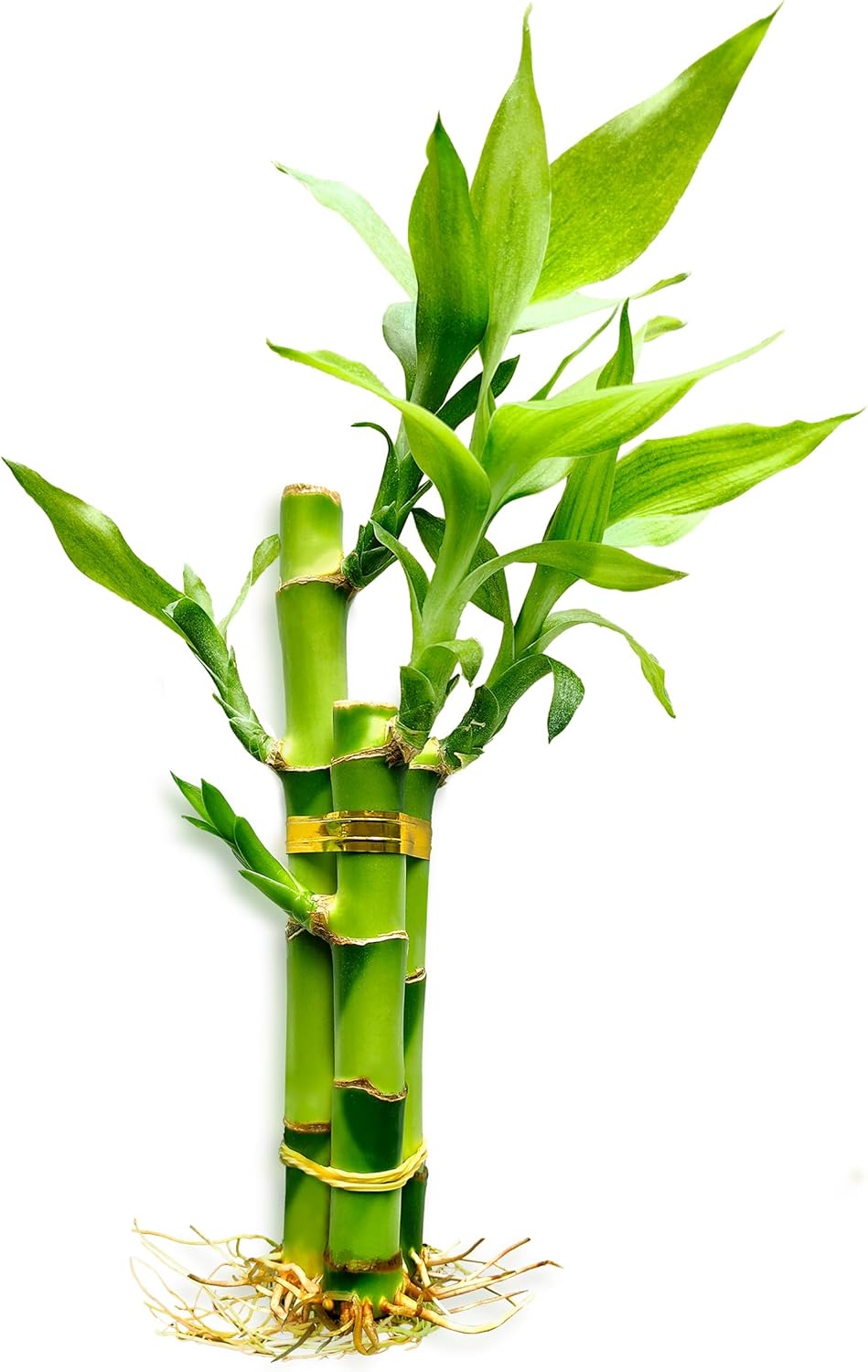
Lucky bamboo adds a sleek vertical element to betta tanks
Lucky bamboo (Dracaena braunii) adds a distinctive vertical element to betta tanks with its sleek stalks. Lucky bamboo works particularly well in smaller betta setups and bowls where other plants may be too large. It’s a low-maintenance option that grows slowly and doesn’t require substrate.
The critical rule with lucky bamboo: only the stems go in the water. Lucky bamboo leaves will rot and decompose if submerged, fouling your water quality and potentially harming your betta. Use a tank lid or clip system to keep the leafy portion above the waterline. The submerged stems absorb some nitrates and add a clean, modern aesthetic.
- Unique, sleek aesthetic — works well in small and nano betta tanks
- Keep only stems submerged — leaves must stay above water
- Low maintenance and slow growing
- Does not require substrate — stands upright on its own
5. Duckweed (Lemnoideae)
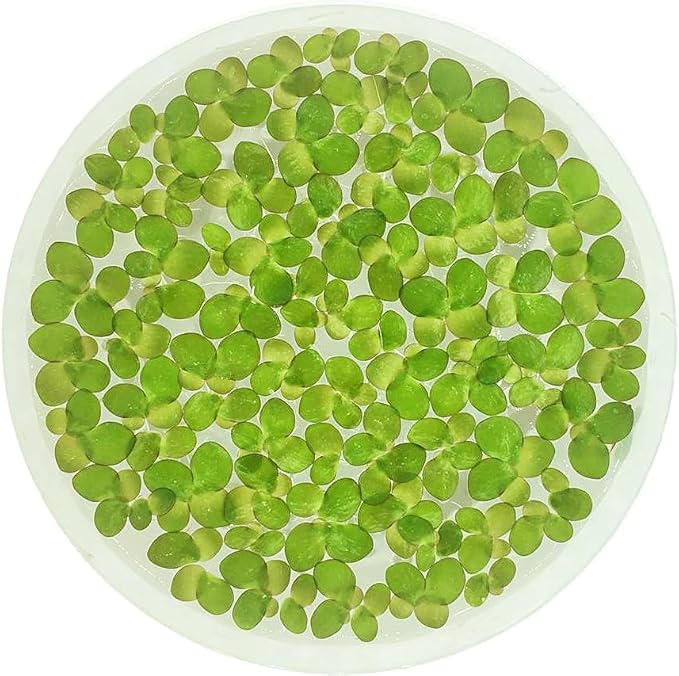
Duckweed provides shade and cover but requires regular thinning
Duckweed is a tiny floating plant that spreads rapidly across the water surface, providing shade and cover that bettas appreciate. Duckweed absorbs nutrients aggressively from the water column, helping control nitrate levels between water changes. Bettas often nibble on Duckweed, which provides beneficial dietary fiber — think of it as a salad bar for your betta.
The biggest challenge with Duckweed is controlling its growth. Duckweed multiplies fast and can completely cover the water surface within days. Since bettas need surface access to breathe air through their labyrinth organ, you must thin Duckweed regularly. Scoop out excess with a net, keeping at least 30-40% of the surface clear. For more floating plant options, see our best floating aquarium plants guide.
- Easy to grow floating plant — spreads rapidly
- Absorbs nitrates and excess nutrients aggressively
- Temperature range: 56-85°F — thrives in betta tank temps
- Requires regular thinning to maintain surface access for bettas
6. Hornwort (Ceratophyllum demersum)
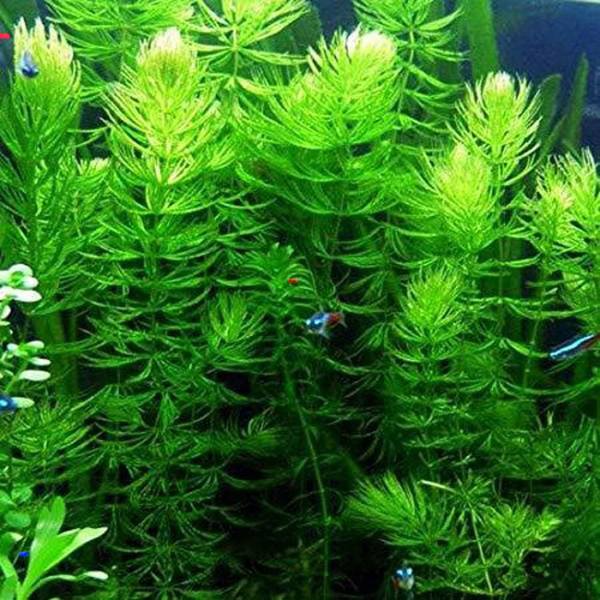
Hornwort's dense, feathery growth provides excellent oxygenation
Hornwort is one of the best oxygenating plants available for betta tanks, with dense, feathery needle-like leaves that excel at removing ammonia and nitrates from the water. Hornwort has the widest temperature tolerance of any plant on this list (40-95°F), making it nearly impossible to kill. It’s a rootless plant that naturally floats, though it can be weighted down with plant anchors.
Hornwort grows fast — very fast. Regular trimming is essential to prevent it from taking over the tank. Hornwort also sheds needle-like leaves periodically, which settle on the substrate and filter intake. A quick weekly vacuum keeps debris under control. Despite the maintenance, Hornwort’s water-cleaning ability makes it one of the most beneficial plants for betta water quality.
- Excellent oxygenator — one of the best for water quality
- Removes ammonia and nitrates effectively
- Widest temperature tolerance: 40-95°F
- Fast growing — requires regular trimming
Maintenance Note:
- Sheds needles regularly — vacuum debris from substrate weekly
- Rootless plant — use plant weights if you don't want it floating
7. Java Fern (Microsorum pteropus)
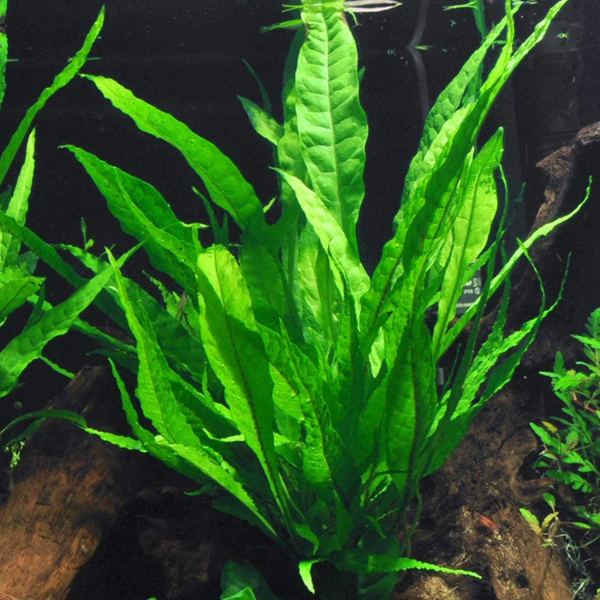
Java Fern attached to driftwood — never bury the rhizome
Java Fern is arguably the single best plant for betta tanks. Java Fern prefers the same water conditions bettas thrive in — warm, low-light, slightly acidic — and requires virtually zero maintenance once established. The rough, wrinkled leaves grow slowly from a central rhizome and propagate easily from leaf cuttings, so one plant eventually becomes many.
Java Fern tolerates 65-85°F and actually prefers low to moderate light. Excessive light causes Java Fern leaves to turn transparent and brown — a common mistake beginners make by placing them under overly bright LEDs. Attach Java Fern to driftwood or rocks (never bury the rhizome in substrate) and leave it alone. For more low-light aquarium plants that pair well with Java Fern, see our dedicated guide.
- Extremely low maintenance — thrives on neglect
- Prefers the same conditions as bettas (warm, low light, soft water)
- Propagates easily from leaf cuttings
- Temperature: 65-85°F — avoid excessive light (causes leaf transparency)
8. Java Moss (Vesicularia dubyana)
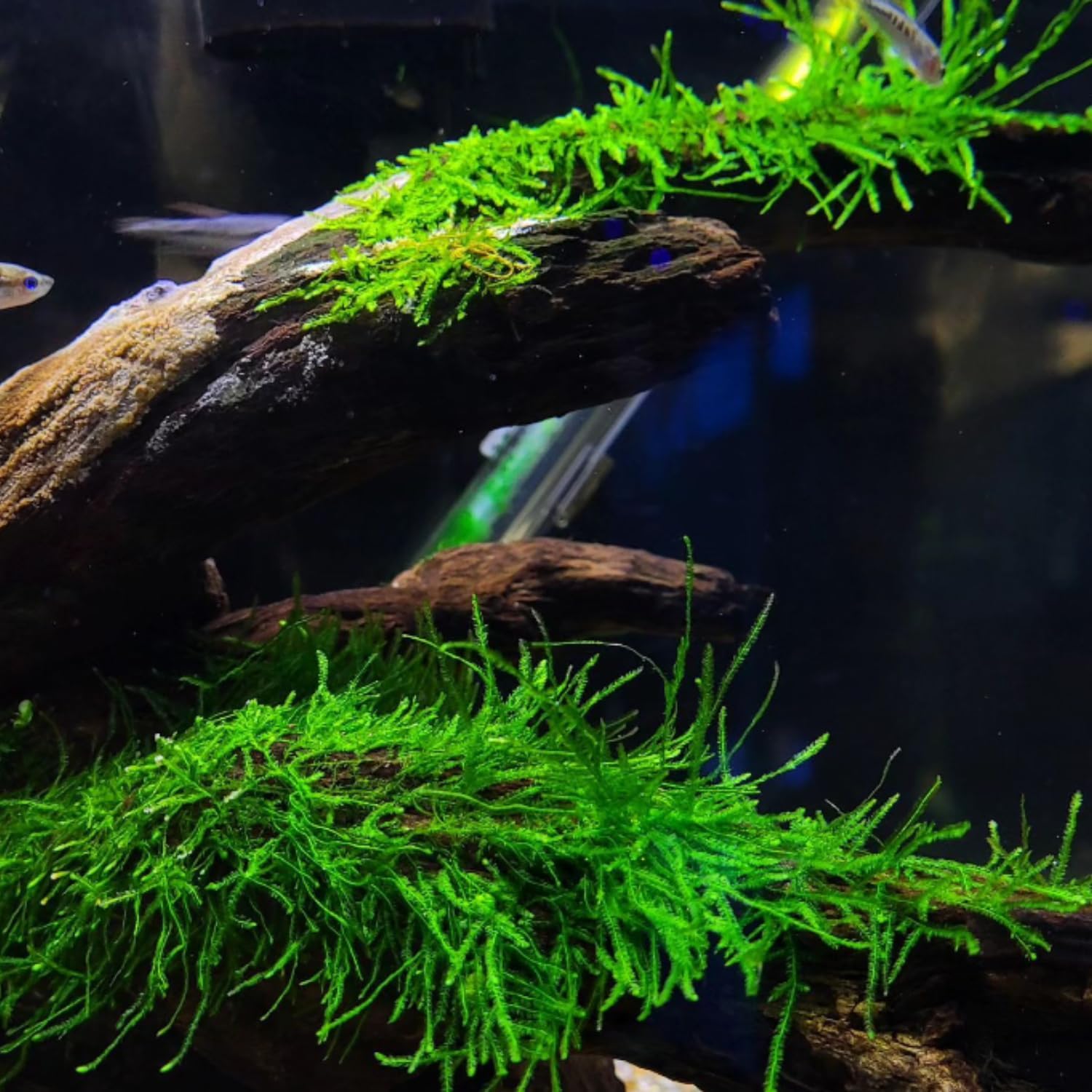
Bettas love to nibble, play, and hide in Java Moss
Java Moss grows in dense, furry clumps that bettas absolutely love — they nibble on it, rest in it, and hide among its bushy growth. Think of a plant that looks like a soft green carpet or cushion. Java Moss attaches to virtually any surface (driftwood, rocks, ornaments, even tank walls) and can be shaped into moss walls, trees, or carpets for creative aquascaping.
Java Moss grows faster in cooler water (65-72°F) and slows down in warmer betta-temperature water (76-80°F), which actually works in your favor — less trimming needed. Java Moss is one of the easiest aquarium plants to keep alive, tolerating low light and requiring no fertilizer or CO2. It’s a perfect first plant for anyone new to planted betta tanks.
- Excellent beginner plant — nearly impossible to kill
- Bettas love nibbling, hiding, and resting in Java Moss
- Attaches to any surface — create carpets, walls, or moss trees
- Temperature: 65-80°F — grows slower in warmer betta temps (less trimming)
9. Peace Lily (Spathiphyllum)
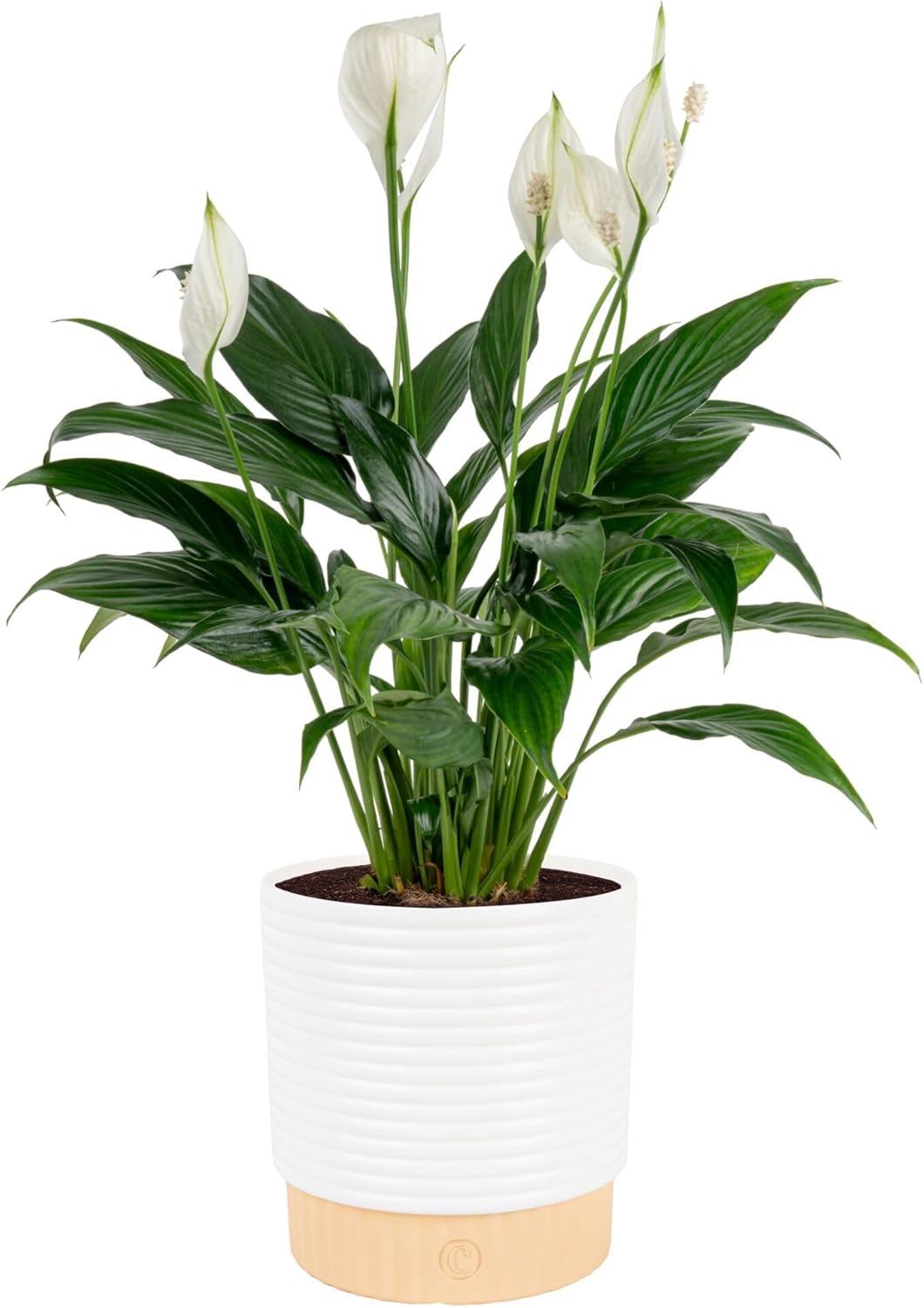
Peace lilies grow with roots in the water and leaves above
Peace Lily is a unique option for betta tanks — the root system dangles in the water while the broad leaves and flowers grow above the surface. Peace Lily roots provide cover for bettas and absorb some nutrients from the water. The above-water foliage adds a distinctive natural look that other aquarium plants can’t achieve.
Peace Lily prefers low light levels and works best in larger betta setups (10 gallons or more) where there’s room for both the root system and adequate swimming space. You’ll need a surface support structure — a modified lid, plant holder, or suction-cup basket — to keep the Peace Lily positioned properly. Never submerge the leaves, as they’ll rot underwater.
- Unique aesthetic — roots in water, leaves and flowers above
- Prefers low light levels — no special lighting needed
- Best in larger betta setups (10+ gallons) with surface support
- Root system provides hiding spots and absorbs some nutrients
10. Water Sprite (Ceratopteris)
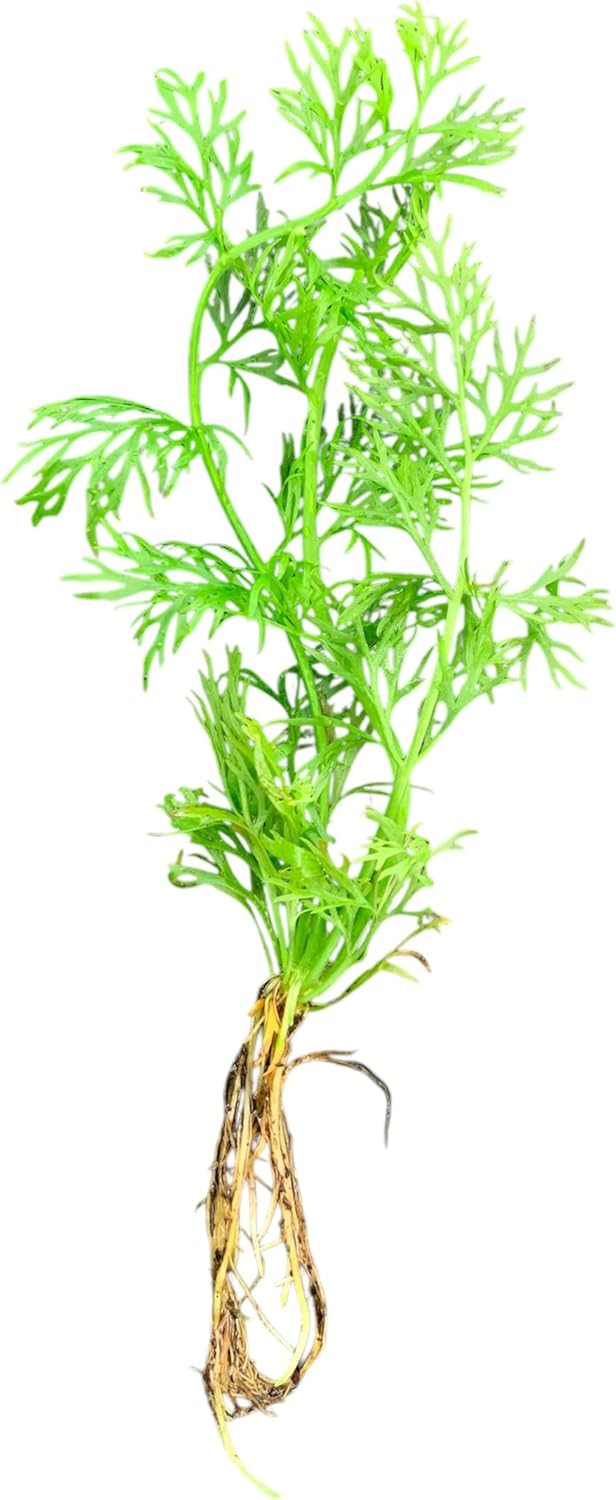
Water Sprite provides shade and hiding spots at the water surface
Water Sprite is a light, feathery plant that works either floating at the surface or planted in substrate — versatility that makes it useful for filling different zones in a betta tank. Water Sprite is an excellent ammonia absorber and grows fast enough to provide cover within weeks of planting. The delicate, lacy leaves create gentle shadows that bettas find comforting.
Water Sprite is more sensitive than the other plants on this list. It doesn’t tolerate sudden temperature swings or pH changes well, and benefits from regular liquid fertilizer to maintain healthy growth. Temperature range is 64-82°F. Despite being slightly more demanding, Water Sprite rewards the small extra effort with attractive, fast-filling growth that transforms bare tanks.
- Excellent ammonia absorber with fast, attractive growth
- Floats at surface or plants in substrate — versatile placement
- Temperature: 64-82°F — sensitive to sudden changes
- Benefits from regular liquid fertilizer for best results
Plant Care Tips for Betta Tanks
Keeping live plants healthy in a betta tank is straightforward — these are low-maintenance species, after all. The most important rule is monitoring growth to maintain your betta’s access to the water surface. Bettas breathe air through their labyrinth organ and will stress (or worse) if floating plants or fast-growing stems completely block the surface.
- Keep 30-40% of the water surface clear for betta air access at all times
- Remove dead, yellowing, or decaying plant material immediately — it releases ammonia as it breaks down
- Trim fast-growing species (Anacharis, Hornwort, Duckweed, Water Sprite) weekly or biweekly
- Consider liquid fertilizer for Water Sprite and Amazon Sword if growth stalls
- Run aquarium lights 6-8 hours per day — more promotes algae on slow-growing plants like Anubias
- Never bury rhizomes (Java Fern, Anubias) — attach to hardscape with thread, line, or super glue
Start Simple, Then Experiment
Every betta responds differently to plants. Start with 2-3 hardy species — Java Fern, Anubias, and Java Moss are nearly impossible to kill. Once they’re established and you see how your betta interacts with them, add more variety. Some bettas love sleeping on broad Anubias leaves; others prefer hiding in dense Java Moss clumps. Let your betta’s preferences guide your plant choices.
Frequently Asked Questions
Do bettas like live plants in their tank?
Yes, bettas naturally enjoy interacting with live plants. In the wild, bettas live among dense vegetation in the rice paddies and river basins of Thailand and Southeast Asia. Live plants provide hiding spots for resting and sleeping, reduce stress by mimicking their natural habitat, and offer dietary fiber that bettas occasionally nibble.
Will plastic plants hurt my betta?
Cheap plastic plants can catch and tear a betta's long, flowing fins on rough edges. If you prefer artificial plants, choose soft silk plants instead. To test a plastic plant, run pantyhose across the surface — if it snags, it will snag betta fins too. Live plants are always the safest option.
Are silk plants safe for betta fish?
Silk plants are a safer artificial alternative to hard plastic because their soft, pliable material won't tear betta fins. They lack the biological benefits of live plants — they don't absorb ammonia, produce oxygen, or reduce algae — but they're a reasonable option if you struggle to keep live plants alive.
Do betta tank plants need special lighting?
The plants on this list are all low-light species that thrive under a basic aquarium LED. Java Fern, Anubias, and Java Moss actually prefer low to moderate light — too much causes algae growth on their leaves. A standard 6-8 hour photoperiod is sufficient for all ten plants.
Can bettas eat live plants?
Bettas occasionally nibble on soft-leaved plants like Java Moss and Duckweed, which provides beneficial dietary fiber. This nibbling doesn't harm the plants and is a natural behavior — wild bettas graze on plant matter alongside their primarily insectivore diet.
How should I care for live plants in a betta tank?
Monitor plant growth to prevent fast-growing species from blocking the water surface where bettas breathe air through their labyrinth organ. Remove dead or yellowing leaves promptly to prevent decay. Never bury the rhizome of Java Fern or Anubias — attach them to driftwood or rocks instead.
For more betta care information, see our guides on Betta Tank Water Care and Do Betta Fish Need a Heater.
Related Topics
Found this helpful?
Share this guide with your fellow aquarium enthusiasts!

Written by
FTW Team
The FishTankWorld editorial team brings together experienced aquarists to help you succeed in the hobby.