
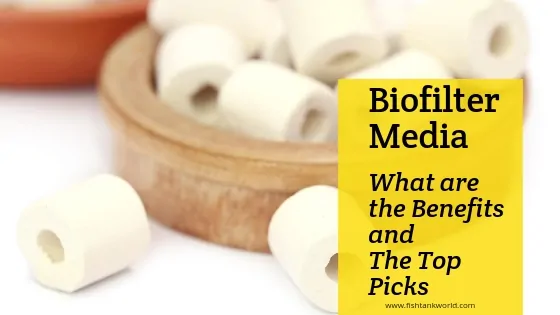
Fluval BioMax Bio Rings is the best biological filter media for most aquariums due to its versatile ceramic ring design, compatibility with all filter types, and strong bacteria colonization surface area at a reasonable price. Eheim Substrat Pro offers the highest surface area for heavily stocked tanks, while Seachem Matrix provides natural denitrification through anaerobic bacteria support.
Biological filter media serves as the foundation of aquarium filtration by hosting beneficial bacteria colonies. These bacteria replicate what happens in nature — transforming harmful ammonia and nitrite into less toxic nitrate through the nitrogen cycle. Without adequate biological media, ammonia from fish waste and uneaten food accumulates to lethal levels within days.
This guide covers the four best biological filter media options, explains how each type works, and helps you choose the right media for your aquarium filter setup. For broader filtration guidance, see our guide to setting up a fish tank filter.
Three-Stage Filtration
Power filters use mechanical, chemical, and biological media working together. Mechanical media traps debris, chemical media (like activated carbon) absorbs dissolved organics, and biological media hosts bacteria colonies that break down ammonia and nitrite. Biological filtration is the most critical stage — without it, the other two stages cannot keep fish alive long-term.
How Biological Filter Media Works
Biological filter media provides a breeding ground for beneficial bacteria that derive energy from converting waste products. Fish waste and uneaten food decompose into ammonia, which is toxic even at low concentrations. The bacteria living on biological filter media process these toxins in two stages:
- Nitrosomonas bacteria colonize porous surfaces and convert ammonia into nitrite
- Nitrobacter bacteria then convert nitrite into nitrate, which is far less toxic
- Regular water changes remove accumulated nitrate to complete the cycle
- Some porous media also supports anaerobic bacteria deep inside for nitrate reduction
- Established bacteria colonies are self-sustaining and grow to match your tank's bioload
The key factor in biological filter media effectiveness is surface area. More porous media provides more microscopic surfaces for bacteria to colonize, which means more ammonia and nitrite processing capacity for your aquarium.
Types of Biological Filter Media
Biological filter media comes in several forms, each with distinct advantages. Understanding the differences helps you match the right media to your filter type and budget.
Ceramic Media
Most popular choice
- Available as rings, cylinders, or balls
- Porous internal structure for bacteria
- Durable construction lasts years
- Moderate cost with wide availability
Sintered Glass
Premium option
- Highest surface area per volume
- Extremely porous micro-structure
- Premium price point
- Excellent bacteria colonization rate
Porous Rock
Natural option
- Lava rock or pumice stone varieties
- Supports aerobic and anaerobic bacteria
- Natural appearance if visible
- Cost-effective in bulk quantities
Plastic Bio Balls
Wet/dry specialist
- Designed for trickle and wet/dry filters
- Creates water and air turbulence
- Lower surface area than ceramic or glass
- Primarily used in sump filtration systems
Ceramic cell-pore media (like Fluval BioMax) features internal tunnels that dramatically increase surface area beyond what smooth ceramic offers. Sintered glass media (like Eheim Substrat Pro) takes porosity further with a microscopic structure that maximizes colonization surface. Natural zeolite serves double duty — it hosts bacteria while also absorbing ammonia chemically, though it requires periodic recharging.
Advantages of Biological Filter Media
Adding dedicated biological filter media to your aquarium filter provides two essential benefits that keep fish healthy:
Clean, Safe Water: Biological filter media removes ammonia and nitrite — the two most dangerous compounds in aquarium water. These toxins build up from fish waste, uneaten food, and decaying plant matter. Without biological filtration working alongside mechanical and chemical stages, toxic levels accumulate rapidly.
Stable, Healthy Environment: Ammonia spikes cause fish to gasp at the surface, develop red or inflamed gills, and can kill fish within hours. Established biological filter media prevents these dangerous spikes by maintaining consistent bacterial populations that process waste as fast as fish produce it. A mature biological filter keeps ammonia and nitrite at zero parts per million between water changes.
Top 4 Best Biological Filter Media
Biological filter media was evaluated based on four criteria: surface area (porosity and bacteria colonization potential), filter compatibility (how many filter types each media works with), durability (how long the media lasts before physical breakdown), and value (performance relative to price). Freshwater and saltwater compatibility, media shape, and user feedback on maintenance ease were also considered.
Biological Filter Media Comparison
| Material | Ceramic rings | Sintered glass | Pumice stone | Ceramic cylinders |
| Package Size | 500g | 1L | 1L | 1.25L |
| Freshwater Compatible | ||||
| Saltwater Compatible | ||||
| Works in All Filters | ||||
| Supports Anaerobic Bacteria | — | — | — | |
| Check Price | Check Price | Check Price | Check Price |
- Material
- Ceramic rings
- Package Size
- 500g
- Freshwater Compatible
- Saltwater Compatible
- Works in All Filters
- Supports Anaerobic Bacteria
- —
- Material
- Sintered glass
- Package Size
- 1L
- Freshwater Compatible
- Saltwater Compatible
- Works in All Filters
- Supports Anaerobic Bacteria
- —
- Material
- Pumice stone
- Package Size
- 1L
- Freshwater Compatible
- Saltwater Compatible
- Works in All Filters
- Supports Anaerobic Bacteria
- Material
- Ceramic cylinders
- Package Size
- 1.25L
- Freshwater Compatible
- Saltwater Compatible
- Works in All Filters
- Supports Anaerobic Bacteria
- —
1. Fluval BioMax Bio Rings — Best Overall
Fluval BioMax Bio Rings
- Ceramic rings with internal tunnel structure for maximum bacteria colonization
- Compatible with canister filters, HOB filters, sumps, and internal filters
- Works in both freshwater and saltwater aquariums
- Widely available and affordably priced for the quality provided
Fluval BioMax Bio Rings feature a complex internal tunnel structure that provides significantly more surface area than standard ceramic rings. Beneficial bacteria colonize both the exterior and interior channels, creating dense bacterial populations within a compact volume. The ceramic construction is durable enough to last for years with proper care.
Fluval BioMax Bio Rings work in virtually any filter type — canister filters, hang-on-back filters, sumps, and internal filters. The ring shape allows water to flow through and around each piece, ensuring bacteria receive a constant supply of ammonia-rich water to process. This versatility makes Fluval BioMax Bio Rings the best choice for most aquarists.
Note: Fluval recommends partial replacement every six months, but many aquarists find Fluval BioMax Bio Rings last much longer with proper maintenance. Only replace when the ceramic begins to physically deteriorate.
2. Eheim Substrat Pro — Premium Choice
Eheim Substrat Pro uses sintered pearl-shaped glass to deliver the highest surface area of any biological filter media on this list. The sintering process creates an extremely porous micro-structure throughout each sphere, providing vastly more colonization surface than standard ceramic media.
Eheim Substrat Pro excels in canister filters where its spherical shape allows excellent water flow distribution. The sintered glass construction rinses clean easily during maintenance without damaging the porous structure. For heavily stocked tanks or systems with high bioloads, Eheim Substrat Pro provides the bacterial capacity to handle elevated ammonia production.
Strengths:
- Highest surface area per volume among bio media options
- Sintered glass micro-structure for deep bacteria colonization
- Pearl shape promotes even water flow in canister filters
- Premium Eheim manufacturing quality and durability
- Compatible with freshwater and saltwater systems
Limitations: Eheim Substrat Pro carries a higher price than ceramic alternatives. For lightly stocked community tanks, the premium surface area may exceed what the bioload requires.
3. Seachem Matrix — Best Natural Option
Seachem Matrix consists of porous pumice pebbles mined from volcanic deposits, providing both external and internal surfaces for bacterial colonization. Unlike ceramic or glass media, Seachem Matrix features naturally occurring internal macropores large enough to support anaerobic bacteria deep within each pebble.
Seachem Matrix stands apart from ceramic and glass alternatives because of its anaerobic zones. Aerobic bacteria on the Seachem Matrix surface process ammonia and nitrite as expected, but anaerobic bacteria inside the deep macropores take filtration a step further by converting nitrate into harmless nitrogen gas. Seachem Matrix’s denitrification capability reduces nitrate buildup between water changes — a benefit that ceramic rings and sintered glass cannot provide.
Seachem Matrix works in canister filters, HOB filters, sumps, and media reactors. The pebbles can be used loose in filter compartments or placed in mesh media bags for easy removal during maintenance.
Strengths:
- All-natural volcanic pumice with no chemical additives
- Supports both aerobic and anaerobic bacteria populations
- Internal macropores enable denitrification (nitrate reduction)
- Versatile — works loose or in media bags in any filter type
- Trusted Seachem brand with proven formulation
Limitations: Seachem Matrix costs more than basic ceramic media. The pumice is heavier than ceramic rings, adding weight to portable filter setups.
4. Fluval G-Nodes — High-Performance Ceramic
Fluval G-Nodes feature a star-shaped ceramic cylinder design engineered for maximum water flow-through and surface area. The multi-pointed star cross-section creates channels that direct water through the media rather than around it, improving contact time between bacteria and waste-laden water.
Fluval G-Nodes were originally designed for the Fluval G-Series canister filters but work in any canister filter or sump with sufficient space. The highly porous ceramic material provides ample surface area for bacteria, while the star shape prevents compaction and channeling that can reduce filtration efficiency.
Strengths:
- Star shape maximizes flow-through and prevents channeling
- Highly porous ceramic construction for dense bacterial colonization
- Trusted Fluval engineering and quality control
- Designed for high-capacity biological filtration demands
Limitations: Fluval G-Nodes carry premium pricing. The star-shaped cylinders may not fit efficiently in smaller HOB filter compartments — best suited for canister filters and sumps.
How to Choose the Right Biological Filter Media
Selecting the best biological filter media depends on your specific setup. Research your existing filter first — many canister filters and HOB filters ship with basic media included, and adding premium media alongside (rather than replacing) can improve biological capacity.
Check Your Filter Compatibility
Different filters accommodate different media sizes and shapes. Small ceramic rings like Fluval BioMax Bio Rings fit well in HOB filter compartments. Larger media like Seachem Matrix pebbles or Fluval G-Nodes work best in canister filters and sumps where space is not constrained. Make sure the media you choose physically fits your filter before purchasing.
Freshwater vs. Saltwater Considerations
All four biological filter media options on this list work in both freshwater and saltwater systems. However, saltwater reef tanks with substantial live rock may already have enough porous surface area for beneficial bacteria. In reef setups, the rocks themselves serve as biological filtration. Dedicated biological filter media is most beneficial in saltwater fish-only tanks or reef tanks with minimal live rock.
Budget and Bioload
The size of your aquarium and fish stocking level determine how much biological filter media you need. Ceramic rings like Fluval BioMax Bio Rings offer the best value for moderately stocked community tanks. Premium options like Eheim Substrat Pro justify their cost in heavily stocked tanks, large aquariums, or systems housing messy fish species that produce significant waste.
Starting New Media
Speed up bacteria colonization on new biological filter media by adding bottled nitrifying bacteria (such as Seachem Stability or Fritz TurboStart). Running new media alongside established media in the same filter for 2-4 weeks also transfers bacteria colonies naturally, reducing the risk of ammonia spikes during the transition.
Biological Filter Media Maintenance
Preserve Your Bacteria Colonies
Biological filter media should NOT be replaced unless absolutely necessary. Replacing bio media destroys established beneficial bacteria colonies, potentially causing dangerous ammonia spikes. Some bacteria must remain on the media for biological filtration to continue functioning.
Proper biological filter media maintenance focuses on preservation rather than replacement. For a detailed walkthrough, see our guide on how to change aquarium filter without losing bacteria.
- Rinse biological media gently in OLD TANK WATER removed during water changes
- Never rinse bio media in tap water — chlorine and chloramine kill beneficial bacteria instantly
- Only clean biological media when water flow becomes noticeably restricted
- If replacement is truly necessary, change only 25-50% of the media at a time
- Wait 2-4 weeks between partial replacements so bacteria recolonize the new media
- Quality ceramic and sintered glass media lasts 1-3 years before physical breakdown
Conclusion
Fluval BioMax Bio Rings earn the top recommendation for biological filter media due to their versatility, proven performance, and value across different filter systems. The ceramic ring design with internal tunnels works in virtually any filter type and provides excellent surface area for bacterial colonization at a reasonable price.
For premium builds or heavily stocked tanks, Eheim Substrat Pro offers maximum surface area through its sintered glass micro-structure. Seachem Matrix appeals to aquarists who prefer natural materials and want anaerobic nitrate reduction capability built into their biological filtration. Fluval G-Nodes serve high-capacity setups where maximum flow-through and anti-channeling performance matter.
Biological filter media is a long-term investment in your aquarium’s health. Quality ceramic or sintered glass media, properly maintained with gentle rinses in tank water, will support your aquarium’s nitrogen cycle for years without replacement.
Related Guides
- Best Canister Filters — canister filters provide the most space for biological media
- How to Change Aquarium Filter Without Losing Bacteria — essential reading before replacing any filter media
- How to Cycle a Freshwater Aquarium — the nitrogen cycle that biological media supports
- Best Aquarium Filters — complete filter selection guide
What does biological filter media do?
Biological filter media provides surface area for beneficial bacteria colonies to grow. These bacteria convert toxic ammonia (from fish waste) into nitrite, then into less harmful nitrate through the nitrogen cycle. Without adequate bio media, ammonia builds to lethal levels.
How often should I replace biological filter media?
Biological media should NOT be replaced frequently - the goal is to preserve bacteria colonies. Only replace when media physically breaks down (every 1-2 years for quality ceramic). Never replace all bio media at once; do partial replacements to maintain bacterial populations.
Can I use biological filter media in any filter?
Yes, biological media works in canister filters, HOB filters, sumps, and even DIY setups. Choose media size appropriate for your filter - small rings for HOB filters, larger media for canisters. Ensure water flows through (not around) the media.
What's the best type of biological filter media?
Ceramic rings and sintered glass media offer the best balance of surface area, durability, and value. Ceramic rings like Fluval BioMax are versatile and widely available. Premium sintered glass like Eheim Substrat Pro provides maximum surface area but costs more.
Do I need biological filter media in a saltwater tank?
Live rock in reef tanks often provides enough porous surface area for beneficial bacteria. However, dedicated biological filter media like Seachem Matrix or Eheim Substrat Pro supplements live rock in heavily stocked saltwater systems or fish-only setups without live rock.
How do I speed up bacteria colonization on new media?
Add prepared nitrifying bacteria liquid or powder (like Seachem Stability or Fritz TurboStart) when installing new biological filter media. Running new media alongside established media for 2-4 weeks also transfers bacteria colonies naturally.
Related Topics
Found this helpful?
Share this guide with your fellow aquarium enthusiasts!

Written by
FTW Team
The FishTankWorld editorial team brings together experienced aquarists to help you succeed in the hobby.