
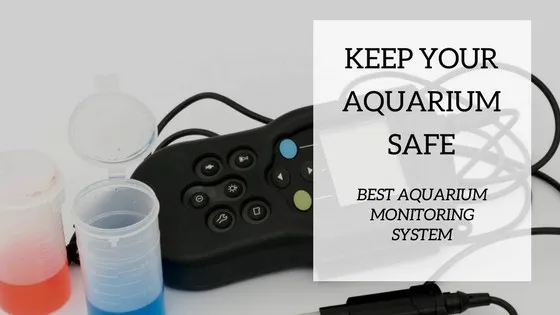
The best aquarium monitoring system for freshwater tanks depends on what you need to track and how much automation you want. A basic digital thermometer and liquid test kit cover the essentials for most community tanks. Smart WiFi monitors add real-time phone alerts and continuous parameter tracking for hobbyists managing sensitive species, planted tanks, or multiple setups.
Top Pick for Most Freshwater Tanks
The Kactoily 7-in-1 Smart WiFi Monitor tracks pH, temperature, TDS, EC, ORP, salinity, and specific gravity continuously — with free phone alerts via the Tuya app and no subscription fees. For freshwater hobbyists who want to monitor water quality remotely without spending hundreds on a reef controller, the Kactoily is the best value on the market.
Quick Comparison: Best Freshwater Monitoring Systems
| Parameters Tracked | pH, TDS, Temp, EC, ORP, Salt, SG | Temperature (dual probe) | pH, Ammonia, Nitrite, Nitrate | NH3 (ammonia), pH, Temp | Temperature only |
| Connectivity | WiFi (2.4 GHz) | WiFi (2.4 GHz) | Manual (liquid reagent) | USB + optional WiFi server | None (visual display) |
| App / Interface | Tuya Smart (free) | Inkbird (free) | None | Seneye dashboard | None |
| Power Source | USB powered | Outlet-powered (1200W capacity) | None needed | USB powered | Battery (LR44) |
| Subscription Required | — | — | — | — | |
| Phone Alerts | — | — | |||
| Best For | Multi-parameter WiFi monitoring | Heater safety & temp control | Accurate manual water testing | Ammonia monitoring during cycling | Budget temperature monitoring |
| Check Price | Check Price | Check Price | Check Price | Check Price |
- Parameters Tracked
- pH, TDS, Temp, EC, ORP, Salt, SG
- Connectivity
- WiFi (2.4 GHz)
- App / Interface
- Tuya Smart (free)
- Power Source
- USB powered
- Subscription Required
- —
- Phone Alerts
- Best For
- Multi-parameter WiFi monitoring
- Parameters Tracked
- Temperature (dual probe)
- Connectivity
- WiFi (2.4 GHz)
- App / Interface
- Inkbird (free)
- Power Source
- Outlet-powered (1200W capacity)
- Subscription Required
- —
- Phone Alerts
- Best For
- Heater safety & temp control
- Parameters Tracked
- pH, Ammonia, Nitrite, Nitrate
- Connectivity
- Manual (liquid reagent)
- App / Interface
- None
- Power Source
- None needed
- Subscription Required
- —
- Phone Alerts
- —
- Best For
- Accurate manual water testing
- Parameters Tracked
- NH3 (ammonia), pH, Temp
- Connectivity
- USB + optional WiFi server
- App / Interface
- Seneye dashboard
- Power Source
- USB powered
- Subscription Required
- Phone Alerts
- Best For
- Ammonia monitoring during cycling
- Parameters Tracked
- Temperature only
- Connectivity
- None (visual display)
- App / Interface
- None
- Power Source
- Battery (LR44)
- Subscription Required
- —
- Phone Alerts
- —
- Best For
- Budget temperature monitoring
What to Monitor in a Freshwater Tank
Freshwater aquariums require tracking fewer parameters than saltwater or reef tanks, but the parameters that matter are critical to fish health. Neglecting any one of them leads to stress, disease, and fish loss.
Essential Freshwater Parameters
Temperature is the single most important daily check. Tropical freshwater fish typically need 75-82°F (24-28°C), and even a 3-4 degree swing over a few hours can trigger stress, ich outbreaks, or organ failure. A digital thermometer provides constant visibility into temperature stability — and a temperature controller provides automatic protection against heater malfunctions.
Ammonia and nitrite are lethal at any detectable level in an established tank. Both should read 0 ppm on a liquid test kit. During the nitrogen cycle, ammonia spikes first, followed by nitrite, before beneficial bacteria convert both to nitrate. Monitoring ammonia and nitrite daily during cycling tells you exactly where your tank stands in the process.
Nitrate is the end product of the nitrogen cycle and accumulates between water changes. Most freshwater fish tolerate nitrate levels below 40 ppm, though sensitive species prefer under 20 ppm. Weekly nitrate testing helps you determine the right water change frequency for your specific bioload.
pH affects everything from fish comfort to how toxic ammonia becomes. A stable pH level matters more than a “perfect” number — most freshwater fish adapt to a range of 6.5-7.8 as long as the pH doesn’t swing rapidly. Weekly pH testing catches gradual drift before it becomes a problem.
Smart Monitoring vs. Manual Testing
Smart WiFi Monitoring
Best for: remote monitoring, multiple tanks, sensitive species
- Continuous 24/7 parameter tracking
- Phone alerts when parameters drift out of range
- Historical data and trends over time
- Remote access while traveling or at work
- Higher upfront cost ($80-200+)
Manual Testing (Liquid Kits)
Best for: single tanks, tight budgets, proven accuracy
- More accurate for ammonia, nitrite, and nitrate
- No electronics to fail or calibrate
- Lowest cost ($25-40 covers all parameters)
- Tests only when you remember to do them
- Color matching can be subjective
Most freshwater hobbyists do well with manual testing supplemented by a digital thermometer for continuous temperature visibility. Smart WiFi monitors become valuable when you want phone alerts for temperature swings, track parameter trends over time, or manage tanks while traveling.
The Best Setup Uses Both
Smart monitors excel at continuous tracking — catching a heater failure at 2 AM or a pH crash while you’re at work. Liquid test kits excel at accurate ammonia, nitrite, and nitrate readings that most smart monitors can’t measure. Using both together gives you the most complete picture of your aquarium’s health.
The Best Freshwater Aquarium Monitoring Systems Reviewed
1. Kactoily 7-in-1 Smart WiFi Monitor — Best Overall
Kactoily 7-in-1 Smart WiFi Aquarium Monitor
- Tracks 7 parameters: pH, TDS, temperature, EC, ORP, salinity, specific gravity
- WiFi connectivity with free Tuya Smart app — no subscription fees
- Push notifications when any parameter exceeds your set range
- Historical data charting to track trends over days, weeks, and months
- Works with freshwater, saltwater, and planted tanks
- USB powered with submersible probe — clean in-tank installation
Why we recommend it: The Kactoily 7-in-1 WiFi monitor is the best aquarium monitoring system for freshwater hobbyists who want smart features without the $500+ price tag of reef controllers like the Neptune Apex. The Kactoily tracks seven water parameters continuously and sends real-time alerts to your phone through the free Tuya Smart app. No subscription fees, no monthly sensor replacements — just plug it in, connect to WiFi, and start monitoring.
The Kactoily 7-in-1 Smart WiFi monitor fills a gap that previously only existed at the premium reef controller price point. For freshwater hobbyists, the most useful readings are temperature, pH, and TDS — three parameters that tell you whether your tank is stable, your water chemistry is consistent, and your fertilizer dosing (for planted tanks) is on track.
What makes the Kactoily stand out: The combination of multi-parameter monitoring and WiFi alerts at this price point is unmatched. Competing smart monitors either track fewer parameters, cost significantly more, or require ongoing subscription fees. The Kactoily uses the Tuya Smart platform, which integrates with Alexa and Google Home for voice-activated parameter checks. The historical data charting is particularly useful for spotting gradual pH drift or seasonal temperature changes that manual spot-testing would miss.
pH accuracy matters most for freshwater. Forum users report the Kactoily’s pH readings align closely with liquid reagent test results — a critical validation since pH is the parameter freshwater hobbyists care about most. Temperature accuracy is typically within 0.5°F of reference thermometers. TDS readings help planted tank hobbyists track fertilizer consistency and know when RO water needs replacing.
Setup and connectivity: The Kactoily connects via 2.4 GHz WiFi only (not 5 GHz). The submersible probe sits inside the tank while the display unit stays outside. USB power means no batteries to replace, but the monitor does need to stay plugged in continuously. The Tuya Smart app handles all configuration, alerting, and historical data.
One limitation: The Kactoily does not measure ammonia or nitrite — the two most critical parameters during tank cycling. You still need a liquid test kit like the API Freshwater Master Test Kit for nitrogen cycle monitoring. The Kactoily is best used as a continuous monitoring supplement to periodic manual testing, not a complete replacement.
2. Inkbird ITC-306A WiFi — Best Temperature Controller
Inkbird ITC-306A WiFi Aquarium Temperature Controller
- Dual temperature probes — alerts if readings disagree by more than 5°F
- WiFi connectivity with free Inkbird app for remote monitoring and control
- 1200W outlet capacity handles any standard aquarium heater
- Automatic heater shutoff if temperature exceeds your set maximum
- Dual heating outlets for running two heaters simultaneously
- Aquarium-specific design with rubber-tipped waterproof probes
Why we recommend it: Heater failure is the #1 fear in the freshwater aquarium hobby — and the Inkbird ITC-306A is the most effective safety net against it. The dual-probe design catches both stuck-on heaters (overheating) and failed heaters (temperature drops) before fish are harmed. WiFi connectivity means you get phone alerts whether you're at work, sleeping, or on vacation.
The Inkbird ITC-306A WiFi temperature controller sits between your aquarium heater and the wall outlet, acting as an independent safety cutoff that prevents heater-related disasters. If the water temperature exceeds your set maximum, the Inkbird cuts power to the heater immediately — regardless of whether the heater’s built-in thermostat has failed.
Why dual probes matter: The ITC-306A uses two independent temperature probes. If the probes disagree by more than 5°F, the controller triggers an alarm, indicating a probe failure or malfunction. This redundancy catches a failure mode that single-probe controllers miss entirely. Place one probe near the heater output and the other on the opposite side of the tank for the most useful readings.
The right way to use it: Set your heater’s built-in thermostat to your target temperature (e.g., 78°F) and set the Inkbird’s cutoff 2-3 degrees higher (e.g., 81°F). Under normal conditions, the heater’s thermostat handles temperature regulation and the Inkbird stays passive. The Inkbird only activates if the heater’s thermostat fails and water temperature approaches the danger zone. This setup gives you two independent layers of temperature protection.
WiFi alerts provide real peace of mind. The Inkbird app sends push notifications for high temperature, low temperature, and probe disagreement events. During power outages — when the heater and controller both lose power — you’ll see the temperature dropping in the app’s live graph, giving you time to take action before the tank cools to dangerous levels.
Probe reliability is the known trade-off. Aquarium hobbyists on forums report that Inkbird probes can drift by a few degrees after 12-18 months of continuous submersion. Replace probes annually as preventive maintenance, even if readings seem stable. The probes are inexpensive and available directly from Inkbird.
For a budget alternative without WiFi, the
offers similar outlet control with a single probe at a lower price. The ITC-308 also includes a cooling outlet — useful if you’re pairing it with an aquarium chiller.3. API Freshwater Master Test Kit — Best Manual Test Kit
API Freshwater Master Test Kit
- Tests pH, high-range pH, ammonia, nitrite, and nitrate
- Liquid reagent method — more accurate than test strips
- 800+ individual tests per kit — lasts months of regular testing
- Color comparison cards included for all parameters
- Industry standard used by aquarium stores and fish breeders
- Comprehensive instructions with freshwater-specific guidance
Why we recommend it: The API Freshwater Master Test Kit is the gold standard liquid test kit for freshwater aquariums. No smart monitor on the market can match the accuracy of liquid reagent testing for ammonia, nitrite, and nitrate — the three parameters that determine whether your nitrogen cycle is functioning and your fish are safe. At $25-35 for 800+ tests, it's the highest-value monitoring investment any freshwater hobbyist can make.
The API Freshwater Master Test Kit covers the five parameters that matter most for freshwater fish health: pH, high-range pH, ammonia, nitrite, and nitrate. Each test uses liquid reagents that react with your water sample to produce a color change, which you match against an included color card to determine the concentration.
Why liquid testing beats everything else for ammonia and nitrite. No consumer-grade smart monitor accurately measures ammonia or nitrite in real time at freshwater concentrations. The API test kit detects ammonia at 0.25 ppm — a level that’s already stressful for fish and signals a developing problem. Test strips exist but are significantly less precise, and their accuracy degrades within months of opening the container due to humidity exposure.
The ammonia test is the most important test in the kit. During the nitrogen cycle, daily ammonia testing tells you whether beneficial bacteria are establishing, whether your bioload is manageable, and when cycling is complete. In established tanks, ammonia should always read 0 ppm — any detectable ammonia indicates a serious problem requiring immediate investigation.
How to get accurate results: Shake the Nitrate Test #2 bottle vigorously for 30 full seconds before every use. The reagent settles between uses, and insufficient shaking is the #1 cause of falsely low nitrate readings — a widespread frustration in the hobby. Also shake the test tube for 60 seconds after adding both nitrate reagents. This step is not optional for accurate readings.
Testing frequency for freshwater tanks: Test weekly for established, stable tanks. Test daily during cycling, after adding new fish, after medicating, or after any unusual fish behavior. As your tank matures over 6+ months with consistent readings, you can reduce testing to biweekly — but always have the kit on hand for troubleshooting.
For hobbyists who want more precise pH readings than color-chart matching allows, the
provides digital pH readings accurate to ±0.1 pH — useful for planted tank hobbyists who need to dial in CO2 injection levels.4. Seneye Home — Best for Ammonia Monitoring
Seneye Home Aquarium Monitor
- Continuous ammonia (NH3) monitoring — unique among consumer monitors
- Tracks pH and temperature alongside ammonia readings
- USB connectivity with optional WiFi server for remote access
- Seneye dashboard with historical graphing and alert system
- Particularly useful during tank cycling and new tank syndrome
- Compact in-tank sensor design with minimal visual impact
Why we recommend it: The Seneye Home is the only consumer aquarium monitor that continuously tracks free ammonia (NH3) levels in real time. This makes the Seneye uniquely valuable during the nitrogen cycle, when ammonia spikes can happen rapidly and without warning. For hobbyists cycling a new tank or managing a tank recovering from a crash, the Seneye provides ammonia visibility that no other monitor offers.
The Seneye Home aquarium monitor fills a niche that no other consumer product addresses: continuous, real-time ammonia detection in freshwater aquariums. While the Kactoily 7-in-1 and other smart monitors track pH and temperature, none of them can detect ammonia — the most immediately dangerous parameter in a freshwater tank.
How the Seneye works: A replaceable sensor slide sits inside the tank, continuously measuring free ammonia (NH3), pH, and temperature. The slide connects to a USB-powered module that uploads data to the Seneye cloud dashboard. Each sensor slide lasts approximately 30 days before requiring replacement — an ongoing cost that separates the Seneye from subscription-free monitors.
Best use case — cycling new tanks. The Seneye Home shines during the nitrogen cycle, when ammonia levels rise and fall unpredictably. Instead of testing manually once or twice a day and hoping you catch the peak, the Seneye tracks ammonia continuously and alerts you when levels become dangerous. Once the tank is fully cycled and ammonia stabilizes at zero, the Seneye’s ongoing sensor cost becomes harder to justify for most hobbyists.
The ongoing cost consideration: Replacement sensor slides are the Seneye’s main drawback. Each slide lasts about a month, adding a recurring expense that compounds over time. For hobbyists who cycle tanks frequently, breed fish, or manage quarantine systems, this cost is justified by the ammonia visibility. For hobbyists with a single established community tank, the API Freshwater Master Test Kit provides ammonia testing at a much lower long-term cost.
For a lower-cost passive ammonia indicator, the
sticks inside the tank and changes color when free ammonia is detected. The Seachem Ammonia Alert lasts up to a year and requires no power or electronics. It’s less precise than the Seneye but serves as a useful early warning system between manual tests.5. VIVOSUN 4-Pack LCD Digital Thermometer — Best Budget Option
VIVOSUN 4-Pack LCD Digital Aquarium Thermometer
- 4 thermometers per pack — equip multiple tanks or cross-check readings
- Submersible probe with 78-inch cable for flexible placement
- Large LCD display with suction cup mounting on tank exterior
- Temperature range: -50°C to 70°C (-58°F to 158°F)
- Compact, clean design that doesn't clutter the tank
- LR44 battery included — runs for months
Why we recommend it: The VIVOSUN 4-pack provides reliable temperature monitoring at about $2-3 per thermometer. The 4-pack is ideal for aquarists with multiple tanks or for using two thermometers on one tank to cross-check accuracy — a practice recommended by experienced hobbyists who know that any single cheap thermometer can drift.
The VIVOSUN LCD digital thermometer is a no-frills temperature monitor that does one thing reliably: display your aquarium’s current water temperature on an easy-to-read LCD screen. The submersible probe sits inside the tank while the display unit mounts outside on the glass with a suction cup.
Why a 4-pack makes sense: Experienced aquarists routinely use two thermometers per tank to verify accuracy. Inexpensive digital thermometers can drift by 2-4 degrees over time — a variance that’s invisible unless you have a second thermometer for comparison. With four thermometers in the pack, you can equip two tanks with redundant monitoring or keep spares on hand for immediate replacement.
The 78-inch cable is a practical advantage. The long probe cable gives you flexibility in placement — route the probe to the opposite side of the tank from the heater for the most representative temperature reading. Short cables force the probe near the display, often placing it close to the heater where readings run artificially high.
What the VIVOSUN won’t do: The VIVOSUN has no WiFi, no app, and no alerts. If the temperature drops overnight because a heater fails, you won’t know until you look at the display in the morning. For hobbyists who want temperature alerts, the Inkbird ITC-306A WiFi controller provides both monitoring and automatic heater control. The VIVOSUN is best used as a visual-check thermometer for daily temperature verification.
Choosing the Right Monitoring Setup
Freshwater monitoring needs scale with tank complexity. A 10-gallon betta tank doesn’t need the same equipment as a 75-gallon planted community tank running pressurized CO2. Match your monitoring investment to your actual needs.
Beginner / Budget Setup
Under $40 — covers all essentials
- VIVOSUN digital thermometer — daily temp checks
- API Freshwater Master Test Kit — weekly water testing
- Seachem Ammonia Alert badge — passive ammonia warning
- Best for: community tanks, betta tanks, first tanks
Intermediate / Smart Setup
$80-150 — automated monitoring
- Kactoily 7-in-1 WiFi — continuous multi-parameter tracking
- Inkbird ITC-306A WiFi — heater safety controller
- API test kit — for ammonia/nitrite verification
- Best for: multiple tanks, planted tanks, sensitive species
Start simple and add as needed. A thermometer and liquid test kit handle the monitoring needs of 90% of freshwater community tanks. Smart monitoring becomes worthwhile when you find yourself worrying about temperature stability while away from home, want data trends to optimize water change schedules, or manage multiple tanks where manual testing every tank weekly becomes burdensome.
Preventing Heater Failures: The #1 Safety Concern
Heater malfunction is the most common equipment disaster in freshwater fishkeeping. A heater stuck in the “on” position can raise water temperature to 90°F+ within hours, killing fish from thermal shock. A heater that fails off lets the tank drop to room temperature overnight — equally dangerous for tropical species.
- Use a standalone temperature controller (Inkbird ITC-306A or ITC-308) as an independent safety cutoff
- Run two smaller heaters instead of one large one — if one fails stuck-on, it can't overheat the tank alone
- Set the temperature controller 2-3°F above your target as an emergency shutoff, not for daily regulation
- Replace temperature probe tips annually even if readings appear stable
- Use a WiFi-enabled controller for phone alerts — catching a failure at 2 AM saves fish
- Keep a battery-powered air pump for power outages — oxygen matters more than heat in short outages
Heater Thermostat Failure Is Real
Every heater — regardless of brand or price — can fail with the thermostat stuck on. The heater’s built-in thermostat is a single point of failure. A standalone temperature controller like the Inkbird ITC-306A provides a second, independent layer of protection that cuts power to the heater before water temperature reaches lethal levels. Experienced hobbyists consider a temperature controller essential equipment, not optional.
Monitoring for Planted Tanks
Planted freshwater aquariums have additional monitoring needs beyond standard fish-only setups. CO2-injected planted tanks require tracking dissolved CO2 levels to maintain the balance between plant growth and fish safety.
The
provides continuous CO2 level indication using a pH reagent solution. The drop checker mounts inside the tank with a suction cup and changes color based on dissolved CO2 concentration: blue indicates low CO2, green indicates optimal levels (around 30 ppm), and yellow indicates dangerously high CO2. No batteries, no electronics — just a glass chamber with reagent that reacts to CO2 in the water.TDS monitoring helps planted tank hobbyists track fertilizer dosing consistency. Total dissolved solids (TDS) rise as you add fertilizers and fall after water changes. The Kactoily 7-in-1 WiFi monitor includes TDS and EC (electrical conductivity) readings, giving planted tank hobbyists a way to track dosing schedules and know when water changes have diluted nutrients sufficiently. A standalone TDS meter is a less expensive alternative if you don’t need the other six parameters.
pH monitoring is especially important with CO2 injection. Injecting CO2 into a planted tank lowers pH — sometimes by a full point or more during the photoperiod. A continuous pH monitor like the Kactoily reveals exactly how much pH swings between CO2-on and CO2-off periods, helping you dial in the injection rate for stability. Without continuous monitoring, you’re only seeing pH at the moment you manually test, which may not capture the full daily swing.
Conclusion
The best aquarium monitoring system for a freshwater tank matches your setup’s complexity and your comfort level with automation. For most freshwater hobbyists, the right starting point is straightforward:
Every freshwater tank needs: a digital thermometer for daily temperature visibility and a liquid test kit for periodic water quality checks. The VIVOSUN 4-pack and API Freshwater Master Test Kit together cost under $40 and cover every essential parameter.
Smart monitoring is worth the investment when: you manage multiple tanks, keep sensitive species, run pressurized CO2 on a planted tank, or simply want the peace of mind that comes from phone alerts when something goes wrong. The Kactoily 7-in-1 WiFi monitor provides the best multi-parameter smart monitoring value for freshwater tanks.
Temperature protection is the highest-impact upgrade: A standalone temperature controller like the Inkbird ITC-306A WiFi prevents the most common and most devastating equipment failure in the hobby — a heater stuck on. For the price of a few replacement fish, you get permanent heater safety with WiFi alerts.
Frequently Asked Questions
What parameters should I monitor in a freshwater aquarium?
Temperature is the most important daily check — rapid fluctuations stress freshwater fish immediately. Weekly testing should cover pH, ammonia, nitrite, and nitrate using a liquid test kit like the API Freshwater Master Test Kit. During cycling or after adding new fish, test ammonia and nitrite daily until levels stabilize at 0 ppm. Planted tanks benefit from monitoring CO2 levels with a drop checker if injecting CO2.
Do I need a smart monitoring system for a freshwater tank?
Most freshwater community tanks don't require a smart monitoring system. A reliable digital thermometer and a quality liquid test kit cover the essentials for under $40. Smart WiFi monitors like the Kactoily 7-in-1 become worthwhile for hobbyists managing multiple tanks, keeping sensitive species, or wanting phone alerts while away from home. Temperature controllers like the Inkbird ITC-306A are worth considering if heater failure is a concern.
How often should I test my freshwater aquarium water?
Test weekly for established tanks with a consistent maintenance routine. Test daily during the nitrogen cycle, after adding new fish, after medicating, or if fish show signs of stress. Temperature should be checked visually every day — a quick glance at a digital thermometer takes seconds. Reduce testing frequency only after 6+ months of stable, consistent readings.
Are digital thermometers more accurate than glass ones?
Not necessarily. Independent testing of 40+ aquarium thermometers found that glass floating thermometers often matched or outperformed cheap digital models in accuracy. Inexpensive digital thermometers can drift by 2-4 degrees over time, especially as batteries weaken. The most reliable approach is using two thermometers — one digital and one glass — to cross-check readings. Avoid stick-on thermometer strips, which measure glass temperature rather than water temperature.
How do I prevent my aquarium heater from overheating the tank?
Use a standalone temperature controller like the Inkbird ITC-306A or ITC-308 as a safety cutoff. Set the controller 2-3 degrees above your target temperature and let the heater's built-in thermostat handle normal regulation. If the heater's thermostat fails stuck-on, the Inkbird cuts power before the water reaches dangerous levels. Running two smaller heaters instead of one large one also limits the damage any single heater failure can cause.
Can I use a WiFi aquarium monitor without a subscription?
Yes. The Kactoily 7-in-1 WiFi monitor uses the free Tuya Smart app with no subscription fees — all features including real-time monitoring, historical data, and push notifications are included at no ongoing cost. The Inkbird ITC-306A WiFi temperature controller also uses a free app (Inkbird app) with no subscription. Seneye monitors do require purchasing replacement sensor slides monthly, which functions as an ongoing cost.
What is the best budget monitoring setup for a freshwater tank?
A VIVOSUN digital thermometer ($3-5) paired with an API Freshwater Master Test Kit ($25-35) covers all essential parameters for under $40. This combination monitors temperature continuously and tests pH, ammonia, nitrite, and nitrate on demand. Add a Seachem Ammonia Alert badge ($5) for passive ammonia detection between manual tests. This budget setup handles the needs of most freshwater community tanks reliably.
Is the Seachem Ammonia Alert badge accurate?
The Seachem Ammonia Alert badge detects free ammonia (NH3) but not total ammonia nitrogen (NH3 + NH4+). It works as an early warning indicator — not a replacement for proper liquid testing. The badge can trigger false positives when water conditioners like Seachem Prime are used, since Prime temporarily converts ammonia to a less toxic form. Use the Ammonia Alert as a supplementary safety net between regular liquid kit tests, not as your primary testing method.
Do aquarium monitoring systems work with planted tanks?
Standard monitoring systems track temperature and pH, both relevant to planted tanks. For planted tanks with CO2 injection, add a NilocG glass CO2 drop checker to monitor CO2 levels visually — the drop checker changes color based on dissolved CO2 concentration. Planted tanks also benefit from a TDS meter to track fertilizer dosing consistency. The Kactoily 7-in-1 monitor includes TDS, EC, and pH readings useful for planted tank maintenance.
Related Topics
Found this helpful?
Share this guide with your fellow aquarium enthusiasts!

Written by
FTW Team
The FishTankWorld editorial team brings together experienced aquarists to help you succeed in the hobby.