
The best filter for most large aquariums is the Fluval FX4 (4.4 stars) — it pumps 700 GPH and handles tanks up to 250 gallons with Smart Pump technology that self-optimizes and auto-purges trapped air. For tanks in the 55-100 gallon range, the Fluval 407 (4.4 stars) delivers the same engineering at a lower price, and the OASE BioMaster 2 Thermo 350 (4.5 stars) stands out with a built-in heater that eliminates in-tank equipment.
Quick Comparison: Best Filters for Large Tanks
| Best For | 100-250 gal tanks | 55-90 gal (w/ heater) | 55-100 gal tanks | 55-75 gal (HOB) | 55-60 gal (budget) |
| Flow Rate | 700 GPH | 350 GPH | 383 GPH | 350 GPH | 300 GPH |
| Filter Type | Canister | Canister + Heater | Canister | HOB Power | HOB Power |
| Customer Rating | 4.4/5 | 4.5/5 | 4.4/5 | 4.4/5 | 4.2/5 |
| Self-Priming | — | — | — | ||
| Media System | 1 US gal | 4-stage | EZ-Lift baskets | Cartridge + Bio-Wheel | Cartridge |
| Check Price | Check Price | Check Price | Check Price | Check Price |

- Best For
- 100-250 gal tanks
- Flow Rate
- 700 GPH
- Filter Type
- Canister
- Customer Rating
- 4.4/5
- Self-Priming
- Media System
- 1 US gal

- Best For
- 55-90 gal (w/ heater)
- Flow Rate
- 350 GPH
- Filter Type
- Canister + Heater
- Customer Rating
- 4.5/5
- Self-Priming
- —
- Media System
- 4-stage

- Best For
- 55-100 gal tanks
- Flow Rate
- 383 GPH
- Filter Type
- Canister
- Customer Rating
- 4.4/5
- Self-Priming
- —
- Media System
- EZ-Lift baskets
- Best For
- 55-75 gal (HOB)
- Flow Rate
- 350 GPH
- Filter Type
- HOB Power
- Customer Rating
- 4.4/5
- Self-Priming
- —
- Media System
- Cartridge + Bio-Wheel

- Best For
- 55-60 gal (budget)
- Flow Rate
- 300 GPH
- Filter Type
- HOB Power
- Customer Rating
- 4.2/5
- Self-Priming
- Media System
- Cartridge
A filter that works on a 20 or 30-gallon aquarium won’t cut it on a 55-gallon tank or larger. The increased water volume, waste accumulation, and biological load demand significantly more powerful filtration. Below, we break down the five best options covering canister filters for serious setups and HOB alternatives for tighter budgets.
How We Selected These Filters
We evaluated these filters based on verified customer ratings, proven reliability for large tank sizes, media capacity, flow rate relative to tank volume, and current availability. Each product listed has active customer reviews and covers a specific niche within the 55-250+ gallon range.
Best Aquarium Filter Reviews for Large Tanks
1. Best Overall: Fluval FX4 High Performance Canister Filter
Fluval FX4 High Performance Canister Filter
- 700 GPH flow rate — handles tanks up to 250 gallons
- Smart Pump microchip continuously optimizes performance
- Self-starting: add water, plug in, and it runs automatically
- Auto-evacuates trapped air every 12 hours for peak efficiency
- 1 US gallon of media in removable, stackable baskets
- Compact 16.5" tall design fits under most aquarium stands
Why we recommend it: The Fluval FX4 is the go-to canister filter for large aquariums. Its 700 GPH flow rate handles everything from a 75-gallon community tank to a 250-gallon monster setup. The Smart Pump technology eliminates the most common canister frustrations — it self-starts, auto-purges air bubbles, and adjusts performance automatically.
Best For:
- Large freshwater tanks from 75 to 250 gallons
- Heavily stocked or high-waste setups (cichlids, large plecos, turtles)
- Planted aquariums needing strong water circulation
- Aquarists who want extended maintenance intervals
Key Specifications
Smart Pump Technology
The Fluval FX4’s advanced microchip continuously monitors and optimizes pump performance in real time. Unlike conventional canister filters where trapped air gradually reduces flow, the FX4 automatically evacuates air every 12 hours. This means consistent filtration output without manual intervention. Setup is equally hands-off — fill with water, plug it in, and the Smart Pump handles priming on its own.
Multi-Stage Filtration with Stackable Baskets
The FX4 holds a full US gallon of media across removable, stackable baskets. The basket design eliminates water bypass — water must pass through each media layer rather than finding shortcuts around it. All filtration media is included out of the box: mechanical foam pads, activated carbon, and biological BioMax rings. You can also customize the media stack for specialized needs like phosphate removal or additional biological capacity.
Compact Footprint for the Power
At just 16.5 inches tall, the FX4 fits under most aquarium stands without issue. For context, it delivers 700 GPH in a body that’s smaller than many filters rated for half the capacity. The compact size also makes it practical to run two FX4 units on very large tanks (200+ gallons) for redundant filtration.
What Customers Say
Customers report the FX4 works well for tanks up to 400 gallons, with high flow rates that handle heavily planted 100-gallon aquariums. It’s frequently praised for quiet operation and ease of setup. Multiple customers note it’s particularly effective for turtle tanks where waste output is high.
Common Concerns:
- Price: This is a premium filter, and some customers feel it's expensive compared to budget canisters
- Mixed long-term reliability: While most users report years of service, a few report units stopping after several months
- Overkill for smaller tanks: If your tank is under 75 gallons, the Fluval 407 is a better fit
Maintenance Schedule
Mechanical Media (Foam Pads)
Every 2-4 weeks — rinse foam pads in old tank water to remove trapped debris. Never use tap water, which kills beneficial bacteria.
Chemical Media (Carbon)
Every 4-6 weeks — replace activated carbon. If using specialty media (Purigen, phosphate remover), follow the manufacturer's schedule.
Biological Media (BioMax)
Every 3-6 months — gently rinse in old tank water only when flow noticeably decreases. Biological media rarely needs replacement.
Full Canister Service
Every 3-4 months — inspect the impeller, clean the canister body, and check all O-rings and seals. Lubricate O-rings with silicone grease if they look dry.
2. Most Innovative: OASE BioMaster 2 Thermo 350 Canister Filter
OASE BioMaster 2 Thermo 350 Canister Filter
- Built-in heater eliminates in-tank heating equipment
- EasyClean pre-filter module removes separately for fast maintenance
- Sealed 4-stage filtration with multi-density foams and Hel-X biomedia
- Safety locks on handle, pre-filter, and aquastop prevent spills
- Detachable aquastop — move the filter without affecting tubing
- 4-year warranty (3 + 1 with registration), Made in Italy
Why we recommend it: The OASE BioMaster 2 Thermo 350 is the most thoughtfully designed canister filter available. The built-in heater keeps equipment out of the tank, the EasyClean pre-filter makes routine maintenance a 2-minute job, and the safety locks mean you'll never accidentally flood your floor. At 4.5 stars, it's the highest-rated filter on this list.
Best For:
- 55-90 gallon tanks where you want minimal in-tank equipment
- Aquascapers who want a clean, equipment-free look inside the tank
- Hobbyists who prioritize easy, no-mess maintenance
- Freshwater and saltwater setups (compatible with both)
Key Specifications
Built-In Heater: Fewer Devices in the Tank
The integrated heater is the OASE BioMaster’s headline feature. Instead of a separate heater hanging inside your tank — taking up space, creating an eyesore, and posing a burn risk to fish — the BioMaster heats water as it passes through the canister. Temperature is controlled via bi-metal technology with an automatic thermal shutoff for safety. This is a genuine advantage for aquascaped tanks where every visible piece of equipment detracts from the display. For more on aquarium heater options, see our heater guide.
EasyClean Pre-Filter Module
The OASE BioMaster’s pre-filter module separates from the main canister body. When it’s time for routine maintenance (every 1-2 weeks), you only remove the pre-filter — not the entire canister. This captures the bulk of mechanical debris before it reaches the main filter foams, extending the life of your biological media and keeping the main canister cleaner between full services.
No-Mess Engineering
Every potential spill point has a safety mechanism: the handle locks, the pre-filter locks, and the aquastop locks. The aquastop is also detachable, meaning you can disconnect the filter body and move it to a sink for cleaning without disturbing the hose routing. These aren’t gimmicks — they solve the most common frustrations of canister filter ownership.
What Customers Say
Customers find the BioMaster easy to set up and appreciate its quiet operation. The filter receives strong praise for overall quality, with one customer describing it as the top-tier choice in canister filtration. The built-in heater and maintenance design are frequently highlighted as standout features.
Common Concerns:
- Tank size ceiling: At 90 gallons max, it's not suitable for the largest setups — consider the Fluval FX4 for tanks over 100 gallons
- Price point: The built-in heater and premium engineering come at a premium cost
- Newer product: Less long-term reliability data compared to established filters like the Fluval FX series
3. Best Mid-Range Canister: Fluval 407 Performance Canister Filter
Fluval 407 Performance Canister Filter
- Fluval eTEC technology for powerful yet energy-efficient pumping
- Runs up to 25% quieter than previous generation models
- EZ-Lift media baskets — remove the entire stack with one finger
- Energy consumption equivalent to an LED light bulb
- Constant pumping power maintains reliable flow over time
- Rated for aquariums up to 100 gallons
Why we recommend it: The Fluval 407 is the sweet spot for 55-100 gallon tanks. It delivers the engineering quality Fluval is known for — quiet operation, reliable motor, and thoughtful media basket design — without the premium price of the FX series. If your tank is under 100 gallons, this is likely all the canister filter you need.
Best For:
- 55-100 gallon community and planted tanks
- Bedrooms or living rooms where noise matters (25% quieter design)
- Hobbyists stepping up from HOB to canister filtration
- Turtle tanks and moderate-to-heavy bioloads
Key Specifications
Quiet, Efficient Pumping
The Fluval 407 uses Fluval’s eTEC motor technology, which delivers constant pumping power while using roughly the energy of an LED light bulb. The precision-crafted pump runs up to 25% quieter than Fluval’s previous generation — a meaningful improvement for tanks in living spaces where filter hum becomes noticeable over time.
EZ-Lift Media Baskets
Canister filter maintenance is only as good as the design makes it. The Fluval 407’s media baskets feature a center handle that lets you lift the entire media stack out with one finger. No wrestling with tight-fitting baskets, no tools required. This makes the difference between dreading maintenance and actually doing it on schedule.
Reliable Motor Design
The 407’s motor generates constant pumping power and pressure throughout its lifespan. Unlike filters that gradually lose flow as the impeller wears, the Fluval 407 maintains consistent output. Customers consistently praise the reliability across both 75-gallon and 30-gallon planted tank applications.
What Customers Say
Customers find the Fluval 407 quiet and effective, working well with both 75-gallon tanks and 30-gallon planted tanks. The filter is praised for intuitive maintenance design, quality construction, and excellent water clarity — keeping tanks crystal clear.
Common Concerns:
- Leakage reports: Some customers report leaking at hose connections — always double-check fittings during setup and use thread seal tape if needed
- Not self-priming: Unlike the Fluval FX4, the 407 requires manual priming during initial setup
- 100-gallon ceiling: For tanks larger than 100 gallons, step up to the Fluval FX4
Setup Tip
When first setting up the Fluval 407, fill the canister with water before connecting the hoses. This makes priming significantly easier and reduces the chance of air lock. Also run the filter for 24 hours before adding fish to let trapped air work itself out.
4. Best HOB Alternative: Marineland Penguin Bio-Wheel Power Filter

Marineland Penguin Bio-Wheel Power Filter 350
- Patented Bio-Wheel provides continuous wet/dry biological filtration
- Multi-stage mechanical, chemical, and biological filtration
- Available in 5 sizes from 75 to 350 GPH
- Affordable filter and replacement cartridges
- Biological filtration continues during cartridge changes
Why we recommend it: Not every large tank needs a canister filter. The Marineland Penguin Bio-Wheel 350 delivers 350 GPH at a fraction of the cost of canister options. The rotating Bio-Wheel maintains beneficial bacteria even when you swap cartridges — a real advantage that most HOB filters don't offer.
Best For:
- 55-75 gallon tanks on a tighter budget
- Hobbyists who prefer simple HOB maintenance over canister servicing
- Backup or secondary filtration paired with a canister
- Community tanks with moderate stocking levels
Key Specifications
The Bio-Wheel Advantage
The Marineland Penguin’s defining feature is its patented rotating Bio-Wheel. This wheel sits at the filter output, constantly exposed to both water and air, creating ideal conditions for nitrifying bacteria. The critical benefit: when you change the filter cartridge, your biological filtration continues uninterrupted on the Bio-Wheel. Standard HOB filters lose a significant portion of their bacterial colony with every cartridge swap.
Budget-Friendly Ongoing Costs
The Penguin uses Marineland Rite-Size filter cartridges, which are among the most affordable replacement cartridges available. For a large tank where you’re changing cartridges monthly, this cost difference adds up significantly over a year. The filter itself is also substantially less expensive than any canister option.
Run Two for Serious Filtration on a Budget
One of the Penguin Bio-Wheel 350’s biggest advantages is that you can run two — one on each side of the aquarium — for 700 GPH of combined filtration and excellent water circulation across the entire tank. Two Marineland Penguin 350s still cost less than most popular canister filters while giving you built-in redundancy: if one unit fails, the other keeps your tank filtered while you replace it. You also get the benefit of staggered maintenance — clean one filter while the other maintains your bacterial colony undisturbed.
When an HOB Makes Sense for Large Tanks
A 55-75 gallon tank with a moderate community stock (tetras, barbs, corydoras) doesn’t necessarily need a canister filter. A single Marineland Penguin Bio-Wheel 350 at 350 GPH provides adequate turnover for this range, and a dual setup pushes coverage well into 75-100+ gallon territory. Where HOBs fall short is with high-waste species (cichlids, goldfish, turtles) or tanks over 100 gallons — in those cases, a canister like the Fluval 407 or FX4 is the better investment.
What Customers Say
Customers describe the Penguin as a powerful, reliable filter that keeps tanks sparkling clean and offers excellent value. Both the filter and replacement cartridges are consistently praised for affordability. The Bio-Wheel gets specific credit for maintaining water quality between cartridge changes.
Common Concerns:
- Noise is inconsistent: Some customers find it surprisingly quiet, while others describe it as loud. Water level and Bio-Wheel seating affect noise.
- Durability varies: Several customers report the filter breaking within 3 months, though many others get years of use
- Bio-Wheel can stop spinning: If the wheel stops rotating, clean the axle bearings with old tank water to restore function
5. Budget Pick: Tetra Whisper IQ Power Filter 60
Tetra Whisper IQ Power Filter 60
- Sound shield technology — under 40 dB for whisper-quiet operation
- 300 GPH flow rate for tanks up to 60 gallons
- Self-priming submerged motor (no manual priming needed)
- Stay Clean technology maintains healthy pH levels
- Affordable replacement Bio-Bag cartridges
Why we recommend it: If you have a 55-60 gallon tank and want the quietest, most affordable filtration option, the Tetra Whisper IQ 60 delivers. The self-priming motor and sub-40 dB operation make it ideal for tanks in bedrooms or quiet spaces. It won't match the performance of a canister on larger or heavily stocked tanks, but for a moderately stocked 55-60 gallon setup, it gets the job done at the lowest price point on this list.
Best For:
- 55-60 gallon tanks with moderate stocking
- Bedrooms, offices, or quiet rooms where noise matters most
- Beginners setting up their first large tank on a budget
- Secondary filtration paired with a canister filter
Key Specifications
Ultra-Quiet Operation
The Tetra Whisper IQ 60’s sound shield keeps noise below 40 dB — roughly the volume of a quiet library. For context, most HOB filters in this flow range produce 45-55 dB. If your tank is in a bedroom or home office, this is a meaningful difference for sleep quality and concentration.
Self-Priming Convenience
The submerged motor design means zero manual priming. Fill the reservoir, plug it in, and it starts pumping. After power outages, it restarts automatically without intervention — a real convenience feature if you live in an area with frequent power fluctuations.
Stay Clean Technology
Tetra’s Stay Clean feature helps maintain stable pH levels by reducing organic buildup. Combined with the Bio-Bag cartridge’s mechanical and chemical filtration, it provides solid baseline water quality management for moderately stocked tanks. Replace cartridges monthly for best results.
What Customers Say
Customers praise the filter for keeping tanks very clean, often clearing cloudy water within an hour. The quiet operation is consistently highlighted as a standout feature, and many find it a good value with affordable refill cartridges.
Common Concerns:
- Durability: Some customers report the unit breaking after about 6 months of use
- Flow inconsistency: A few users report water barely trickling out over time — impeller cleaning typically resolves this
- Limited capacity: At 300 GPH, it's at its ceiling on a 55-60 gallon tank with no room to grow
Canister vs. HOB Filters: Which Does Your Large Tank Need?
The most important decision for large tank filtration is choosing between a canister filter and a hang-on-back (HOB) power filter. Here’s how they compare:
Canister Filters
Fluval FX4, OASE BioMaster, Fluval 407
- Higher media capacity for superior biological filtration
- Quieter operation (motor is outside and below the tank)
- Longer maintenance intervals (4-8 weeks)
- Handles heavy bioloads and large water volumes
- Higher upfront cost but lower long-term cartridge expenses
HOB Power Filters
Marineland Bio-Wheel, Tetra Whisper IQ
- Lower upfront cost and simpler installation
- Easier cartridge-based maintenance
- Good for moderately stocked 55-75 gallon tanks
- No need for cabinet space below the tank
- Cartridge replacements add ongoing cost
The Practical Rule
If your tank is 75 gallons or larger, or if you keep high-waste fish (cichlids, goldfish, plecos, turtles), go with a canister filter. If your tank is 55-75 gallons with a moderate community stock and you prefer simplicity, an HOB filter rated for your tank size can work well. When in doubt, a canister filter is always the safer choice — it’s better to over-filter than under-filter.
Choosing the Right Filter by Tank Size
55-75 Gallon Tanks
Multiple good options at every budget
- Budget: Tetra Whisper IQ 60 (300 GPH, quietest option)
- Mid-range: Marineland Bio-Wheel 350 (proven Bio-Wheel technology)
- Best: Fluval 407 (canister with EZ-Lift baskets)
- Premium: OASE BioMaster Thermo 350 (built-in heater)
75-125 Gallon Tanks
Canister filters recommended
- Best value: Fluval 407 (rated to 100 gal)
- Best overall: Fluval FX4 (700 GPH, room to grow)
- Clean look: OASE BioMaster Thermo (heater included)
- Consider dual HOBs for tanks at the upper end
125-250 Gallon Tanks
Fluval FX4 territory
- Fluval FX4 is the clear choice at 700 GPH
- Consider dual FX4s for 200+ gallons
- Pair with an HOB for backup filtration
- Stagger maintenance between multiple filters
Heavily Stocked / High-Waste
Any tank size with big bioload
- Always size up: choose a filter rated 50-100% above your tank size
- Canister filters handle waste spikes better than HOBs
- Multiple filters provide redundancy against failure
- Focus on biological media capacity over flow rate
What to Look For in a Large Tank Filter
Choosing the right filter for a large aquarium comes down to a few critical specifications. Understanding these helps you cut through marketing and pick what actually matters.
Key Selection Criteria
Flow Rate (GPH) Relative to Tank Volume
Target 4-6x tank volume per hour for HOB filters and 2-4x for canister filters. A 100-gallon tank needs at least 200-400 GPH from a canister. Important: actual flow is 30-50% less than rated flow after accounting for head pressure and media resistance, so always oversize.
Media Capacity
More media means more surface area for beneficial bacteria. This is where canister filters shine — the Fluval FX4 holds 1 US gallon of media compared to a single cartridge in most HOB filters. Larger media capacity also means longer intervals between maintenance.
Self-Priming vs. Manual Priming
Self-priming filters (Fluval FX4, Tetra Whisper IQ) start automatically when plugged in and restart after power outages. Manual-priming filters require you to fill the canister and sometimes siphon to start flow. For large setups, self-priming is a significant convenience.
Maintenance Accessibility
You'll clean this filter every 2-8 weeks for years. Features like Fluval's EZ-Lift baskets, OASE's EasyClean pre-filter, and quick-disconnect valves make the difference between maintaining your filter on schedule and procrastinating until water quality suffers.
Noise Level
Canister filters are generally quieter than HOBs because the motor is enclosed below the tank. The Tetra Whisper IQ is the quietest HOB at under 40 dB. If your tank is in a living space, test the filter early and return if noise is unacceptable.
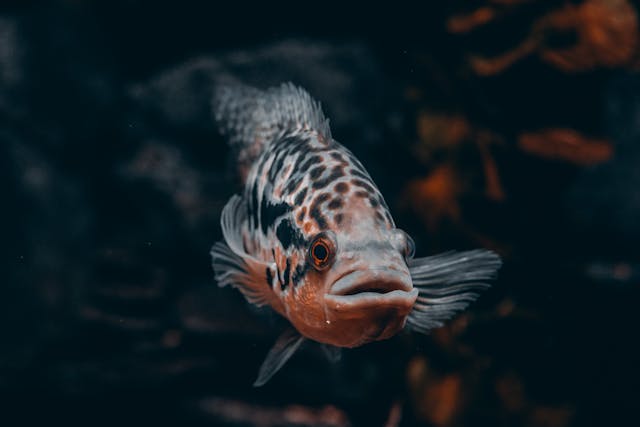
Large tanks over 55 gallons need powerful filtration to maintain water quality. Canister filters provide the flow rate and media capacity that HOB filters can't match at this scale.
Head Pressure: The Hidden Flow Killer
Manufacturers rate flow at zero head pressure (filter at the same level as the tank). In reality, your canister sits 2-4 feet below the waterline. This head pressure reduces actual flow by 30-50%. A filter rated at 700 GPH (like the Fluval FX4) may deliver 400-500 GPH installed — still excellent, but important to factor in when sizing your filter.
Filter Maintenance for Large Tanks
Maintaining filtration on a large tank requires a slightly different approach than small tanks. The larger water volume gives you more buffer, but the higher waste load means skipping maintenance has bigger consequences.
Maintenance Best Practices
- Never clean all filter media at once — stagger mechanical, chemical, and biological media cleaning across different weeks to preserve bacterial colonies
- Always rinse biological media in old tank water, never tap water. Chlorine and chloramines in tap water kill beneficial bacteria instantly.
- Track your maintenance schedule — large canister filters can go weeks between cleanings, making it easy to forget and let debris accumulate
- If running multiple filters, alternate cleaning schedules so one filter always has an established bacterial colony
- Keep spare O-rings and impellers on hand. A failed seal on a canister filter means water on your floor.
For a detailed walkthrough on filter setup, see our fish tank filter setup guide. If flow seems too strong for your fish, our guide on reducing filter flow covers practical solutions. And for more on preserving bacteria during media changes, see how to change your filter without losing bacteria.
Frequently Asked Questions
What type of filter is best for large aquariums?
Canister filters are the best choice for large aquariums (55+ gallons). They provide higher flow rates, larger media capacity for multi-stage filtration, and support mechanical, chemical, and biological filtration simultaneously. The Fluval FX4 handles tanks up to 250 gallons with 700 GPH flow, while the Fluval 407 covers tanks up to 100 gallons. Hang-on-back filters like the Marineland Bio-Wheel 350 can work for 55-75 gallon tanks but lack the power for anything larger.
What flow rate do I need for a large tank?
Aim for a turnover rate of 4-6 times your tank volume per hour for HOB filters, or 2-4 times for canister filters (canisters have longer contact time with media). For a 100-gallon tank, that means 400-600 GPH from an HOB or 200-400 GPH from a canister. Keep in mind that actual flow is typically 30-50% less than the rated flow once you account for head pressure and media resistance.
Can I use multiple filters on a large tank?
Yes, running multiple filters is common and recommended for tanks over 125 gallons or heavily stocked aquariums. Dual filtration provides redundancy if one filter fails and allows staggered maintenance so you never disrupt all your beneficial bacteria at once. For example, two Fluval 407 canister filters on a 150-gallon tank provides excellent coverage with easier maintenance than a single larger unit.
How often should I clean a canister filter on a large tank?
Clean canister filters every 4-8 weeks depending on bioload. Rinse mechanical media (sponges) frequently in old tank water, but only rinse biological media when flow noticeably decreases. Replace chemical media (activated carbon) every 4-6 weeks. Never clean all media at once — stagger cleaning to preserve beneficial bacteria colonies.
Is a canister filter better than an HOB filter for a 55-gallon tank?
For a 55-gallon tank, either can work. A canister filter like the Fluval 407 provides higher media capacity, quieter operation, and longer maintenance intervals. An HOB like the Marineland Bio-Wheel 350 costs less upfront and is easier to maintain. If your tank is heavily stocked or planted, a canister is the better investment. For a lightly stocked community tank, an HOB filter rated for your tank size can be sufficient.
Do canister filters need to be below the tank?
Canister filters work best when positioned below the tank because they rely on gravity-assisted siphon flow. Most canister filters are designed to sit inside an aquarium stand or cabinet. The vertical distance between the filter and tank (called head height) affects actual flow rate — the greater the distance, the harder the pump works. Check your filter's maximum head height rating before installation.
What is the best filter for a 100-gallon aquarium?
For a 100-gallon tank, the Fluval FX4 is the top choice with 700 GPH and room to grow if you upgrade tank size. The Fluval 407 is a more budget-friendly canister option rated specifically for tanks up to 100 gallons. For the most feature-rich option, the OASE BioMaster 2 Thermo 350 includes a built-in heater, reducing equipment inside the tank.
How do I reduce canister filter noise on a large tank?
Most canister filter noise comes from trapped air, vibration, or impeller issues. Run the filter for 24 hours to allow air to purge naturally — many filters like the Fluval FX4 auto-evacuate air every 12 hours. Place a foam mat under the canister to dampen vibration. If the filter is still noisy, check the impeller for debris or damage. Ensure all hose connections are tight and not allowing air intake.
Related Guides:
- All tank sizes: Best aquarium filters for every tank size
- Canister options: Best canister filters
- Biological media: Best biological filter media
- Filter setup: How to set up a fish tank filter
- Flow too strong? How to reduce aquarium filter flow
- Media changes: How to change your filter without losing bacteria
- Large tank guide: Large aquarium setup guide
- Tank stands: Best 55-gallon fish tank stands
- UV sterilizers: Best UV sterilizers for aquariums
Related Topics
Found this helpful?
Share this guide with your fellow aquarium enthusiasts!

Written by
FTW Team
The FishTankWorld editorial team brings together experienced aquarists to help you succeed in the hobby.