
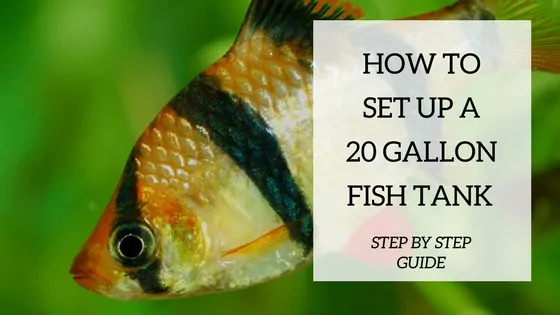
A 20 gallon fish tank offers the ideal balance of space and manageability for building your first aquarium community. Stocking your 20 gallon tank with fish, plants, and decorations is where you turn a glass box into a personalized aquatic world — and the choices you make during stocking determine whether your fish thrive or struggle.
Proper stocking research prevents costly mistakes and avoids fish loss. How many fish fit in 20 gallons? Which species live together peacefully? Can you grow live plants? What about a reef setup?
What You'll Learn in This Guide
Setup ideas for your 20 gallon aquarium covering essential equipment, five proven fish stocking combinations with exact species counts and sizes, compatibility rules, live plant options, and decoration ideas. Whether you’re a complete beginner or upgrading from a smaller tank, these stocking plans help you build a healthy, visually stunning aquarium.
A 20 gallon aquarium supports hundreds of possible fish and plant combinations. The sections below cover the equipment you’ll need, the best fish stocking formulas, and how to bring it all together.
Essential Equipment for a 20 Gallon Fish Tank
A 20 gallon tank is an excellent size for beginners — large enough to support a diverse fish community while small enough to manage easily. Most 20 gallon tanks come as all-in-one kits that include basic equipment, but you may need to supplement depending on your stocking plans.
Cycle Your Tank Before Adding Fish
Your tank must complete the nitrogen cycle before adding any fish, plants, or other living organisms. This process takes 4 to 6 weeks and establishes the beneficial bacteria that keep your water safe. Skipping the cycle is the number one cause of fish death in new aquariums.
Here’s what you need to get your 20 gallon tank ready for its inhabitants.
Filter
The filtration system included with all-in-one kits is usually adequate to start, but may need upgrading depending on the fish you choose. Larger fish produce more waste, which means the filter works harder to keep the water clean.
Most 20 gallon kits come with hang-on-back (HOB) power filters that provide three-stage filtration: mechanical, chemical, and biological. These are the best filter type for a 20 gallon tank because they’re effective, affordable, and easy to maintain. If you find the flow too strong for your fish, there are ways to reduce filter flow without sacrificing filtration quality.
When you eventually need to replace filter media, follow the proper technique for changing your filter without losing beneficial bacteria — this protects the nitrogen cycle you worked so hard to establish.
Water Heater
Tropical freshwater fish thrive in water temperatures between 75-80°F (24-27°C), with most species preferring approximately 78°F (25.5°C). Many freshwater kits don’t include a heater or thermometer, so you’ll need to purchase these separately if your home doesn’t naturally maintain tropical temperatures.
A submersible aquarium heater with a built-in thermostat gives you precise temperature control. For a 20 gallon tank, a 100-watt heater is sufficient for most room temperatures, though a 150-watt unit provides extra headroom in cooler climates. Read our full guide on how to choose and use an aquarium heater for sizing recommendations.
Always Use a Separate Thermometer
Even with a thermostat-equipped heater, keep a separate aquarium thermometer in your tank. This lets you verify the heater is working correctly and catch temperature swings before they stress your fish.
Lighting
Lighting serves two purposes in your 20 gallon aquarium: making the tank enjoyable to watch and keeping fish healthy by mimicking natural day/night cycles. The best aquarium lights replicate both sunlight and moonlight phases.
LED lights dominate the aquarium hobby for good reason — they produce excellent light quality, consume minimal electricity, and last for years. Many kits include LED lighting with built-in sunlight and moonlight modes.
If you plan to grow live plants, lighting becomes even more critical. Plants require specific light wavelengths for photosynthesis, and insufficient lighting is the main reason aquarium plants fail. Reef tank corals have their own specialized LED lighting requirements that differ from freshwater planted tanks.
Substrate
Aquarium substrate — gravel, sand, or specialty plant media — serves multiple functions beyond visual appeal. Substrate creates surface area for beneficial bacteria colonies, anchors live plants, and gives bottom-dwelling fish like Corydoras Catfish a natural surface to forage on.
For a planted 20 gallon tank, nutrient-rich substrates like CaribSea Eco-Complete Planted Aquarium Substrate provide essential minerals directly to plant roots without requiring additional fertilizers. A 20-pound bag covers a 20 gallon tank with approximately 2 inches of depth. Check out our full guide to the best substrates for planted tanks for more options.
For fish-only setups, standard aquarium gravel or sand works perfectly well. Choose a grain size appropriate for your fish — fine sand suits Corydoras Catfish and other bottom feeders, while coarser gravel works for most community fish.
Plants and Decorations
Plants and decorations are where personal taste takes center stage. Some fish consume certain plants, so matching plant species to your fish community matters. Most fish benefit from having hiding spots and places to explore, which reduces stress and encourages natural behavior.
If you’re not ready to commit to live plants, high-quality artificial plants fill your space nicely and still give fish areas to enjoy. Live plant options and decoration ideas are covered in dedicated sections below.
Fish Stocking Guide for 20 Gallon Tanks
A 20 gallon freshwater aquarium supports dozens of compatible fish combinations, but not every grouping works. Picking fish based on appearance alone — without checking adult sizes, temperaments, and water requirements — leads to overcrowding, aggression, and fish loss.
Why 20 Gallons Is a Great Starter Size
A 20 gallon tank offers enough water volume to maintain stable parameters while providing space for a diverse, colorful fish community. It’s large enough to explore aquarium keeping to its full extent and create a unique aquatic world of your own design — without overwhelming a beginner with maintenance.
Several factors determine a successful stocking plan: species compatibility, adult fish size, how many fish the tank can support, which water column layers they occupy, water chemistry requirements, and gender dynamics. Let’s start with the best species choices.
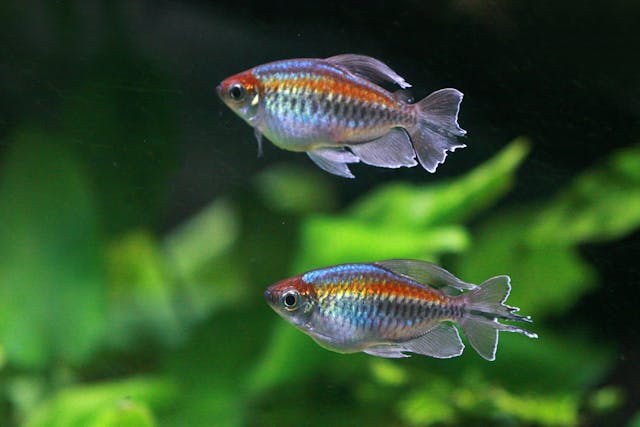
Tetras are among the most popular choices for a 20 gallon community tank thanks to their vibrant schooling behavior
Freshwater Fish Options
The most recommended freshwater fish for beginners are livebearers — species that give birth to live young rather than laying eggs. Livebearers remain fairly small at maturity and adapt well to a range of water conditions.
Livebearers for a 20 Gallon Tank
- Guppies — males reach 1.5-2 inches, females up to 2.5 inches. Colorful, active, and peaceful
- Platies — reach 2-3 inches. Hardy, available in many color varieties, and excellent community fish
- Swordtails — males reach 4-5 inches including tail. Need space to swim and can be slightly territorial
- Mollies — reach 3-5 inches depending on variety. Prefer slightly brackish water and need a larger school
Other Beginner-Friendly Fish
- Neon Tetras — 1.2 inches at maturity. Best kept in schools of 6 or more for vibrant schooling behavior
- Zebra Danios — 2 inches. Extremely hardy and active swimmers that tolerate a wide range of conditions
- Corydoras Catfish — 1-2.5 inches depending on species. Peaceful bottom dwellers that should be kept in groups of 4-6
- Bristlenose Catfish — 4-5 inches. The best algae-eating fish for a 20 gallon tank, only need one per tank
- Tiger Barbs — 3-4 inches. Active and colorful but can be nippy; keep in groups of 5 or more to reduce aggression
Five Proven Stocking Combinations
Five proven stocking formulas provide balanced, compatible communities for a standard 20 gallon tank. Each combination accounts for adult fish sizes and total bioload to stay within safe stocking limits.
Stocking Combination 1: Livebearer Community
- 3 Guppies (2 inches each)
- 2 Platies (2.8 inches each)
- 2 Mollies (4.8 inches each)
- Total: approximately 17.2 inches of fish at adult size
Stocking Combination 2: Tetra Showcase
- 5 Neon Tetras (1.2 inches each)
- 5 Glowlight Tetras (1.8 inches each)
- 3 Black Phantom Tetras (1.8 inches each)
- 1 baby Albino Bristlenose Catfish (grows to 4-5 inches)
- Total: approximately 20.4 inches at adult size
Stocking Combination 3: Neon and Corydoras Community
- 10 Neon Tetras (1.2 inches each)
- 6 Corydoras Catfish (1.25 inches each)
- 1 Albino Bristlenose Catfish (grows to 4-5 inches)
- Total: approximately 23.5 inches — works with good filtration and live plants
Stocking Combination 4: Active Swimmers
- 5 Zebra Danios (2 inches each)
- 5 Harlequin Rasboras (2 inches each)
- 5 Corydoras Catfish (1.25 inches each)
- Total: approximately 26.25 inches — relies on strong filtration and regular water changes
Stocking Combination 5: Tiger Barb Monoculture
- 5 Tiger Barbs (4 inches each)
- Total: approximately 20 inches at adult size
- Keeping Tiger Barbs in a species-only group of 5+ reduces fin-nipping behavior
Tetra Alternatives
If Neon Tetras don’t appeal to you, several other tetra species work beautifully in a 20 gallon community. Each offers slightly different colors and behaviors while filling the same ecological role:
- Glowlight Tetra — 1.6-2 inches, warm orange-red stripe
- Black Neon Tetra — 1.6 inches, subtle black and iridescent green coloring
- Rummynose Tetra — 2 inches, distinctive red nose and striped tail
- Black Phantom Tetra — 1.8 inches, males display dramatic black fins
- Diamond Tetra — 2 inches, sparkling scales that catch the light
Danio Alternatives
Zebra Danios are the most common, but the Danio family offers variety. These alternatives share the same hardiness and active swimming style:
- Glowlight Danio — subtle golden glow
- Gold Danio — bright metallic gold coloring
- Long Finned Danio — flowing fins on the classic Zebra pattern
- Leopard Danio — spotted rather than striped
- Pearl Danio — iridescent pearl-like sheen
- Celestial Pearl Danio — tiny (1 inch) with stunning galaxy-like spotted pattern
- Gold Ring Danio — gold-ringed markings
Saltwater and Reef Tank Options
A 20 gallon tank can support a small saltwater aquarium, though your species options are more limited than with freshwater. Suitable saltwater fish for a 20 gallon tank include Clownfish (the most popular beginner saltwater fish), Firefish, and small Gobies.
Saltwater setups require additional equipment beyond what a freshwater kit provides: a protein skimmer for organic waste removal, a powerhead for water circulation, reef-grade salt mix, and a refractometer to measure salinity. If you plan to keep corals, you’ll also need specialized reef lighting.
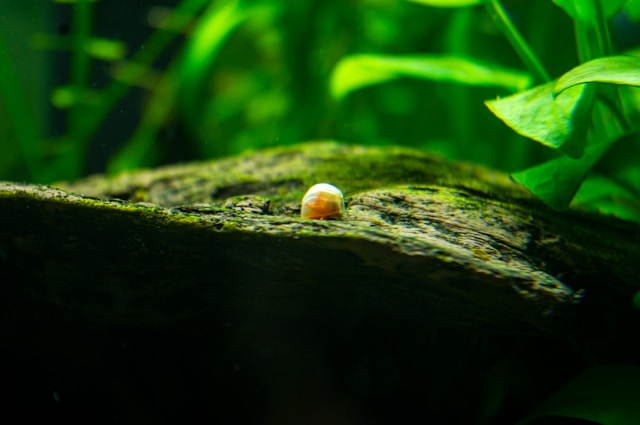
Snails pull double duty in a 20 gallon tank — entertaining to watch and effective at cleaning algae from glass and decorations
Snails and Shrimp
Snails and shrimp make excellent additions to a 20 gallon aquarium. They provide entertainment — watching shrimp forage and snails cruise the glass is surprisingly relaxing — while performing valuable cleanup duties. These invertebrates naturally feed on fish waste, algae, uneaten food, and other debris, helping to keep your tank clean between maintenance sessions.
Popular choices for a 20 gallon freshwater tank include Nerite Snails (excellent algae eaters that won’t reproduce in freshwater), Mystery Snails (larger and more active), and Cherry Shrimp (colorful and fun to watch in groups). Check out our guide to the best algae eaters for more options.
Key Stocking Considerations
Successful 20 gallon fish tank stocking depends on more than species selection alone. Compatibility, adult growth size, water column distribution, and water chemistry all determine whether your community thrives long-term.
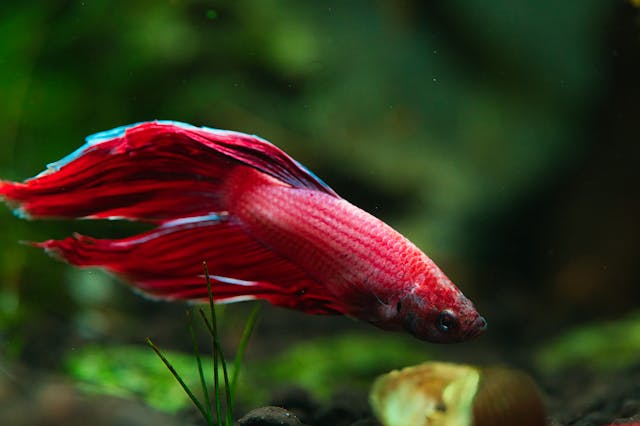
Some species like Bettas require careful tank mate selection — research compatibility before mixing fish
Fish Compatibility
Fish compatibility determines whether a 20 gallon community tank succeeds or fails. Introducing species that don’t coexist peacefully causes unnecessary stress, aggression, injury, and fish loss.
Some species are naturally aggressive and bully smaller or slower fish. Others are fin-nippers that target long-finned tank mates. Before purchasing any fish, research their temperament and known incompatibilities. A peaceful community tank requires deliberate planning — not guesswork.
Research Before Buying
Never buy a fish on impulse without checking its compatibility with your existing stock. Even fish that look peaceful in the store may become territorial or aggressive once established in your tank. Prevention is always easier than dealing with aggression problems after the fact.
Fish Maturity and Adult Size
Most fish sold in stores are juveniles that reach full adult size within 3 to 6 months. Planning for adult size rather than purchase size is the single most important stocking decision beginners overlook.
A fish that’s 1 inch at the store may grow to 4 or 5 inches at maturity. If you stock your tank based on the size of juvenile fish rather than adult fish, you’ll end up with an overcrowded tank within a few months. Overcrowding causes stress, increases aggression as space becomes limited, and degrades water quality faster than your filter can handle.
Always research the full adult size of every species before adding it to your stocking plan.
Quantity and the Inch-Per-Gallon Rule
A 20 gallon aquarium can stock quite a few fish, but preferably smaller species. The most common guideline in the aquarium hobby is the water density rule of 1 inch of fish per gallon — meaning a 20 gallon tank can support roughly 20 inches of adult fish.
The inch-per-gallon rule serves as a useful starting point, but several variables affect the actual capacity of a 20 gallon tank:
- Filtration strength — a high-quality filter allows slightly higher stocking levels
- Live plants — plants absorb nitrates and improve water quality, supporting more fish
- Fish body shape — a stocky 3-inch Molly produces more waste than a slender 3-inch Neon Tetra
- Feeding habits — heavy eaters produce more waste regardless of size
Also note that certain species require minimum group sizes to remain healthy. Schooling fish like Neon Tetras and Corydoras Catfish evolved to live in large groups and become stressed, hide constantly, or show faded colors when kept in pairs or alone. Research the minimum school size for each species in your plan.
Water Column Layering
Different fish occupy different zones of the water column: surface, middle, and bottom. Planning your stock across all three layers creates a visually balanced aquarium where every section of the tank has activity.
- Surface dwellers — Guppies, Hatchetfish, and Danios spend most of their time near the top
- Mid-water swimmers — Tetras, Rasboras, and Platies cruise the middle zone
- Bottom dwellers — Corydoras Catfish, Bristlenose Catfish, and loaches forage along the substrate
Layering prevents overcrowding in any single zone and distributes territorial behavior more evenly. A tank with fish only at the bottom looks empty from across the room, while a tank with layered stock appears full and vibrant at every level.
pH Levels and Temperature
After your tank has completed the nitrogen cycle and is ready for fish, test the water to confirm pH levels and nitrogen parameters are within acceptable ranges.
Every fish species has a preferred range for pH, temperature, and water hardness. The key rule: all fish in your tank must share compatible environmental requirements. You can’t mix a species that needs pH 6.0 with one that requires pH 8.0 — one of them will suffer.
Most popular beginner freshwater fish — including Neon Tetras, Guppies, Platies, and Corydoras Catfish — tolerate a pH between 6.5 and 7.5 and temperatures between 74-80°F. This overlap makes mixing and matching relatively straightforward, but always verify each species’ specific requirements before purchasing.
Fish Genders
Gender matters primarily for livebearers like Guppies, Platies, Mollies, and Swordtails. These species reproduce easily in aquarium conditions, and a mixed-gender group can quickly overpopulate a 20 gallon tank with fry.
If you don’t want baby fish, keep only males — or only females. Be aware that some female livebearers can store sperm for months, so a female purchased from a store may already be pregnant.
Gender also affects aggression. Males of many species are territorial, especially during breeding. Introducing two males of an aggressive species into the same tank often results in constant fighting. Research the social dynamics of each species you plan to keep.
Acclimating New Fish to Your Tank
New fish require gradual acclimation before entering your 20 gallon tank. The water in a store bag differs from your aquarium in temperature, pH, and dissolved mineral content — and dropping fish directly into mismatched water causes extreme stress or death.
The safest introduction method is the drip acclimation technique:
- Float the sealed bag in your tank for 15-20 minutes to equalize temperature
- Open the bag and clip it to the side of the tank
- Set up a slow drip from your tank water into the bag using airline tubing with a control valve
- Let the drip run for 30-45 minutes, allowing the fish to gradually adjust to your water chemistry
- Net the fish out of the bag and release it into the tank — never dump the store water into your aquarium
Dim the Lights
Keep your aquarium lights off for the first few hours after introducing new fish. Dim lighting reduces stress and gives newcomers time to explore and find hiding spots before encountering established tank mates.
Live Plants for a 20 Gallon Tank
Live plants are always a worthwhile addition to a 20 gallon aquarium. They require a little more research and maintenance than artificial alternatives, but the benefits are substantial: plants absorb nitrates to improve water quality, produce oxygen, provide natural hiding spots for fish, and make your tank look dramatically more natural.
For beginners, start with hardy low-light aquarium plants that tolerate a wide range of conditions:
Easy Beginner Plants for a 20 Gallon Tank
- Java Fern — attaches to driftwood or rocks, doesn't need substrate planting. Nearly indestructible
- Anubias — slow-growing, thrives in low light, attach to hardscape rather than burying the rhizome
- Java Moss — grows on any surface, provides shelter for fry and shrimp. Extremely low maintenance
- Water Lettuce — floating plant that absorbs excess nutrients from the water column
- Duckweed — fast-growing floating plant that provides shade and nutrient absorption (can spread quickly)
- Amazon Sword — a centerpiece plant with broad leaves, needs nutrient-rich substrate to thrive
For a full planted tank setup, our low-tech planted aquarium guide walks you through everything from substrate selection to lighting requirements without the complexity of CO2 injection systems.
Decoration Ideas
Aquarium decorations let you personalize your 20 gallon tank with nearly unlimited creative options. Natural materials, themed ornaments, and functional structures all serve different aesthetic and practical purposes.
Driftwood is one of the most popular natural decorations. It creates a focal point, provides hiding spots for fish, and slowly releases tannins that soften water — which many tropical fish prefer. Mopani wood, Malaysian driftwood, and spider wood are all excellent choices for a 20 gallon tank.
Rocks add natural structure and create caves and crevices. River rocks, dragon stone (Ohko stone), and seiryu stone are popular aquascaping materials. If you’re keeping plants, dragon stone works particularly well because it’s lightweight and easy to arrange. Resin rock structures provide a similar look with built-in caves for fish to hide in.
Themed decorations let you express personality — from sunken ships to castle ruins to natural biotope recreations. Some decorations incorporate air pumps to produce bubble effects, which aren’t necessary for water quality but add visual interest.
Only Use Aquarium-Safe Decorations
Every decoration placed in your tank must be aquarium-safe and non-toxic. Items not designed for aquariums may leach chemicals, paint, or heavy metals into the water. Never add random objects from around the house without verifying they’re fish-safe.
One important consideration for a 20 gallon tank: every decoration takes up swimming space. A heavily decorated tank looks impressive but leaves less room for fish to move. In a 20 gallon aquarium, striking a balance between decoration and open swimming space is especially important. Sometimes less is more.
Making Your 20 Gallon Tank Your Own
Stocking your new aquarium with fish, plants, and decorations is the most exciting part of the hobby. The key to success is patience — cycle your tank properly, research your species combinations thoroughly, and introduce fish gradually rather than all at once.
A 20 gallon aquarium offers a remarkable amount of creative freedom. Whether you choose a vibrant livebearer community, a serene planted tank with schooling Neon Tetras, or an eye-catching Tiger Barb display, the possibilities for personalizing your aquatic world are nearly endless.
If you’re still choosing your tank, check out our guide to the best 20 gallon fish tank kits for reviewed recommendations, and our comparison of glass vs. acrylic tanks to help you decide on the right material.
Have fun stocking your aquarium with your new aquatic friends!
How many fish can you put in a 20 gallon tank?
The general guideline is 1 inch of fish per gallon of water, meaning a 20 gallon tank can hold roughly 20 inches of fish at adult size. However, this varies by species, filtration capacity, and whether you keep live plants. Always research each species' adult size and bioload before purchasing.
What are the best fish for a 20 gallon freshwater tank?
The best fish for a 20 gallon freshwater tank include livebearers like Guppies, Platies, Mollies, and Swordtails. Other excellent options are Neon Tetras, Zebra Danios, Corydoras Catfish, and Bristlenose Catfish. These species stay small, tolerate a range of water parameters, and are beginner-friendly.
Do I need a heater for a 20 gallon fish tank?
Most tropical freshwater fish require water temperatures around 78°F (25.5°C). If your room temperature doesn't consistently maintain this range, a submersible aquarium heater is essential. Even in warmer climates, a heater prevents temperature swings that stress fish.
How long should I cycle a 20 gallon tank before adding fish?
A new 20 gallon tank typically requires 4 to 6 weeks to complete the nitrogen cycle. During this period, beneficial bacteria colonize the filter media and substrate to process ammonia and nitrites into less harmful nitrates. Skipping the cycle is the leading cause of fish loss in new aquariums.
Can I keep saltwater fish in a 20 gallon tank?
Yes, a 20 gallon tank can house certain small saltwater species like Clownfish, Firefish, and small Gobies. Saltwater setups require additional equipment including a protein skimmer, powerhead for water circulation, and specialized lighting if you plan to keep corals.
What substrate should I use in a 20 gallon planted tank?
For a planted 20 gallon tank, nutrient-rich substrates like CaribSea Eco-Complete provide essential minerals for root-feeding plants without requiring additional fertilizers. A 2-3 inch layer gives plant roots room to anchor while supporting beneficial bacteria growth.
Related Topics
Found this helpful?
Share this guide with your fellow aquarium enthusiasts!
Written by
FTW Team
The FishTankWorld editorial team brings together experienced aquarists to help you succeed in the hobby.